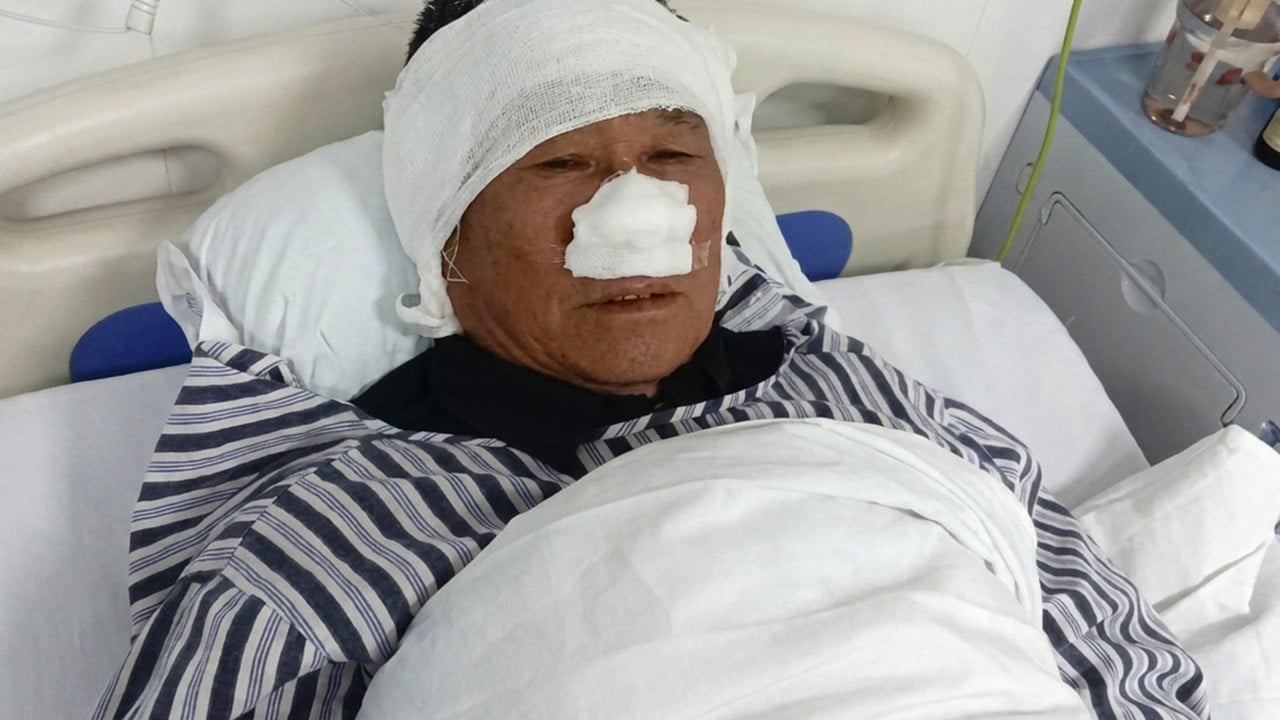
On Tuesday, July 14, 2026, a tragic maritime disaster unfolded 600 yards off Alcatraz Island when the Volare, a 49-foot cabin cruiser carrying 20 family members, took on a massive wave and capsized in the San Francisco Bay. The incident, occurring during a memorial service to scatter ashes, claimed the life of 79-year-old Clifford Joseph Boisa, a retired former Sutter County sheriff's deputy. Sixteen passengers were rescued by quick-acting civilian mariners and emergency crews, while three remain missing in the bay’s notoriously treacherous waters. This sudden sinking exposes the severe, unforgiving physical mechanics of the San Francisco Bay and the regulatory gray areas governing private pleasure crafts.
For decades, the central bay has been treated as a scenic playground for local and visiting boaters. Yet beneath the postcard views of the Golden Gate Bridge and the historic prison island lies one of the most hydrodynamically hostile environments on the West Coast. The loss of the Volare was not a freak accident, but rather a violent intersection of natural forces, vessel design vulnerabilities, and the deceptive nature of inland water safety.
The Chaos on the Water
The emergency call received by the San Francisco Fire Department shortly after 3:30 p.m. initially reported a boat on fire. Plumes of what looked like dark smoke rose from the center of the bay, flagging the attention of nearby commercial fishermen and charter operators. In reality, the "smoke" was steam, boiling off the hot engine block of a vessel rapidly swallowing water while its motor continued to run at full throttle.
By the time civilian rescuers reached the scene, the Volare was almost entirely submerged, with only its top deck breaching the surface. Passengers were scattered in the choppy, 50-degree water. Some clung to the sinking hull, others grasped onto the board of a passing kiteboarder who had rushed in to help, and several were trapped in the violent currents without life jackets.
Civilians on charter fishing boats like the Bass Tub and the California Dawn arrived before official first responders. They threw life rings, lowered swim ladders, and pulled freezing, injured survivors from the bay. The rescue was a frantic race against cold water shock, which can incapacitate even strong swimmers within minutes.
The active search for the three missing passengers—identified as Carol Boisa, Jackie Boisa, and a family friend named Tondra—was suspended by the U.S. Coast Guard after an exhaustive 24-hour effort covering 950 square nautical miles. The tragedy transformed a solemn family memorial into a horrific fight for survival. It leaves the maritime community asking how a seemingly sturdy 49-foot vessel could roll over and sink so quickly in a matter of seconds.
The Physics of a Roll
To understand why the Volare sank, one must look at the mechanical forces that govern vessel stability. A boat's stability is determined by the relationship between two moving targets: the center of gravity (CG) and the center of buoyancy (CB).
When a vessel is upright and in equilibrium, these two forces are vertically aligned on the centerline. Gravity presses downward while buoyancy pushes upward with equal force. However, when a wave heels the boat to one side, the hull tilts, and the center of buoyancy shifts outward. The distance between the downward force of gravity and the upward force of buoyancy creates what naval architects call the righting arm.
In a properly balanced vessel, this righting arm acts as a lever, pulling the boat back to an upright position. But the Volare was a multi-deck cabin cruiser with a high superstructure, which inherently raises the vertical center of gravity.
According to survivor accounts, a large wave hit the vessel, causing it to lean heavily to its starboard side. As the boat listed, several factors likely combined to seal its fate:
- Free Surface Effect: If water found its way onto the decks or inside the cabin, the sloshing liquid would shift instantly to the low side of the vessel, drastically accelerating the roll.
- Passenger Weight Distribution: In a sudden emergency, passengers naturally move away from or get thrown toward the listing side, further shifting the center of gravity.
- Enclosed Spaces: The Volare had enclosed main and lower decks. When a boat rolls past its angle of vanishing stability, water rushes through open doors, windows, and vents. Once these spaces flood, the righting arm disappears entirely, turning the vessel upside down.
A heavy cabin cruiser has high initial stability because of its wide beam, but once it is pushed past its limit, it can become incredibly stable in the inverted position. This "turning turtle" phenomenon explains why the Coast Guard warned that the missing passengers might have been trapped inside the cabin as the vessel went down.
The Alcatraz Slot and the Convergence of Dangers
The location of the capsize—just 600 yards from Alcatraz Island—is one of the most perilous corridors in the entire San Francisco Bay. Known to local mariners as "the slot," this area is where cold ocean winds rushing through the Golden Gate collide with the massive volume of water draining from the Sacramento and San Joaquin rivers.
During an ebb tide, millions of gallons of water are squeezed through the narrow opening of the Golden Gate, creating currents that can easily exceed five or six knots. When these powerful outbound currents run directly into strong, incoming afternoon winds, the water has nowhere to go but up.
The result is a chaotic, unpredictable field of steep, short-interval waves known as "chop" or "tide rips". Unlike long, rolling ocean swells, these bay waves are vertical walls of water that strike in rapid succession. They give a vessel no time to recover its natural buoyancy before the next blow lands.
A boat designed for the flat, calm waters of the Sacramento Delta or the Stockton channels can find itself instantly overwhelmed when entering the central bay during a peak tidal exchange. The Volare, based out of Stockton, was accustomed to inland waterways. Crossing into the central bay during the late afternoon—when winds peak and currents rip around the underwater topography of Alcatraz—placed the vessel in a physical washing machine.
The Regulatory Gap of Private Cruisers
The tragedy of the Volare also highlights a gaping loophole in maritime safety regulations. Had the Boisa family chartered a commercial tour boat for their memorial service, they would have stepped onto a vessel subjected to rigorous, mandatory U.S. Coast Guard inspections, strict passenger limits, and a requirement to carry commercial-grade survival equipment.
Because the Volare was a privately owned pleasure craft operated by a family member, it was not bound by these stringent commercial standards.
+------------------------------------+------------------------------------+
| Commercial Passenger Vessel        | Private Pleasure Craft (Volare)    |
+------------------------------------+------------------------------------+
| Annual Coast Guard Hull Inspection | No Mandatory Government Inspection |
| Certified Passenger Limits         | Owner-Determined Capacity          |
| Mandatory Liferaft & Survival Gear | Basic Life Jackets Required        |
| Professional Licensed Crew         | Private Operator's License         |
+------------------------------------+------------------------------------+
While John Boisa, the captain, was an experienced former Navy sailor, the vessel itself lacked the redundant safety systems mandated on commercial ships. Rescuers noted the absence of an easily deployable liferaft—a piece of gear that is mandatory on commercial vessels operating in the bay and could have kept the passengers out of the freezing water entirely.
Furthermore, private recreational vessels are rarely subjected to stability tests to determine how many passengers can safely stand on the upper decks. When twenty people gather on a multi-deck cabin cruiser, a sudden shift of passengers to one side to watch a memorial service or look at Alcatraz can dangerously reduce the boat's safety margins.
Survival in the Dead Zone
The immediate cause of death in bay accidents is rarely drowning in the traditional sense. It is the physiological reaction to water that hovers between 50 and 55 degrees Fahrenheit year-round.
When a human body is suddenly immersed in water this cold, it experiences cold water shock. The skin's cold receptors trigger an involuntary gasp reflex. If a victim's head is underwater when this gasp occurs, they inhale water directly into their lungs, leading to instant drowning.
For those who survive the initial plunge, hyperventilation sets in, rapidly depleting oxygen levels and causing panic. Within ten minutes, the body begins losing motor control. The fingers stiffen, arms and legs grow heavy, and the ability to swim or even hold onto a floating object disappears.
This is why wearing a life jacket before an emergency occurs is the single most critical factor in bay survival. Several passengers on the Volare were pulled from the water without life jackets, having had no time to locate or don them as the boat rolled over in seconds.
The fast-moving current also presents an immediate tactical problem for rescuers. The tide near Alcatraz can sweep a floating person half a mile in just a few minutes, scattering a group of survivors across a massive area and making visual location from surface vessels nearly impossible in choppy conditions.
The Lessons of the Volare
The investigation into the sinking of the Volare will likely take months as investigators attempt to map the wreckage, analyze the vessel's weight distribution, and reconstruct the final moments of the voyage. Yet the immediate takeaways are already clear to anyone who operates a vessel in these waters.
The San Francisco Bay is not a lake. It is an extension of the Pacific Ocean, behaves like a wild river, and demands the same respect as the open sea.
Boaters must move past the assumption that a large boat is inherently safe. Large, multi-deck recreational vessels carry unique stability risks that are easily magnified by wind, waves, and passenger movement. Until private operators treat the bay with the same caution as an ocean crossing—monitoring stability, ensuring every passenger wears a life jacket, and avoiding the treacherous convergence of peak ebb tides and afternoon winds—the waters around Alcatraz will continue to claim lives.