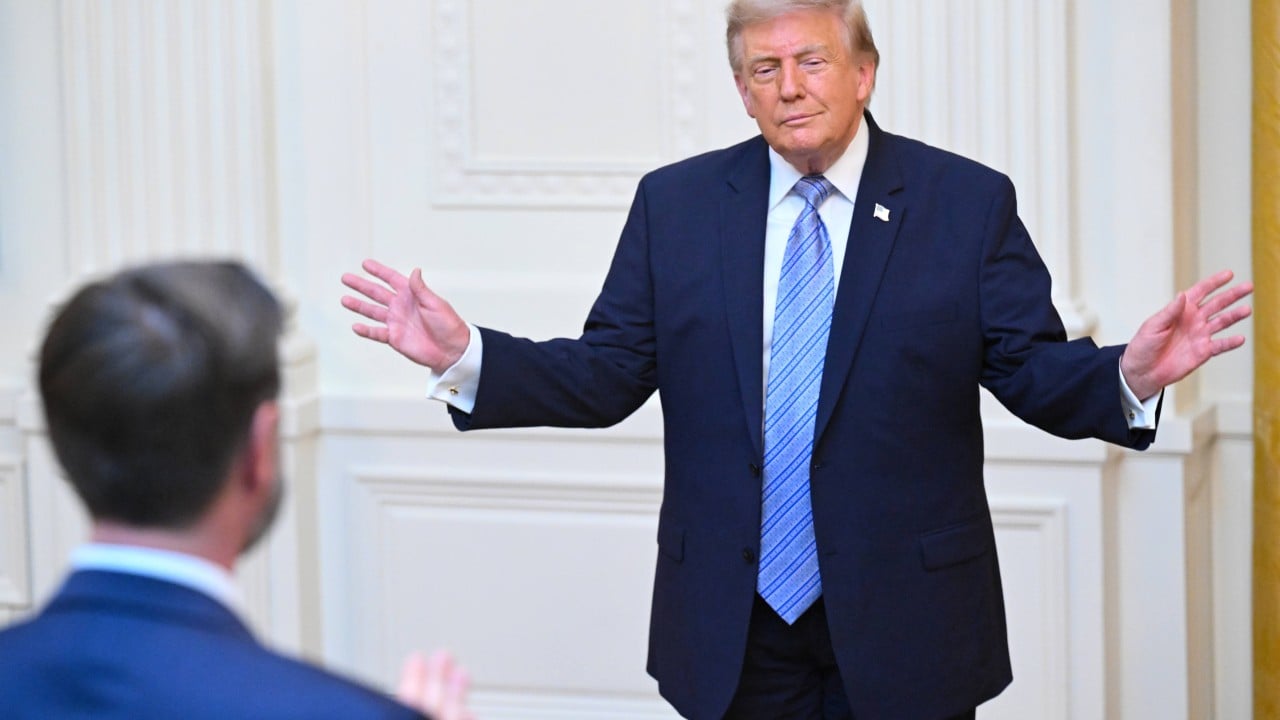
On Thursday night, President Donald Trump stood before a prime-time national audience to accuse China of systematic interference in American elections, declassifying a cache of intelligence documents that he claimed proved Beijing had acquired millions of U.S. voter records. While the theatrical presentation shocked viewers, the underlying strategy had very little to do with protecting the ballot box. Instead, the move was a highly calculated effort to redirect public anger away from a stalled military campaign in Iran, override a skeptical intelligence community, and energize a flagging Republican base ahead of the critical November midterm elections.
To understand the sudden escalation against Beijing, one must look past the podium and into the gears of a presidency currently fighting on multiple domestic and foreign fronts.
The Mechanics of a Well Timed Declassification
The timing of the President’s address was not an accident. The administration has spent weeks facing brutal headlines over high domestic energy prices and a grinding, unpopular conflict in Iran. The initial promise of a quick, decisive victory has faded.
Instead, the public has grown weary.
By introducing a major national security threat from a superpower like China, the White House successfully changed the subject. The declassified files, according to the president, show that Chinese state actors illicitly acquired 220 million American voter files. The announcement was designed to look like a historic exposure of foreign espionage.
Yet, when the declassified documents are examined closely, the threat begins to look far more mundane.
Intelligence analysts who have reviewed the released pages point out that the material contains very little new information. Most of the files detail activities that have been known to the intelligence community for years.
Parsing the 220 Million Voter Files
The center of the administration's claim rests on the sheer volume of voter data allegedly stolen by Chinese hackers. To the average citizen, 220 million records sounds like an existential breach of personal privacy.
The reality of how voter data is managed tells a very different story.
+------------------------------------+------------------------------------+
| White House Allegation             | Intelligence Reality               |
+------------------------------------+------------------------------------+
| China hacked and compromised       | Voter registration lists are       |
| sensitive, confidential files      | largely public records, easily     |
| to manipulate the 2020 vote.       | purchased by political campaigns.  |
+------------------------------------+------------------------------------+
| U.S. intelligence agencies         | Multiple bipartisan reviews        |
| suppressed evidence of technical   | confirmed no foreign adversary     |
| interference in voting machines.   | altered actual votes or tallies.   |
+------------------------------------+------------------------------------+
Most of what constitutes a voter file is public information. Names, home addresses, party affiliations, and voting histories are routinely sold by state governments to political consultants, commercial marketing firms, and public interest groups. Anyone with a credit card and a campaign registration can acquire these databases legally.
"There is a massive difference between harvesting public records and breaching secure election infrastructure," says one former Department of Homeland Security cyber official who spoke on the condition of anonymity. "The public is being led to believe that the actual voting machines were compromised, when in reality, the Chinese were simply compiling the same public mailing lists that political campaigns buy every single cycle."
Furthermore, the National Intelligence Council’s unclassified assessments have consistently maintained that while China routinely gathers data on American political candidates, voters, and public opinion to help predict policy outcomes, it has avoided direct, technical interference with voting machines. The risks of getting caught doing so simply outweigh the potential benefits for Beijing.
The Internal War Over Intelligence
Perhaps the most significant aspect of the President's address was his direct attack on his own intelligence apparatus. By alleging that officials within the CIA and the Office of the Director of National Intelligence deliberately suppressed information regarding China, the administration is reviving a long-running battle against the civil service.
This is a classic political maneuver.
If the public can be convinced that the nation's premier intelligence agencies are hiding the truth, then any assessment from those agencies that contradicts the White House can be easily dismissed. The narrative of a hostile, hidden bureaucracy serves as a shield against inconvenient facts.
- The Minority View: The administration is pointing to a previous disagreement within the intelligence community, where a single cyber official expressed moderate confidence that China had attempted to influence the 2020 cycle via state-run media.
- The Majority Consensus: Every major national security agency agreed that there was no technical manipulation of the vote-counting process.
- The Legislative Push: By casting doubt on the integrity of past elections, the White House is attempting to force Congress to pass highly controversial voting laws.
The ultimate target of this rhetoric is the legislative logjam in Washington. The administration has been pushing for strict new federal voting regulations, including nationwide citizenship verification and identity requirements. These measures have stalled in the Senate, facing intense opposition from lawmakers who argue they are unnecessary and designed to suppress turnout among specific demographics.
By framing election security as an urgent national security crisis involving foreign adversaries, the White House hopes to shame hesitant lawmakers into submission.
Shifting the Midterm Spotlight
With the midterms approaching, the Republican majority in Congress is vulnerable. Historical patterns suggest that the party in power typically loses seats during midterm cycles, and current economic pressures have only amplified that risk.
To win, political strategists know they must give their base a powerful reason to show up at the polls.
Fear of foreign subversion is an incredibly potent motivator. By painting the election system as compromised and suggesting that political opponents are complicit in hiding the threat, the administration is establishing a convenient excuse. If the party performs poorly in November, the blame can be laid squarely at the feet of foreign hackers and the domestic officials who allegedly protected them.
The strategy is high-risk.
By systematically undermining public confidence in democratic institutions, leaders risk depressing their own voters' turnout. If citizens believe the game is rigged by a foreign superpower, they may see little reason to participate at all.
Beijing, for its part, has dismissed the allegations as baseless political theater. While China's state apparatus undoubtedly conducts extensive espionage and influence operations, the focus has historically been on economic theft, academic influence, and long-term industrial policy rather than the crude manipulation of Western voting machines.
The real danger to American democracy is not that a foreign adversary will secretly change votes in the middle of the night. The real danger is that the constant, politically motivated assault on the integrity of the system will leave the public unable to trust any election result, regardless of who wins.
The declassified documents released on Thursday do not reveal a secret Chinese plot to steal an election. They reveal an administration using the tools of national security to fight a domestic political battle, transforming routine intelligence into partisan weaponry.