In public safety emergencies, the gap between a lethal outcome and survival is measured by the transition of a bystander from passive observer to active intervenor. When an assailant began strangling a woman in a village in Chenzhou, Hunan province, the surrounding crowd faced a classic bystander calculus: the risk of personal harm outweighed the immediate benefit of intervention, resulting in collective hesitation. The intervention of 69-year-old Zeng Fanlin broke this paralysis but highlighted the severe asymmetric physical risks inherent in close-quarters civilian intervention.
Analyzing this event requires moving past standard media narratives of raw bravery. It demands an examination of the precise biomechanical risks of close-quarters combat, the clinical realities of complex facial reconstruction, and the structural socio-economic frameworks used to incentivize civic intervention.
The Biomechanical Asymmetry of Close-Quarters Intervention
Civilian intervention in ongoing violent assaults is highly volatile due to a lack of protective equipment, tactical training, and defensive distance. In this case, the attacker, a man in his 20s undergoing an acute emotional crisis, possessed a significant age and physical advantage over the 69-year-old mediator.
When a rescuer attempts to subdue an erratic individual without restraining weapons, the engagement distance drops to zero. This shift introduces specific biomechanical risks:
- Vulnerability of Vital Sub-systems: Close-range grappling exposes highly sensitive sensory and respiratory organs. The human bite can exert pressures between 120 and 160 pounds per square inch, capable of shearing through dense cartilage and soft tissue.
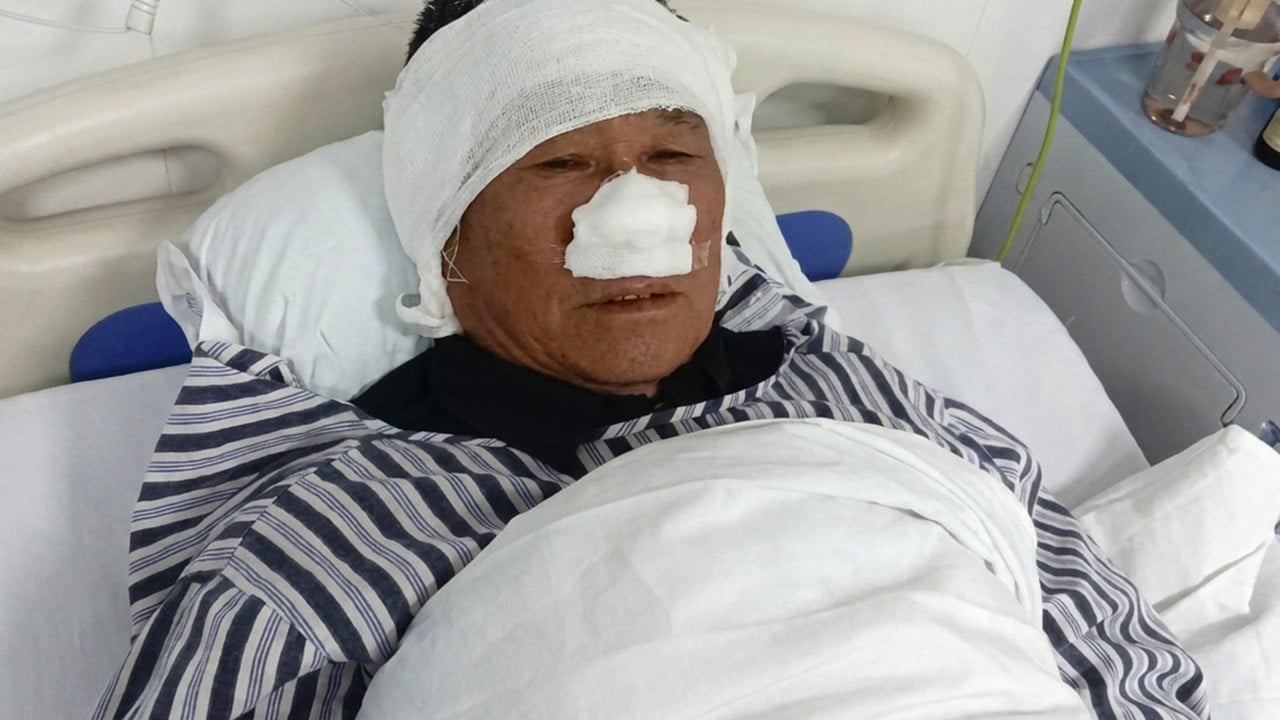
- The Grip-Injury Trade-Off: During the confrontation, the assailant bit off and swallowed a significant portion of Zeng’s nose. To prevent the assailant from resuming his lethal stranglehold on the primary victim, Zeng chose to maintain his physical hold despite experiencing catastrophic tissue damage. This illustrates a severe tactical trade-off: maintaining a secure hold on a violent subject requires exposing one's own face and neck to targeted counter-attacks.
- Adrenaline-Induced Analgesia: Zeng reported feeling no immediate pain during the struggle, only realizing the extent of the trauma when alerted by other villagers. Under extreme stress, the endocrine system floods the body with catecholamines (adrenaline and noradrenaline). This temporary analgesic block allows a rescuer to continue fighting, but it also masks severe injuries, potentially delaying life-saving self-preservation decisions.
The Surgical Mechanics of Total Nasal Reconstruction
The physical toll of this intervention highlights a complex area of plastic and reconstructive surgery: subtotal nasal reconstruction following severe human bite trauma.
Human bites carry a high risk of polymicrobial infection, introducing aggressive oral pathogens like Eikenella corrodens, Staphylococcus aureus, and various anaerobes deep into exposed tissue. Because the assailant swallowed the amputated tissue, direct revascularization via microsurgical replantation was impossible.
This required a complex, multi-stage reconstructive strategy to rebuild three critical layers: the internal lining, the structural support, and the external skin cover.
Stage 1: Wound Debridement & Infection Control
   │
   ▼
Stage 2: Structural Framework Assembly (Rib/Ear Cartilage Grafts)
   │
   ▼
Stage 3: Soft Tissue Coverage (Paramedian Forehead Flap / Scalp Graft)
   │
   ▼
Stage 4: Flap Division, Sculpting, and Revascularization
Reconstruction begins with thorough debridement and targeted antibiotic therapy. Once the wound bed is stable, surgeons must reconstruct the nasal structural framework, typically using cartilage harvested from the patient's ribs or ears. Without this rigid support, the airway would collapse during inhalation.
For external coverage, surgeons often use a paramedian forehead flap or a skin graft harvested from the scalp. This procedure involves rotating a vascularized flap of skin down to cover the new nasal structure while keeping it attached to its primary blood supply (the supratrochlear artery) at the brow line.
After several weeks, once the graft has established a local blood supply, the tissue bridge is divided and sculpted to match the natural contours of the face. Zeng’s recovery timeline is estimated at six months, a period marked by persistent neuropathic pain, scar tissue contraction, and the psychological burden of facial disfigurement.
The Economics of Civic Courage: Institutional Incentives
Society cannot rely solely on spontaneous altruism to maintain public safety. To encourage intervention in high-risk situations, governance structures must actively lower the personal costs and liabilities associated with doing so.
In China, this is managed through a formal legal and financial framework designed to protect and reward acts of civic courage, known as yi yong wei yi (acting courageously for a just cause).
                     [ Public Assault in Progress ]
                                    │
                                    ▼
                      [ Bystander Risk Assessment ]
                     /                             \
     (High Physical/Financial Risk)           (Institutional Mitigation)
                    │                                      │
                    ▼                                      ▼
           [ Passive Paralysis ]                  [ Active Intervention ]
                                                           │
                                                           ▼
                                                [ State-Backed Protections ]
                                                - Medical Cost Indemnification
                                                - Civil/Criminal Immunity
                                                - Direct Financial Awards
This structural framework uses three main tools to mitigate the risks faced by civilian rescuers:
1. Medical and Financial Indemnification
The primary deterrent to bystander intervention is the fear of long-term financial ruin from medical bills or lost wages. In this case, Zeng's reconstructive surgeries cost over 70,000 yuan (approximately $10,000 USD), a sum that would heavily burden a retired rural resident.
The state mitigated this by covering all medical expenses through government support and providing an additional 20,000 yuan award from a private-public partnership with the Alibaba Foundation. Securing these funds ensures that citizens do not face financial hardship for protecting others.
2. Legal Liability Protections
Historically, potential rescuers feared being held civilly liable if their intervention inadvertently caused harm or if the assailant sued them for injuries sustained while being subdued. China's Civil Code addresses this through "Good Samaritan" provisions that shield rescuers from civil liability when attempting to prevent harm to others.
3. Formal Social Status Recognition
In July 2026, the Central Political and Legal Affairs Commission officially added Zeng to its national registry of heroes. This formal designation is more than just symbolic; it elevates the social status of the individual and their family, reinforcing altruistic behavior across the community.
Structuring the Ideal Intervention Strategy
While Zeng’s actions successfully saved a life, relying on physical confrontation carries a high risk of severe injury or death. For civilian bystanders, intervention should follow a structured progression to maximize victim safety while minimizing personal risk.
First, establish physical distance and call for emergency services. This creates an official record and alerts law enforcement.
Second, attempt to defuse the situation using verbal commands or distractions. Loud, authoritative interventions can draw more witnesses, increasing the psychological pressure on the attacker and breaking the bystander effect.
Third, if physical intervention becomes necessary, avoid one-on-one struggles whenever possible. Bystanders should coordinate to overwhelm the attacker using numerical superiority or improvised tools to maintain distance, such as poles or barriers.
The goal of civilian intervention is to disrupt the attack and hold the suspect until law enforcement arrives, while keeping the physical risk to the rescuers as low as possible.