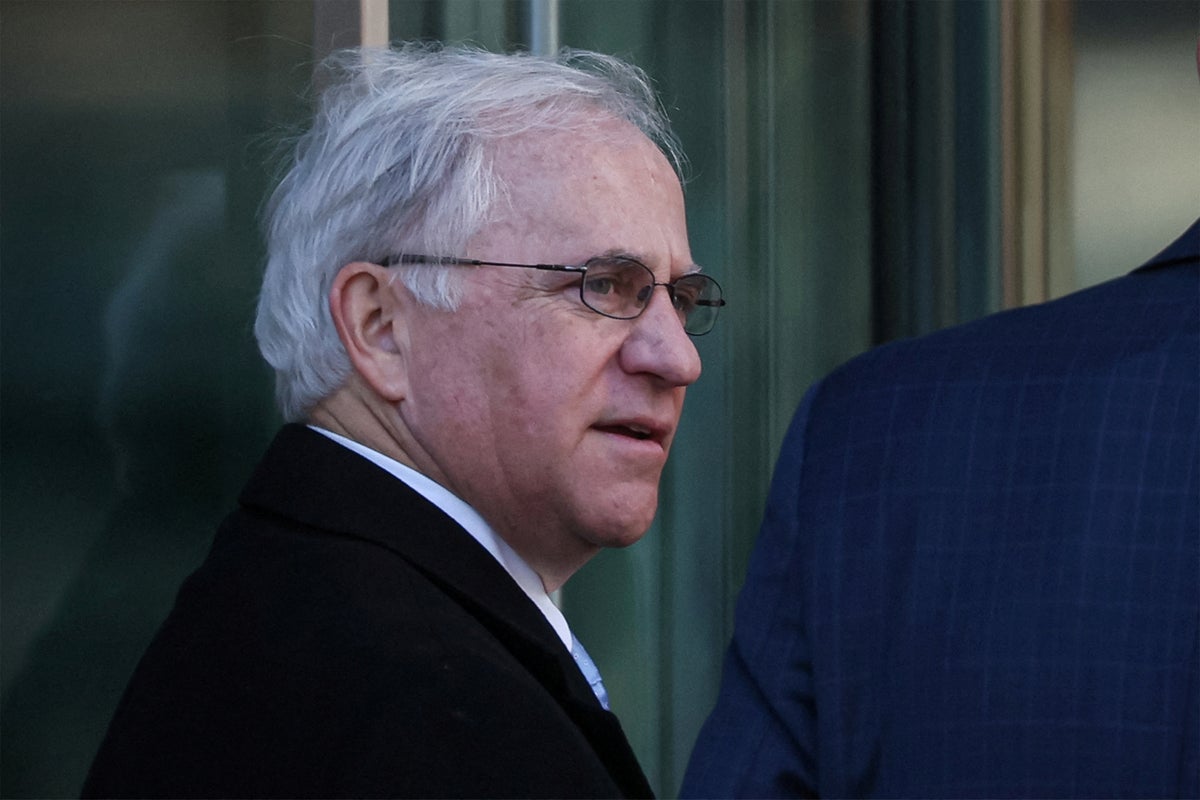
The corporate media has its playbook, and it rarely deviates from it. Donald Trump issues a full, unconditional presidential pardon to former Indiana Representative Stephen Buyer, and the predictable headlines write themselves. They scream about "insider trading," "political favors," and "broken accountability systems."
They are missing the actual structural story.
By treating the Buyer pardon as another chapter in a hyper-partisan reality show, mainstream commentators ignore how the federal government weaponizes nebulous, judge-made rules to criminalize routine corporate consulting. The outrage machine wants you to believe this is about a corrupt politician getting away with a financial heist. In reality, the case against Buyer exposes a far more dangerous trend: the expansion of the "misappropriation theory" into a dragnet that can turn any industry insider into a federal felon.
I have spent decades watching federal prosecutors build high-profile white-collar cases out of thin air to secure career-making headlines. If you look past the partisan smoke, the reality of the Stephen Buyer case reveals that our insider trading laws are structurally broken, hopelessly vague, and desperately need the exact kind of executive course correction that the Constitution explicitly provides.
The Myth of the Clear-Cut Financial Crime
To understand why the mainstream consensus is wrong, you have to look at what Buyer actually did—and what the law actually says.
The media loves to present insider trading as a black-and-white offense, akin to bank robbery. You take information you shouldn't have, you buy stock, and you make a profit. But unlike bank robbery, there is no comprehensive federal statute that explicitly defines "insider trading." Instead, prosecutors rely on Section 10(b) of the Securities Exchange Act of 1934 and SEC Rule 10b-5—broad anti-fraud provisions designed nearly a century ago, long before the modern consulting economy existed.
Buyer, working as a private consultant and lobbyist years after leaving Congress, purchased shares of Sprint ahead of its merger with T-Mobile, and Navigant ahead of its acquisition by Guidehouse. The prosecution argued he violated a duty of confidentiality to his clients.
But let's be entirely precise about how the law operates here. Under the Supreme Court's ruling in United States v. O'Hagan, the government relies on the "misappropriation theory." This theory dictates that a person commits securities fraud when they misappropriate confidential information for securities trading purposes, in breach of a duty owed to the source of the information.
Here is the problem: what constitutes a "duty of trust and confidence" in modern business consultancy is notoriously gray. Consultants are paid specifically for their perspective, market synthesis, and ability to connect disparate dots. The line between a brilliant market thesis and "misappropriation" is often entirely dependent on how aggressively a federal prosecutor wants to interpret a standard non-disclosure agreement.
Lawfare and the Execution of Selective Prosecution
We must address the argument put forward by Buyer’s congressional allies, who claimed he was a victim of "lawfare" and targeted by the institutional "deep state" due to his historical role as a prosecutor in Bill Clinton’s 1998 impeachment trial.
While that narrative makes for compelling political theater, the systemic reality is more corporate than conspiratorial. It isn't necessarily about ancient political grudges; it is about institutional incentives within the Department of Justice.
The Southern District of New York (SDNY) has long operated as an independent fiefdom where ambitious prosecutors hunt for high-profile scalps to punch their tickets to lucrative defense partnerships. I have seen corporate executives and consultants run through this meat grinder for transactions that would not even warrant an internal HR review in other jurisdictions.
Consider the sheer mechanics of Buyer's trial. The government pushed the boundaries of venue mechanics just to keep the case in Manhattan, arguing that because the New York Stock Exchange is based there, they had jurisdiction—even though the physical servers executing the trades were located in New Jersey and Buyer was operating out of Indiana.
When the state has to rely on jurisdictional gymnastics and complex digital forensics to tie a defendant to a specific geographic court, the prosecution is no longer simply enforcing the law. They are manufacturing a high-profile win.
The Hypocrisy of the Trading Disparity
The loudest critics of Trump’s pardon are completely silent on the structural double standard that defines Washington D.C.
The Stop Trading on Congressional Knowledge (STOCK) Act of 2012 was supposed to clean up Capitol Hill. It failed spectacularly. Sitting members of Congress routinely out-trade the market, perfectly timing entries and exits into defense, technology, and energy stocks just days before major legislative announcements or committee votes.
Imagine a scenario where a sitting committee chair oversees an industry, shapes the regulatory environment that governs it, and watches their spouse actively trade options on those exact companies. This happens continuously on both sides of the aisle, and it rarely results in a criminal indictment.
Yet, Stephen Buyer—a man who had been out of office for seven years, operating as a private citizen selling his strategic advice—gets hit with a 22-month prison sentence for a trade that netted roughly $350,000.
In the grand scheme of institutional finance, $350,000 is rounding error territory. The enforcement mechanisms are structurally inverted: the individuals with actual legislative power to move entire markets face minimal scrutiny, while private consultants are turned into cautionary tales to maintain the illusion that the SEC is policing the system fairly.
The Strategic Purpose of the Executive Pardon
The standard institutional critique of the presidential pardon is that it undermines the rule of law. This view fundamentally misunderstands why the Framers included Article II, Section 2 in the Constitution.
The pardon power was never intended to be a polite rubber stamp reserved exclusively for uncontroversial, historic cases after all appeals have been exhausted. Alexander Hamilton wrote in Federalist No. 74 that the pardon power was established because "humanity and good policy conspire to dictate, that the benign prerogative of pardoning should be as little as possible fettered or embarrassed." It was explicitly designed as a safety valve against judicial overreach, harsh sentencing, and politically infected prosecutions.
Buyer served his time. He completed his 22-month sentence and was released in 2025. He paid his fines and forfeited the contested gains. The pardon does not erase the historical reality of his conviction, nor does it hand him back his money.
What the pardon actually does is deliver a direct institutional rebuke to the weaponization of the federal judiciary. By citing Buyer’s decades of productive public service, including his tenure as a judge advocate general in the Army, the executive branch re-established a concept that modern federal prosecutors have completely abandoned: proportionality.
The Flaw in the Anti-Pardon Consensus
The obvious counterargument to this perspective is that granting clemency to well-connected political figures creates a two-tiered justice system. It is a fair point. The average citizen caught up in a federal investigation rarely has forty members of Congress signing letters to the White House on their behalf.
But the solution to a flawed, overly aggressive federal justice system is not to demand that it punish everyone with equal severity. The solution is to challenge the legal framework that allows these overreached prosecutions to happen in the first place.
If the business community continues to applaud every time the SEC or the SDNY stretches centuries-old fraud statutes to cover modern advisory roles, we will reach a point where no corporate conversation is safe from retroactive criminalization.
Stephen Buyer’s conviction was not the triumph of justice the media claims it was. It was a demonstration of how easily the state can transform a contract dispute over client confidentiality into a federal prison sentence. Donald Trump didn't break the system by issuing this pardon; he simply called out a system that was already broken.