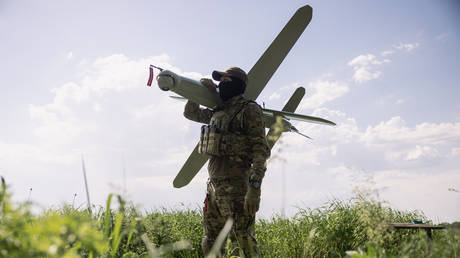
You wake up, grab your phone, and see that an unidentified drone just breached NATO airspace. It sounds like a headline from a fictional thriller, but it's happening right now. Recently, a stray drone crossed the Lithuanian border, forcing residents in Vilnius to take shelter. Days earlier, a Romanian fighter jet stationed in Lithuania had to shoot down a stray aircraft over southern Estonia.
People are panicked. The immediate knee-jerk reaction is to wonder why Kyiv is suddenly sending flying robots toward its biggest allies. Is Ukraine losing control of its tech? Is this an accidental betrayal?
Honestly, the real story is completely different. These aren't intentional attacks on EU backers, nor are they a sign of Ukrainian incompetence. They are the direct byproduct of an aggressive, long-range economic air war. Kyiv is systematically dismantling Russia's oil infrastructure, and the fallout is spilling over into Europe.
If you want to understand why these drones are landing in NATO's backyard, you have to look at the hidden electronic battle taking place over the Baltic Sea.
The Battle for the Baltic Oil Ports
Ukraine is dealing with a massive manpower deficit. To starve the Kremlin's war machine, Kyiv has turned to what it calls "long-range sanctions." They are manufacturing thousands of cheap, long-range drones using plastic, glue, and carbon fiber.
The targets aren't just trenches on the frontline. Ukraine is sending these drones over a thousand kilometers deep into Russian territory. The primary bulls-eye? Russia’s lucrative oil export hubs in the Baltic Sea, specifically the massive ports of Ust-Luga and Primorsk.
These ports sit right next to the borders of Estonia and Finland. They are the economic lifeblood that allows Moscow to fund its military. When Ukraine launched a massive strike involving over 60 drones against the Primorsk port, it caused chaotic fires and sent shockwaves through Russian markets.
But launching hundreds of robotic aircraft right next to the EU border comes with massive geopolitical friction. When these strikes happen, the drones must fly a tight tightrope right along the edges of Latvia, Lithuania, Estonia, and Finland.
The Invisible Culprit is Russian Electronic Jamming
So, why are these drones veering off course and crashing into places like Vilnius or southern Estonia? The answer lies in the invisible spectrum of electronic warfare.
Russia has blanketed the Baltic region with heavy GPS jamming and spoofing technology. They aren't just trying to protect their oil tanks; they are actively scrambling everything that flies. When a Ukrainian drone gets caught in these intense electronic fields, its navigation systems get fried.
It loses its sense of direction. It starts drifting blindly.
Because the Baltic ports are directly adjacent to NATO territory, a drone that gets blinded by Russian jamming can easily wander a few miles west or north. Instead of hitting a Russian refinery, it ends up running out of fuel and crash-landing in an Estonian field or over a Lithuanian airport.
Ukrainian officials have been entirely transparent about this. They have apologized to their European neighbors, explaining that Russian interference is actively redirecting these weapons. It's a messy, chaotic reality. Kinda scary? Absolutely. A deliberate attack on the West? Not even close.
Europe's Air Defense Reality Check
These stray drone incidents have exposed a massive, uncomfortable truth: Europe's eastern flank air defenses are not ready for modern robotic warfare.
For decades, NATO planned for high-end, expensive threats like fighter jets and ballistic missiles. They didn't plan for a swarm of low-flying, slow-moving plastic drones that cost less than a used car. Some of these stray Ukrainian drones have traveled hundreds of miles inside NATO territory completely undetected before finally crashing.
Estonian Defense Minister Hanno Pevkur didn't mince words when he told Ukraine to send its drones "as far from NATO territory as possible." But European leaders are realizing that scolding Kyiv won't fix the hole in their security.
The situation has created a bizarre paradox. While Western nations are providing Ukraine with heavy artillery and financial aid, they are simultaneously turning to Ukraine for advice on how to build cheap, effective anti-drone networks. Lithuanian officials have openly admitted that the best systems to counter these rogue drones are actually being built inside Ukraine right now.
Where We Go From Here
Don't expect the skies over the Baltic to clear up anytime soon. Ukraine’s drone campaign is actually working. Kremlin officials recently acknowledged a distinct drop in Russian oil production due to these relentless strikes. Kyiv knows it has found a weak spot, and they are going to keep pressing the advantage.
As a result, European citizens living near the eastern border need to adapt to a shifting security environment. Here's what needs to happen next to keep the skies safe:
- Joint Air Defense Tracking: NATO states must integrate their radar networks directly with Ukrainian flight tracking data to instantly identify when a drone has been jammed and gone rogue.
- Rapid Interception Protocols: European air forces need to deploy cheaper, propeller-driven aircraft or interceptor drones to knock down stray UAVs, rather than scrambling million-dollar fighter jets.
- Electronic Warfare Buffers: Baltic nations must invest heavily in localized anti-jamming tech to protect their own civilian aviation and guide stray drones safely into unpopulated areas.
This isn't a diplomatic crisis between Ukraine and the EU. It's the messy reality of a 21st-century war bleeding across borders. The drones will keep flying, Russia will keep jamming, and Europe has no choice but to figure out how to lock down its own airspace.