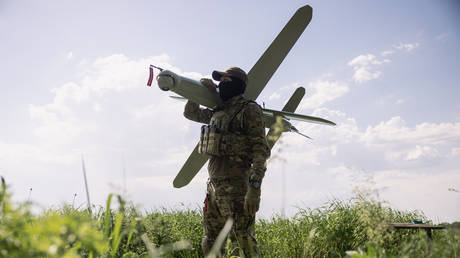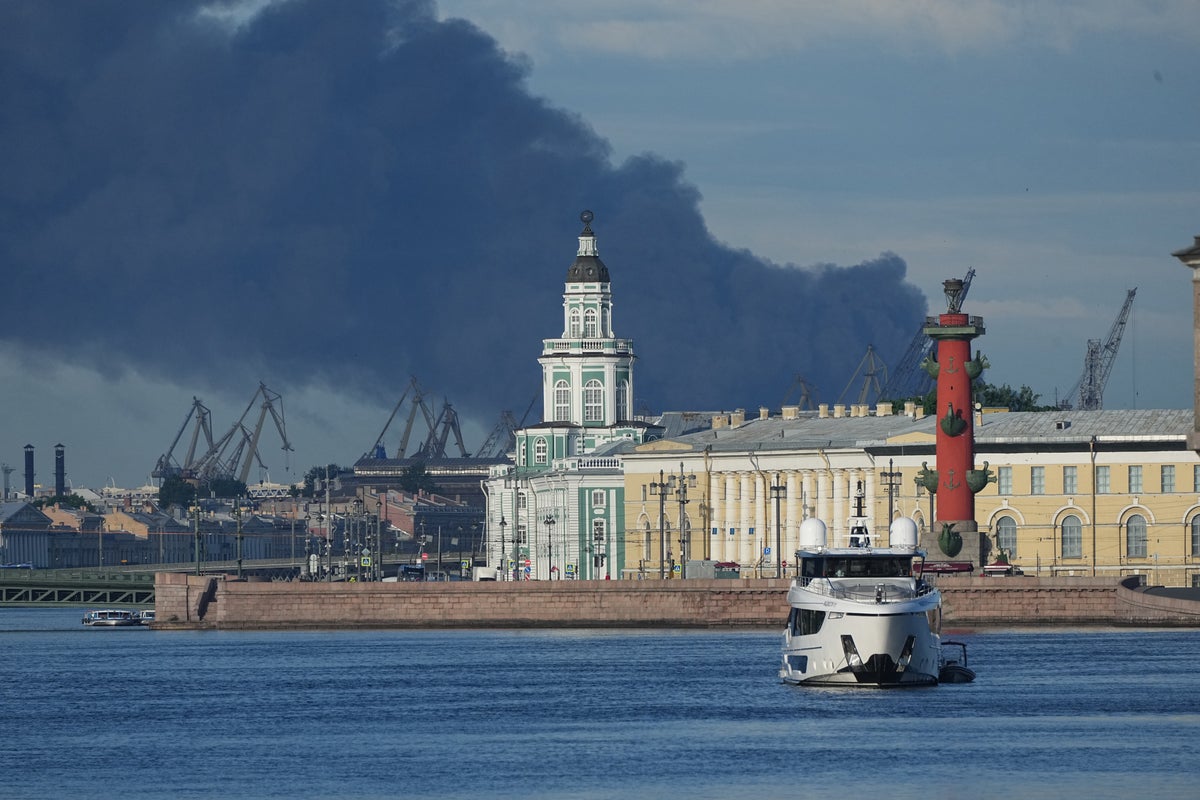
Mainstream media outlets continue to treat long-range drone strikes on Russian infrastructure as a strategic chess move designed to force negotiations. The narrative is comforting: Ukraine strikes deep inside Russian territory, Vladimir Putin feels the heat, Volodymyr Zelensky offers a diplomatic off-ramp, and the Kremlin is supposedly forced to consider the costs of an endless war.
This reading of the situation is fundamentally flawed. It miscalculates the economic reality of modern attrition, misunderstands the domestic political mechanics of the Kremlin, and relies on a outdated theory of escalatory dominance. Striking an oil terminal in St. Petersburg makes for spectacular video footage, but treating these operations as a viable mechanism to compel peace talks is a dangerous strategic illusion.
The Western consensus views these deep-tier strikes through the lens of traditional deterrence. The logic goes that if you increase the cost of war for the aggressor's civilian and economic centers, you reduce their political will to fight. In a closed, hyper-nationalist autocracy, the exact opposite happens. Far from fracturing Putin’s domestic mandate or forcing him to the negotiating table, symbolic strikes on high-profile targets give the Russian state exactly what it needs: a domestic rallying effect and a tangible justification for continued mobilization.
The Flawed Math of Infrastructure Attrition
To understand why these strikes do not yield diplomatic leverage, look at the cold math of industrial warfare. For over two decades, energy logistics and critical infrastructure analysis have shown that modern industrial states possess a remarkable capacity to absorb and reroute logistical shocks.
When a drone hits an oil refinery or a shipping hub in St. Petersburg, the immediate media reaction is to calculate the temporary drop in export capacity or processing volume. What is routinely ignored is the redundancy built into Soviet-era infrastructure and the speed of modern adaptive supply chains. A localized disruption at a Baltic port does not collapse an economy; it merely shifts the logistical burden to alternative rail corridors, pipeline networks, or southern maritime routes.
Furthermore, the economic asymmetry favors the defender in this scenario. The cost of manufacturing and deploying long-range strike drones is low, but the cost of the disruption they cause is lower still when measured against Russia’s total GDP and sovereign wealth reserves. Military strategists like Lawrence Freedman have long pointed out that punishing an adversary's periphery rarely forces a change in core strategic objectives unless followed by overwhelming conventional force projection. A few dozen drones a month hitting targets thousands of miles apart is a tactical nuisance, not an existential threat to state continuity.
Why Dictators Do Not Negotiate Under Pinprick Pressures
The premise that Putin rejected talks because of, or in response to, these specific strikes assumes the Kremlin operates on a standard cost-benefit model familiar to Western democracies. It does not.
In an autocratic regime, political survival is tied to the projection of absolute strength. Agreeing to talks immediately following a strike on a major cultural or economic hub like St. Petersburg would be perceived internally as a sign of weakness. For Putin, the domestic political cost of appearing coerced by external strikes is infinitely higher than the economic cost of fixing a damaged fuel depot.
Western analysts often ask: "How much damage can the Russian economy sustain before public pressure forces a policy shift?" This question reveals a profound ignorance of how modern Russian society is structured. There are no independent institutional mechanisms—no free press, no opposition parties, no independent judiciary—through which public dissatisfaction over localized infrastructure damage can be translated into policy changes at the top. Instead, these strikes are synthesized by state media to validate the regime's core narrative: that Russia is fighting an existential war against an aggressive, encircling adversary.
The Illusion of the Diplomatic Off-Ramp
The conventional narrative insists that Zelensky’s recurring offers for talks represent a genuine diplomatic pathway that Russia is foolishly ignoring. This misses the performative nature of wartime diplomacy.
Public offers for negotiations during active hostilities are rarely aimed at the adversary. They are strategic communications directed at international backers. Ukraine’s diplomatic overtures are designed to maintain the moral high ground, secure continued Western financial and military assistance, and signal stability to Washington and Brussels.
When Russia rejects these offers, it is not a failure of diplomacy; it is an acknowledgement of the actual balance of power on the ground. Peace treaties do not happen because one side successfully launches a drone through a warehouse roof. They happen when one or both sides face imminent conventional military collapse on the front lines. Right now, neither side faces that reality, meaning public talk of negotiations is noise designed to manipulate foreign public opinion.
The Cost of Strategic Misdirection
The real danger of celebrating these deep-tier drone strikes as strategic victories is that it encourages complacency among Ukraine's allies. It fosters the belief that asymmetric warfare can substitute for the massive, grinding requirements of conventional territorial defense.
I have watched defense analysts and policymakers fall in love with cheap, high-tech solutions to brutal, resource-intensive problems. Drones are highly effective tactical tools for reconnaissance, electronic warfare disruption, and localized interdiction. But they cannot hold ground. They cannot replace the sheer volume of artillery ammunition, armored vehicles, and fresh manpower required to break a hardened defensive line in the Donbas.
By focusing on the spectacle of explosions in St. Petersburg, Western commentators avoid the uncomfortable truth: the current strategy of providing just enough aid to prevent a Ukrainian collapse, but not enough to achieve decisive victory, ensures an indefinite war of attrition.
Dismantling the Premise of Escalation Management
A common question dominating foreign policy circles is: "How can Ukraine escalate pressure on Moscow without triggering a wider regional conflict?"
The very premise of this question is broken. You cannot manage escalation in a high-intensity conflict by trying to fine-tune the geographic boundaries of your strikes. The idea that hitting a target in Belgorod is acceptable, but hitting one in St. Petersburg is a strategic game-changer that alters Putin's calculus, is a distinction created in Western policy offices, not on the battlefield.
To the Kremlin, an attack on its sovereign territory is an attack, regardless of the oblast. The reason Russia has not responded with catastrophic escalation against Western nations is not because of careful target selection by Ukraine. It is because Russia is already fully committed militarily and cannot afford a direct confrontation with NATO. The self-imposed restrictions on target selection by Western backers have not prevented escalation; they have merely prolonged the conflict by denying Ukraine the ability to degrade Russian logistical hubs before they can supply the front lines.
Stop looking for shortcuts to end this conflict. Stop assuming that a spectacular explosion in a major Russian city will suddenly cause the regime to fracture or sue for peace. Wars of attrition are won through industrial capacity, logistical endurance, and raw material superiority. Anything else is just a distraction for the cameras.