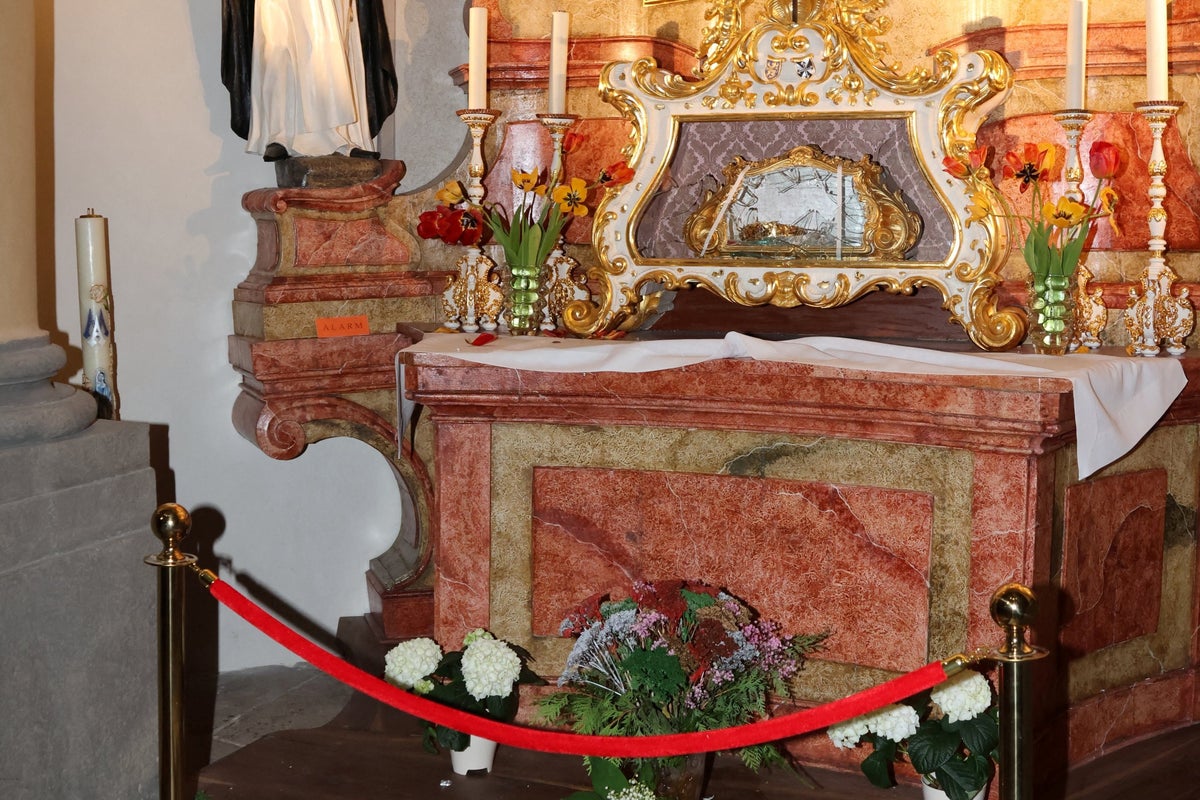
Stop crying over the stolen head of Saint Brigid.
The news cycle is currently obsessed with the "tragic" theft of an 800-year-old skull from a church. The headlines treat it like a heist movie gone wrong. They focus on the grainy CCTV footage, the broken glass, and the moral outrage of a community. But every single one of these stories misses the point. Building on this topic, you can also read: The Hollow Echo of the Division Lobby.
The outrage isn't about the loss of history. It is about the failure of an outdated, sentimental obsession with physical objects that were never meant to be locked behind glass in the first place. If you are shocked that a thief walked off with a medieval bone, you haven't been paying attention to how the world actually works.
The Myth of Permanent Security
Churches are the worst custodians of high-value assets. Observers at BBC News have provided expertise on this situation.
I have spent years looking at security protocols for historical sites. Most of them are a joke. We are talking about institutions that rely on "faith" as a substitute for motion sensors and pressurized glass. When a thief snatches a relic, the media blames the criminal’s lack of a soul. I blame the institution's lack of a budget and a modern brain.
You cannot keep an 800-year-old artifact in a public building with the same security profile as a local library and then act surprised when it vanishes. The "lazy consensus" is that these items are safe because they are holy. Reality check: To a black-market collector, a saint’s skull is just a high-yield, portable investment with zero serial numbers.
Relics Were Meant to Move
Historically, the cult of relics was built on the "translation" of remains. They moved. They were gifted. They were stolen by rival cities to boost local prestige. The idea that a bone should sit in one specific parish for eternity is a modern, static invention that ignores a millennium of ecclesiastical history.
By tethering spiritual value to a physical fragment, we create a perverse incentive for theft. We treat these items like idols while claiming they are just "reminders." If the reminder is so fragile that a guy with a crowbar can delete your heritage in thirty seconds, your heritage was built on sand.
The Economics of the Macabre
Let's talk about the black market for "human remains" (the technical term for what the media calls a "holy relic").
- Portability: A skull weighs roughly five pounds.
- Untraceability: You cannot DNA test a bone against a database to prove it was the one stolen from a specific altar last Tuesday without a pre-existing profile, which most churches don't have.
- Demand: The market for occult items and private curiosities is exploding.
When you leave a "priceless" asset in a soft-target environment, you aren't protecting history. You are subsidizing the underground economy.
Stop Asking "How Could They?" and Ask "Why Do We Care?"
The most annoying part of this narrative is the "People Also Ask" fodder: Is the relic cursed? Will the thief have bad luck? No. The thief will have a bank account balance that looks significantly better once the item reaches a private collection in East Asia or a basement in Brussels.
We need to dismantle the premise that the physical bone is the repository of the saint's "power" or the community's identity. If your faith or your history depends on a piece of calcium, you’ve already lost. The digital age offers us the ability to 3D scan every relic on earth with sub-millimeter precision. We could print perfect replicas that satisfy every aesthetic and liturgical need, while the originals are kept in high-security, climate-controlled vaults.
But we don't do that. Why? Because the church and the public prefer the "drama" of the authentic object. They prefer the risk. They would rather have the real thing stolen than have a "fake" that is actually safe. That is not piety; it is vanity.
The Hard Truth About Recovery
The "return the skull" pleas you see on the evening news are theater.
Statistics for the recovery of stolen art and antiquities are grim. According to data often cited by INTERPOL and art recovery specialists, only a fraction of these items ever resurface. When they do, it’s usually decades later when the thief dies and the heirs don't know how to fence a saint.
The "search for the thief" is a distraction from the real conversation: the total failure of the ecclesiastical community to adapt to a world where "sacred space" means nothing to a man with a professional-grade glass cutter.
The Strategy for the Future (Which Everyone Will Hate)
If we actually cared about these objects, we would do three things immediately:
- Desacralize the Display: Stop putting the actual bone in the window. Use a facsimile. The "vibe" remains the same for the pilgrim, but the risk to the artifact drops to zero.
- Professionalize the Perimeter: If it’s worth a million dollars on the black market, it needs a million dollars' worth of lasers. Anything less is negligence.
- Acknowledge the Obsolescence: Admit that physical relics are a medieval solution to a spiritual need. In a world of 8K video and digital archives, hoarding bones is a weirdly visceral holdover that we only value when it’s gone.
Stop Mourning and Start Auditing
The thief didn't just steal a skull; they exposed a massive hole in how we value our past. We pretend these things are "priceless" but treat them like they are "worthless" right up until the moment the display case is empty.
If you're a priest or a museum curator reading this, go look at your most "sacred" asset. If I can walk in and touch the glass, I can steal it. And if I can steal it, you don't actually value it.
Quit the sentimental hand-wringing. The skull is gone. It’s sitting on a mahogany desk in a room you’ll never see. If you want to protect the next one, stop praying for the thief’s conscience and start paying for an encrypted security mesh.
Pick a side: Do you want a holy relic, or do you want a news story about a crime? Because right now, you’re only building the latter.