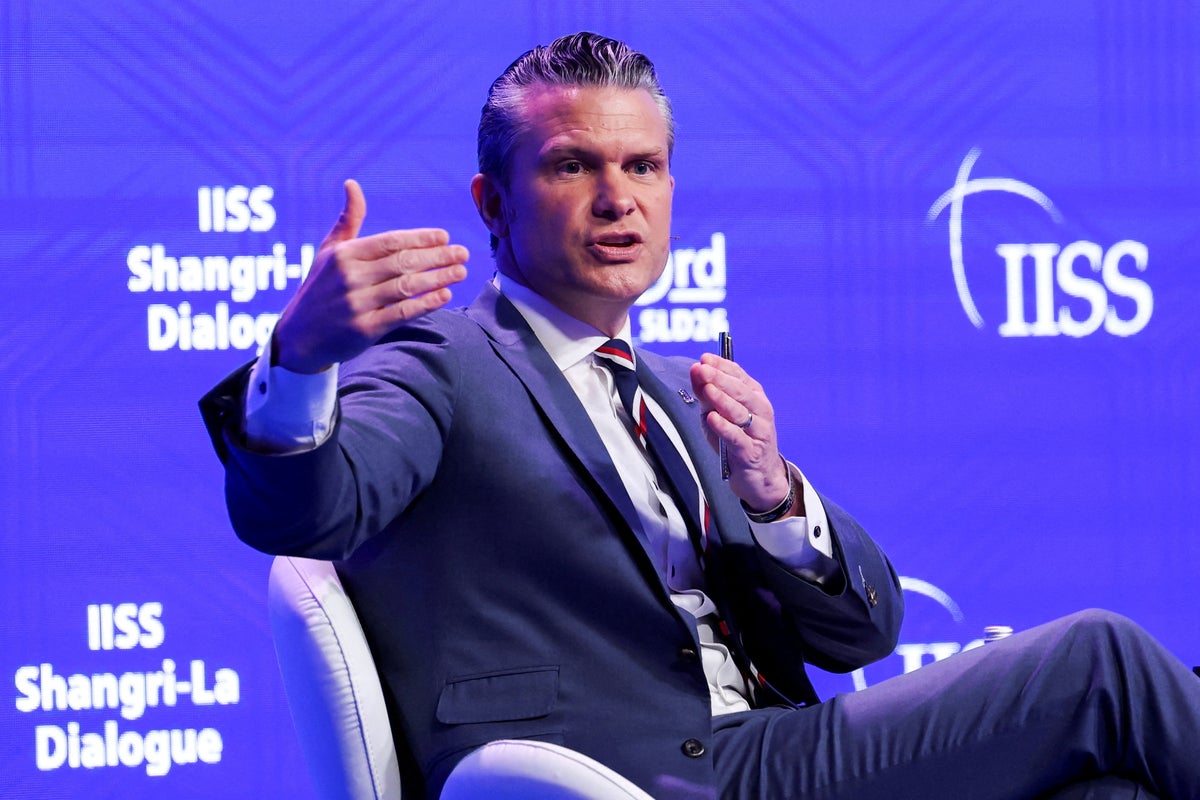
Standing on the manicured grass of the Normandy American Cemetery, looking out over the water where Allied soldiers died to break Nazi Germany, U.S. Defense Secretary Pete Hegseth didn't just talk about history. He turned a sacred anniversary into a sharp political weapon.
During his speech marking the 82nd anniversary of the June 6, 1944 landings, Hegseth drew a straight line from the boats that hit Omaha Beach to the migrant vessels landing on southern European shores today.
It was an intentional, provocative move that left European allies reeling.
The Speech That Shook Normandy
Hegseth didn't actually use the word "immigration" in his address. He didn't have to. The imagery did the heavy lifting.
"Sadly, today, different European beaches are stormed by different dangerous ideologies," Hegseth told the crowd gathered at Colleville-sur-Mer. "Beaches in Spain, in Italy, in Greece, and Bulgaria, boats and men arrive."
Then came the hammer blow.
"When will European capitals do something about that invasion, or is it too late?"
Linking the liberation of Western Europe to modern migration patterns isn't just a casual rhetorical flourish. It's a fundamental shift in how Washington talks to its closest allies. By framing sea arrivals as an "invasion" equivalent to wartime threats, Hegseth signaled that the Trump administration views European border policy as a direct threat to Western security.
A Coordinated Transatlantic Full-Court Press
If you think Hegseth went rogue, you're missing the bigger picture. This speech is part of a calculated strategy coming straight out of the White House.
The administration has spent months hammering European governments for what it describes as lax border enforcement, weak defense spending, and the suppression of nationalist political voices.
Look at what happened just a day before Hegseth took the podium. Vice President JD Vance sparked a massive diplomatic row with London. Vance openly blamed mass migration for the tragic stabbing death of an 18-year-old British student, Henry Nowak, in Southampton. British Prime Minister Keir Starmer’s office fired back, accusing the American Vice President of interfering in British democracy and trying to stir up division on UK streets, especially since both the victim and the suspect were British citizens.
The White House isn't backing down from these fights. They're leaning in.
The foundational text for this worldview can be found in the administration’s national security strategy document released in late 2025. That document used remarkably bleak language, warning that Europe faces the prospect of "civilizational erasure" and could become entirely unrecognizable within two decades. It even explicitly claimed that several NATO allies are on track to become majority non-European.
What This Means for NATO and the Post-War Order
For decades, D-Day commemorations were predictable affairs. American and European leaders would stand shoulder-to-shoulder, praise the transatlantic alliance, and talk about shared democratic values.
Those days are over.
Hegseth used the memory of shared sacrifice to demand compliance. He reminded the audience that during World War II, "Each nation pulled its weight. Each nation bled." He then issued a blunt warning about the future of American military support. "America will lead, and we must, but capable allies must be right there with us, shoulder to shoulder in the breach when it matters."
The subtext isn't subtle. If Europe wants the U.S. nuclear umbrella and military protection, it needs to start spending more on its own militaries and lock down its borders.
Naturally, this is causing a massive reassessment in places like Paris, Berlin, and Brussels. European diplomats are realizing they can no longer treat American security guarantees as a given. The rhetoric coming out of Washington is forcing European capitals to think seriously about defense autonomy and diversifying away from American military technology.
The Growing Diplomatic Divide
The strategy is incredibly polarizing, and it highlights a massive gap in how the two sides of the Atlantic view security.
- The Washington view: Mass migration is a demographic and cultural crisis that weakens state sovereignty, strains social safety nets, and dilutes the core identity of the West. From this perspective, a weak Europe cannot be a reliable military partner for the United States.
- The European view: Treating asylum seekers and economic migrants as an invading army undermines international humanitarian law. Many European leaders argue that the administration is using their internal political challenges to justify a retreat from traditional alliance commitments.
By choosing Normandy to make this point, Hegseth ensured that nobody could ignore the message.
If you want to understand where the U.S.-Europe relationship goes from here, stop looking at old treaties. Listen to the rhetoric. The administration views the defense of the West not just as a matter of weapons systems and troop deployments, but as a battle for borders and ideology. European leaders who expect a return to the old status quo are waking up to a completely different reality.
To see the delivery of these remarks and the visual context of the cemetery where they occurred, you can watch the Hegseth D-Day speech report, which captures the setting of the address and outlines the immediate international reactions to his words.