The room smells of old peppermint and dust. It is a standard therapist’s office, the kind with a beige sofa that has seen ten thousand hours of quiet desperation and a synthetic rug that hides the scuffs of nervous shoes. For a teenager sitting in that chair, the world feels very small. They aren't there for a broken arm or a flu shot. They are there because someone—a parent, a pastor, a mentor—believes their internal compass is pointing the wrong way.
This is the staging ground for what we call conversion therapy. It sounds clinical. It sounds like a renovation. But for those who have sat in that beige chair, it often feels more like an interrogation of the soul.
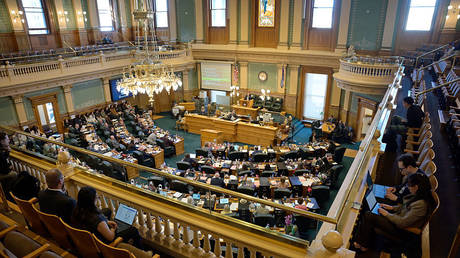
Washington state recently looked at that room and decided to bolt the door shut from the outside. Despite a shifting legal atmosphere at the highest levels of the American judiciary, state lawmakers chose to double down on their protections for LGBTQ+ minors. They didn’t just keep a ban in place; they fortified it. They did so with the understanding that when a child’s identity is treated as a defect, the damage isn't just emotional. It’s structural.
The Weight of the Gavel
Last year, the legal world watched as the Supreme Court weighed in on cases involving free speech and religious expression. The air grew thick with tension. Many observers expected a domino effect—that if a web designer could refuse service for a same-sex wedding, then surely a counselor could argue that their "sincerely held beliefs" allowed them to try and "fix" a child’s orientation.
The argument for the practitioners is often framed as a matter of professional liberty. They claim that the state is reaching into the private sanctity of the consulting room, gagging the provider and dictating what words can be exchanged between a mentor and a seeker. They see it as a First Amendment battleground.
But Washington’s legislative body saw a different picture. They saw a child who doesn't have the power to walk out of the room.
The state’s new measures aren't just a slap on the wrist. They are a declaration. By strengthening the definition of "professional misconduct," the state has ensured that any licensed healthcare provider attempting to change a minor’s sexual orientation or gender identity risks losing their livelihood. They chose the safety of the vulnerable over the "speech rights" of the provider.
The Invisible Scars
Consider a hypothetical boy named Leo. Leo is fourteen. He likes theater, he’s terrified of algebra, and he has realized he is attracted to other boys. His parents, driven by a fear they call love, take him to a licensed counselor who promises to "realign" his desires.
The counselor doesn't use physical pain. There are no electrodes or cold baths. Instead, there is the slow, steady drip of shame.
"Why do you think you want to hurt your mother like this?"
"Let’s look at your relationship with your father. There must be a gap there."
"This is just a phase of brokenness."
Weeks turn into months. Leo learns to perform the "correct" version of himself. He learns to lie so well that he eventually forgets where the lie ends and his heartbeat begins. On the outside, he looks "cured." On the inside, he is a hollowed-out building, waiting for a light that he’s been told is a fire he must extinguish.
The statistics back up Leo’s hypothetical trauma. Major medical associations—the American Psychological Association, the American Academy of Pediatrics—all point to the same grim reality. Minors subjected to these practices face significantly higher rates of depression, substance abuse, and suicide. It isn't a "therapy" in any sense that a doctor would recognize. It is a rejection of the self, sanctioned by an authority figure.
The Legal Tightrope
Washington’s move is a gamble in a high-stakes game of constitutional chess. The Ninth Circuit Court of Appeals has previously upheld these bans, arguing that the state has a legitimate interest in protecting its citizens from harmful medical practices. The logic is simple: you can’t use "free speech" as a license to practice medicine that kills the patient.
However, the shadow of the Supreme Court looms large. Critics of the ban are already sharpening their arguments, waiting for the right case to climb the ladder of the judiciary. They argue that the state is overstepping, creating a "thought-police" environment where only one viewpoint on human sexuality is permitted.
Yet, the state’s response is grounded in the physical reality of the body. If a surgeon wanted to perform a procedure that had a 50% chance of causing the patient to self-harm, the state would intervene. If a pharmacist gave out a pill that offered no benefit but caused massive internal trauma, the state would pull their license. Why should the tongue of a therapist be any different when the results are just as lethal?
Beyond the Beige Sofa
The debate often gets lost in the weeds of legal jargon and political posturing. We talk about "statutory language" and "jurisdictional precedents." We argue about the "neutrality of the law."
But the real story is happening in the silence after the office door clicks shut.
It is happening in the homes where parents are being sold a promise that isn't just false—it’s dangerous. It is happening in the minds of young people who are being told that their very existence is a problem to be solved.
Washington’s law is an attempt to change the narrative before the damage is done. It recognizes that "choice" is a complicated word when you are a minor. A child doesn't "choose" to go to conversion therapy. They are brought there. They don't "choose" to change; they "choose" to survive the pressure.
By toughening the ban, the state is effectively saying that some things are not up for debate. The fundamental dignity of a child is not a "viewpoint." The psychological integrity of a teenager is not a "market of ideas."
The Cost of Silence
There are those who worry that by banning these practices, we are driving them underground. They fear that instead of licensed professionals, these "treatments" will move into unlicensed church basements or private homes where the state has no eyes.
That is a valid fear. The law is a blunt instrument. It can stop a doctor from billing insurance for "reorientation," but it has a harder time stopping a whisper in a private hallway.
But laws also serve as a moral compass for a society. They set the boundaries of what we, as a collective, deem acceptable. By making this ban "robust" and difficult to challenge, Washington is signaling to every Leo in the state: You are not broken. The system that tried to change you is.
The battle lines are drawn. On one side, a push for total expressive liberty, even when that expression is a scalpel. On the other, a fierce defense of the vulnerable, rooted in the belief that the state’s primary job is to ensure its children make it to adulthood with their spirits intact.
The room with the beige sofa is still there. The smell of peppermint and dust remains. But in one corner of the country, the person sitting in the chair now has a powerful, invisible ally standing between them and the person trying to talk them out of their own skin.
A law won't stop every heart from breaking, but it can certainly stop the state from handed out the hammer.
The gavel has fallen. The choice is made. Now, we wait to see if the rest of the country has the courage to look into that room and see the human being instead of the argument.
Somewhere, a teenager is walking into an office, sitting down, and for the first time in a long time, the person across from them is legally required to see them exactly as they are. That is not just a policy shift. It is a lifeline.