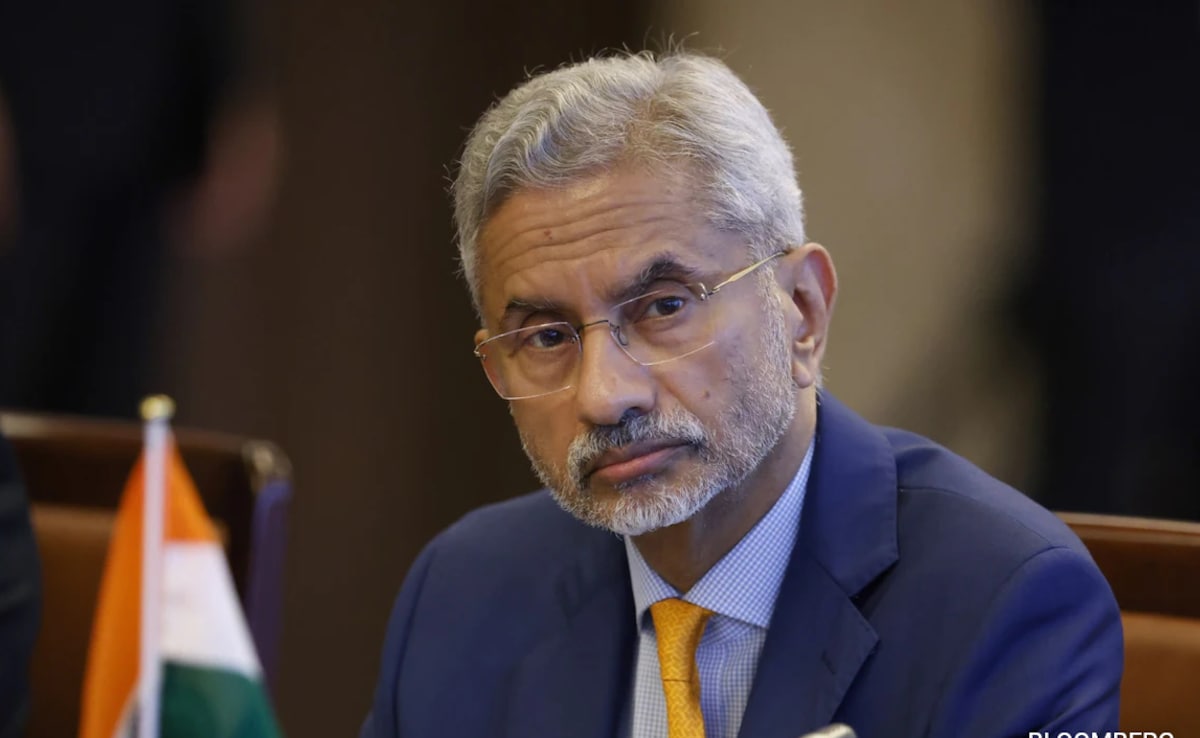
Geopolitics is often treated like a high-stakes soap opera where every flight taken by a Foreign Minister is a "pivotal" attempt to stop a war. The mainstream media is currently obsessed with External Affairs Minister S. Jaishankar’s trip to the UAE, framing it through the lens of the escalating conflict involving Iran. They want you to believe India is playing the role of the global firefighter, rushing to Abu Dhabi to douse the flames of a regional conflagration.
They are wrong.
This isn’t about peace. It isn't even about the war in the way you think it is. To view this visit as a diplomatic rescue mission is to fundamentally misunderstand how New Delhi operates in 2026. India has stopped being the "moral arbiter" of the Non-Aligned Movement. Today, India is a cold-blooded transactional power. Jaishankar isn't going to the UAE to talk about Iran’s missiles; he’s going there to secure the plumbing of the global economy before the pipes burst.
The Myth of the Indian Mediator
The lazy consensus suggests that because India maintains ties with both Tehran and the Abraham Accords signatories, it is uniquely positioned to mediate. This is a fairy tale. I have watched diplomatic circles chase this "honest broker" ghost for a decade, and it almost always ends in a press release that says nothing and achieves less.
Mediation requires a willingness to burn political capital. India has no interest in burning capital to settle a thousand-year-old sectarian and geopolitical grudge between West Asian powers. When Jaishankar touches down in the UAE, the conversation isn't "How do we stop Iran?" It’s "How do we ensure our trade corridors don't become collateral damage?"
If you want to understand the true intent, look at the India-Middle East-Europe Economic Corridor (IMEC). The war isn't the primary subject; it’s the annoying noise disrupting the signal. India’s priority is infrastructure, energy security, and the protection of the eight million-plus Indian nationals who keep the Gulf’s economy breathing.
The Energy Trap: It’s Not About Price, It’s About Flow
Every "expert" on your television is screaming about oil prices. They claim Jaishankar is there to beg for price stability. This ignores the reality of modern energy markets. The UAE doesn't set the price of Brent crude in a vacuum, and India knows that.
The real anxiety is logistics.
If the Strait of Hormuz or the Red Sea becomes a permanent "no-go" zone, the physical delivery of energy matters more than the paper price. India is shifting its strategy from "buying cheap" to "securing the route." The UAE is the essential node in this. This visit is about hardening the logistical arteries that connect the UAE’s ports to India’s west coast.
We are seeing a shift from globalism to "regionalism with teeth." India is essentially telling the UAE: "We don't care who you fight, as long as the tankers keep moving to Mundra and Jamnagar."
Why the "Iran Factor" is a Distraction
The press is hyper-fixated on Iran because it makes for a dramatic headline. "Jaishankar visits UAE amid Iran war" sounds like a thriller. In reality, India’s relationship with Iran is a compartmentalized, pragmatic necessity centered on the Chabahar Port.
India’s brilliance—and its ruthlessness—lies in its ability to ignore the "total war" narrative. While the West demands you pick a side, India picks a ledger. In Abu Dhabi, Jaishankar will likely treat the Iran situation as a risk-management exercise, not a moral crisis.
- Logic Check: If India were truly worried about "choosing" a side, they wouldn't have just signed a 10-year contract for Chabahar.
- The Reality: New Delhi is building a world where it can trade with the UAE, bypass Iran’s enemies, and still use Iranian soil to reach Central Asia.
It’s messy. It’s inconsistent. And it works.
The UAE is India’s New Strategic Backyard
Stop looking at the UAE as just a gas station. Under the Comprehensive Economic Partnership Agreement (CEPA), the UAE has become India’s launchpad for global capital.
I’ve seen analysts miss the forest for the trees here. The UAE isn't just a destination for Indian labor anymore; it’s a massive investor in Indian food parks, renewable energy, and highways. When the region is at war, these investments are at risk. Jaishankar’s presence is a "sovereign handshake"—a signal to the Emirati sovereign wealth funds that despite the chaos, the India-UAE axis is a "too big to fail" enterprise.
The Brutal Truth About De-dollarization
Here is the part the "consensus" won't touch: This trip is a massive step in the slow-motion assassination of the US Dollar’s dominance in energy trade.
India and the UAE have already begun settling trade in Rupees and Dirhams. In a wartime environment, the volatility of the Dollar and the risk of Western sanctions make local currency settlement an existential necessity, not a fringe experiment. Jaishankar is there to stress-test these financial bypasses. If the Middle East goes up in flames, India wants to ensure it can still buy oil without needing a greenback permission slip from Washington.
Actionable Reality for the C-Suite
If you are a business leader or an investor watching this, stop reading the "peace and stability" headlines. Start looking at the following:
- Supply Chain Redundancy: If Jaishankar is prioritizing the UAE, you should be prioritizing UAE-based logistics hubs as a hedge against European disruptions.
- Currency Hedging: The move toward INR-AED settlement is accelerating. If you are doing business in the corridor, the "standard" USD contract is becoming a liability.
- Labor Stability: Watch for updates on the protection of the Indian diaspora. If New Delhi starts announcing new "welfare frameworks" during this trip, it means they expect the kinetic conflict to last a long time.
The Premise is Flawed
People keep asking: "Can India stop the war?"
That is the wrong question. The right question is: "How much of the war can India ignore while still growing at 7%?"
Jaishankar isn't a peacemaker. He is a master of "Strategic Autonomy," which is a polite way of saying India will do whatever it takes to protect its own interests, regardless of who is bombing whom. This visit is a clinical, unsentimental assessment of how to keep the Indian economic engine running while the neighborhood burns.
The UAE knows this. India knows this. Only the pundits are left talking about peace.
If you’re waiting for a "breakthrough" in the Iran conflict to come out of this meeting, you’re going to be disappointed. But if you’re looking for the blueprint of a new, post-Western financial and trade order, it’s being written in Abu Dhabi this week.
Stop looking for a ceasefire. Start looking at the balance sheet.