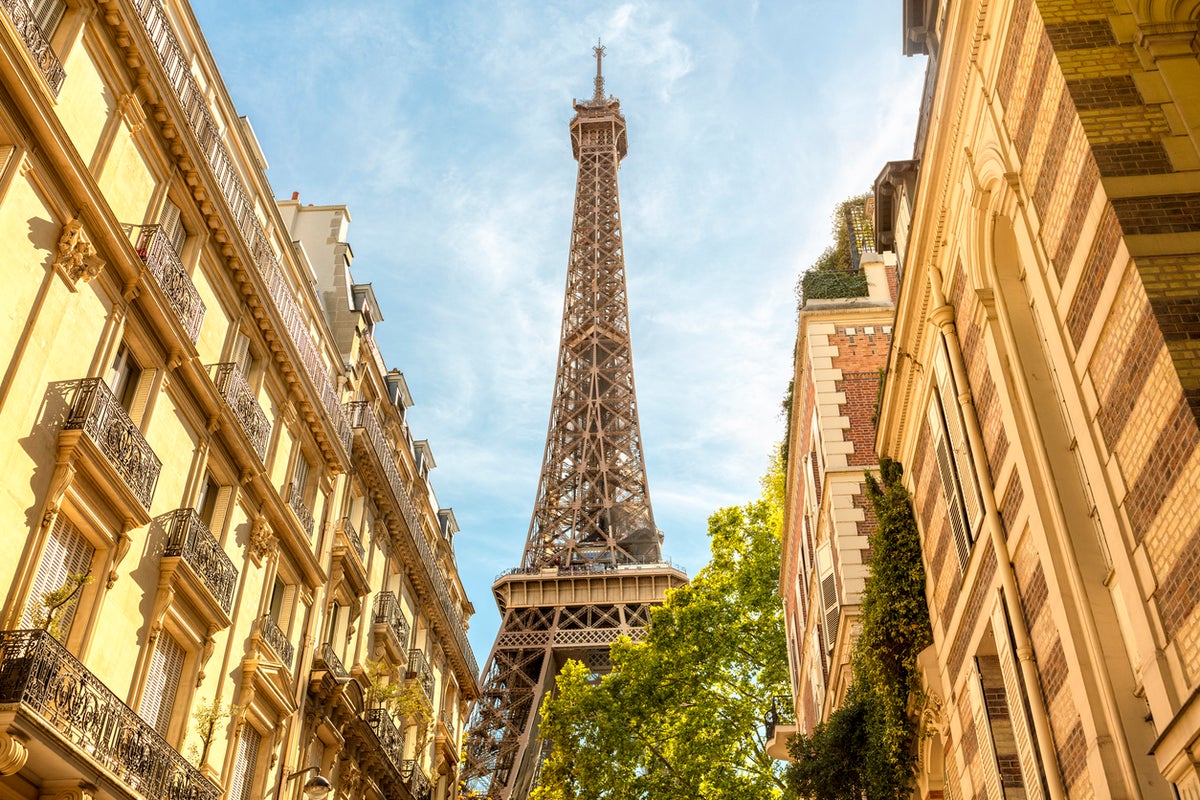
If you stand at the base of the Champ de Mars on a scorching July afternoon, you can hear it. It is not the roar of the scooters on the Avenue de la Bourdonnais, nor is it the polyglot chatter of a thousand tourists holding up melting ice cream cones. It is a metallic groan. A deep, tectonic sigh.
To the casual observer, the Eiffel Tower is a monument of static grandeur. It is the permanent anchor of the Parisian skyline, frozen in its nineteenth-century lace of puddling iron. We look at it to find our bearings. We print it on postcards to freeze a moment in time. But if you look closer, through the shimmer of rising heat waves, you realize the truth.
The tower is alive. It moves. This week, it grew taller.
We tend to think of the human-built world as an antidote to nature's volatility. We pour concrete, weld steel, and bolt iron together to force permanence onto a shifting planet. Yet, nature always negotiates. For the engineers who spend their lives maintaining the Dame de Fer—the Iron Lady—this negotiation is a daily reality. They do not manage a statue; they manage a breathing organism.
The Secret Mechanics of the Sun
Consider a hypothetical engineer named Henri. Henri has spent twenty-four years climbing the narrow, wind-swept maintenance shafts of the tower. He knows every one of the 2.5 million rivets. He knows the specific shade of "Eiffel Tower Brown" paint required to keep the Atlantic brine and Parisian rain from swallowing the iron whole.
On a June morning, Henri notices something that would terrify a layman but brings a knowing smile to a structural physicist. The elevator cables feel a fraction tighter. The expansion joints at the platforms have narrowed.
This is the physics of thermal expansion made monstrously large.
When the sun beats down on the 7,300 tons of puddling iron that make up the tower’s framework, the atoms within the metal begin to dance. They absorb the thermal energy. They vibrate with increasing violence. As they push against one another, seeking room to move, the iron invisibly swells.
The result is staggering. During a significant heatwave, the Eiffel Tower can grow by up to fifteen centimeters. Six inches of iron, conjured out of nothing but sunlight and kinetic energy, pushing the summit just a little bit closer to the clouds.
But the sun is a fickle architect. It does not hit the tower evenly. As the fireball tracks across the Parisian sky, it bakes the southern face while the northern flank remains in the cool shadow of the morning. The iron responds with a slow, majestic evasion. The sunlit side expands, while the shaded side holds its ground.
The tower tilts.
It is a silent, pirouetting dance away from the heat. The summit can drift up to eight centimeters to the side, drawing a gentle, invisible circle in the air over the course of a single day. The tourists on the observation deck look out toward Montmartre, completely unaware that the floor beneath their feet is leaning away from the sun like a sunflower in reverse.
The Legacy of a Misunderstood Visionary
When Gustave Eiffel finalized the designs for the 1889 World’s Fair, the public was outraged. Writers and artists signed manifestos calling it a "gigantic black factory chimney" that would deface the beauty of Paris. They assumed it was a rigid, brutalist middle finger to the classical stone architecture of the city.
They failed to understand that Eiffel was not a builder of walls; he was a master of the wind.
Before he conquered Paris, Eiffel built railway bridges. He knew how rivers swelled and how gales tore through mountain passes. He designed the tower not to resist the elements, but to surrender to them. The lattice structure is not just an aesthetic choice; it is a system of vents. The wind passes through it. The heat redistributes across it.
If Eiffel had built the tower out of solid stone or rigid, unyielding steel plates, the internal stresses of a standard European summer would have cracked the foundations decades ago. The expansion would have had nowhere to go. The force would have chewed through the masonry, tearing the monument apart from the inside out.
Instead, he chose puddling iron. It is a material born of fire, refined by manually stirring molten pig iron until the carbon burns away. It is remarkably resilient, structurally forgiving, and highly sensitive to temperature. Eiffel knew his creation would grow. He calculated the tolerances for the expansion joints. He built a monument that could breathe.
The true genius of the structure lies in its vulnerability. By allowing the iron to expand, to tilt, and to groan under the summer sun, the tower ensures its own survival. It avoids the catastrophic failure of rigid things. It survives by changing shape.
Living with the Shifting Skyline
There is a distinct anxiety in realizing that the grandest symbols of our civilization are fluid. We want our landmarks to be rock-solid. We want them to stand as unchanging sentinels against the chaos of our fleeting lives.
I remember standing on the Champ de Mars during the record-breaking heatwave of recent years. The air was thick, heavy with the scent of roasted chestnuts and dry dust. Looking up at the tower, I felt a strange vertigo. I knew the data. I knew the physics. I knew that, at that very moment, the structure was taller than it had been during the winter chill of January.
It changed how I viewed the city. The stone facades of the Haussmann buildings suddenly felt temporary, susceptible to the slow crumble of time, while the shifting, breathing iron tower felt oddly permanent because of its flexibility.
This weekly growth spurt is not a defect. It is not a sign of structural fatigue. It is the system working exactly as it was intended to work over 130 years ago.
When the autumn winds eventually roll in from the north and the Parisian sky turns the color of wet slate, the atoms in the iron will quiet down. They will draw closer together. The tower will shrug off those fifteen centimeters, sinking back into its winter posture, waiting for the cycle to begin anew.
We spend so much of our lives trying to build unbendable structures within our careers, our relationships, and our societies. We mistake rigidity for strength. But the iron giant of Paris suggests a different philosophy entirely. To endure the heat of the world, you must be willing to grow, to lean, and to change your shape.