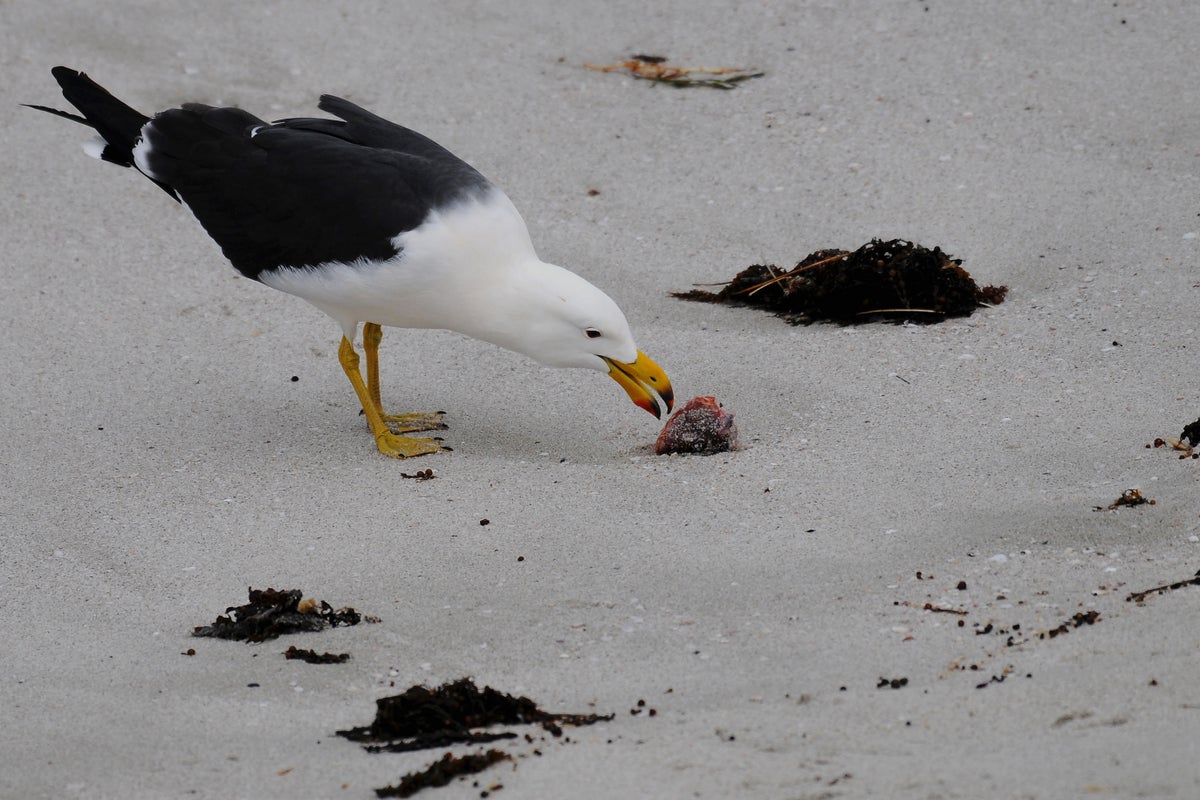
The June 2026 detection of highly pathogenic avian influenza (HPAI) H5N1 clade 2.3.4.4b on the Australian mainland represents a critical breach of a historically isolated biosecurity ecosystem. For decades, Australia relied on geographic insulation and distinct migratory flyways to remain the sole continent free from this destructive epizootic lineage. The confirmation of the virus in a brown skua (Stercorarius antarcticus) in Cape Le Grand National Park, Western Australia, followed immediately by a second detection in a southern giant petrel (Macronectes giganteus) in Port Elliot, South Australia, shifts the national biosecurity posture from exclusion to containment.
Evaluating the threat requires a systematic breakdown of the transmission vectors, commercial vulnerabilities, and the specific ecological mechanisms governing viral propagation across domestic species.
The Epizootic Vector: Disruption of the Geographic Barrier
To quantify the threat of H5N1 clade 2.3.4.4b, one must understand why Australia remained isolated for so long and what shifted to permit entry. Historically, the East Asian-Australasian Flyway (EAAF) protected the mainland from large-scale HPAI incursions due to a biological bottleneck: the primary reservoirs for northern hemisphere H5N1 are freshwater anatids (ducks, geese, and swans) that exhibit high viral tolerance and perform long-distance migrations. These freshwater species do not routinely cross the deep ocean barriers separating the Indonesian archipelago from northern Australia.
The 2026 incursion bypassed this filter by utilizing a completely different vector class: pelagic and sub-Antarctic migratory seabirds. The brown skua and giant petrel are wide-ranging scavenger and predator species. Their feeding behaviors create high-density mixing zones on offshore islands and sub-Antarctic territories—such as Heard Island, where mass mortalities were recorded during the 2025–2026 austral summer.
[Global Reservoir: Freshwater Anatids] ──(Oceanic Barrier Failure)──> [Pelagic Seabirds: Skuas/Petrels] ──(Mainland Coastal Incursion)──> [Local Scavengers & Synanthropic Birds]
This transmission pathway alters the velocity and predictability of the outbreak. Pelagic seabirds travel vast distances but typically remain coastal or offshore. The primary transmission risk now lies in the interaction between these infected marine scavengers and local shorebirds or terrestrial species at the coastline interface.
The Two-Stage Transmission Bottleneck
The progression of H5N1 on the mainland depends on two distinct epidemiological phases. Each phase features specific viral dynamics and environmental variables.
Phase 1: Pelagic to Synanthropic Spillover
The current index cases are restricted to pelagic seabirds found on remote beaches. For the virus to achieve high-density mainland distribution, it must jump from pelagic species to synanthropic birds (species that live in close proximity to humans, such as gulls, ibises, and ravens) or local waterfowl.
This spillover is driven by predation and scavenging. When a pelagic bird succumbs on a mainland beach, local scavengers feed on the carcass. The high viral load in the tissues of an animal killed by H5N1 creates an efficient oral transmission pathway.
Phase 2: The Freshwater Amplification Loop
If the virus transfers successfully to local freshwater species—specifically black swans (Cygnus atratus) and grey teals (Anas gracilis)—the epidemiology alters fundamentally. Unlike northern hemisphere mallards, Australian black swans are highly susceptible to severe disease and mortality from HPAI strains.
While high mortality reduces the window for long-distance individual transmission, the high density of these birds in wetlands creates an intense localized environmental reservoir. The virus is shed in high concentrations via feces into water bodies, where low temperatures and UV-protected microenvironments extend viral viability. This creates an environmental amplification loop that can rapidly expose any nearby agricultural operation.
Commercial Exposure and Market Friction
The primary economic vulnerability rests within the intensive poultry and egg production sectors. Australia’s poultry industry operates under strict biosecurity standards designed around the eradication of low-pathogenic strains (LPAI) that occasionally mutate into highly pathogenic variants locally—as seen in previous H7 outbreaks in Victoria. The introduction of an established, highly infectious global H5N1 strain changes the risk profile.
The Exposure Function of Commercial Facilities
The vulnerability of a commercial poultry facility to H5N1 can be modeled through three operational exposure vectors:
- Aerosol and Fomite Ingress: High-velocity air currents drawing in particulate matter from nearby wetlands, or contaminated footwear, vehicle tires, and equipment moving between properties.
- Water Supply Contamination: Facilities utilizing surface water or unchlorinated ground systems that draw from or interact with wild bird habitats.
- Structural Breaches: Small physical gaps in shedding that allow synanthropic rodents or small wild birds (such as sparrows or starlings) to enter feed storage areas.
The immediate commercial response in Western Australia illustrates the scale of operational disruption. Large-scale producers have moved to complete facility lockdown protocols. This response introduces immediate supply chain friction, restricting personnel movement, increasing sanitization cycle times, and altering logistics schedules.
International Trade Friction
The economic impacts extend past direct flock mortalities or culling programs. International trade agreements react sharply to changes in a nation's disease status. The immediate, temporary ban on all Australian poultry and egg products by Papua New Guinea—Australia's largest single market for chicken meat exports, valued at nearly half of the $133 million export portfolio in recent fiscal years—demonstrates how quickly regulatory friction occurs.
While this specific ban was quickly resolved through bilateral negotiation, future bans remain a constant threat. International standards set by the World Organisation for Animal Health (WOAH) allow countries to declare zones free of HPAI if cases are strictly confined to wild birds. However, the line between wild bird detection and commercial restriction remains narrow and highly dependent on trading partner risk tolerances.
Ecological Cascade and Mammalian Spillover Thresholds
Beyond agriculture, the mainland detection poses severe challenges to Australia’s unique wildlife profile, which already features a high proportion of threatened or endangered avian species. One in six Australian bird species is currently threatened with extinction; the introduction of an unmitigated, highly lethal pathogen introduces a non-linear mortality variable into these fragile populations.
Mammalian Vulnerability Mechanics
H5N1 clade 2.3.4.4b possesses a documented affinity for mammalian neurological and respiratory systems, driven by specific mutations that increase binding affinity to alpha-2,6 sialic acid receptors alongside traditional avian alpha-2,3 receptors.
[Avian Reservoir: Alpha-2,3 Receptors] ──(Mutational Shift)──> [Mammalian Tissue: Alpha-2,6 Receptors] ──> [Neurological/Systemic Failure]
In the Australian context, two mammalian groups face the highest exposure risks:
- Terrestrial Apex Predators and Scavengers: Native marsupial carnivores, such as the Tasmanian devil (Sarcophilus harrisii) in island sanctuaries or spotted-tailed quolls (Dasyurus maculatus) on the mainland, are highly vulnerable due to their scavenging behavior. Consuming an intact, infected avian carcass provides a massive viral bolus directly to the oral mucosa.
- Domestic and Feral Felids: Cats exhibit high susceptibility to H5N1, often developing fatal systemic infections and encephalitis after contact with sick birds. In overseas outbreaks, localized mortalities in farm cats served as an early warning system for wider agricultural infection. Feral cat populations across the Australian interior represent a massive, unmonitored reservoir that could accelerate geographic spread across remote regions.
Strategic Interventions and Operational Limitations
Managing an established mainland incursion requires a shift from passive observation to active, data-driven biosecurity interventions. Standard regional eradication protocols used in previous H7 outbreaks—such as localized containment zones and immediate depopulation of affected farms—are insufficient when dealing with a continuous viral pressure from wild migratory populations.
Structural Biosecurity Upgrades
Commercial enterprises must shift from basic exclusion tactics to advanced bio-containment engineering:
- Air and Water Sanitization: Installation of high-efficiency particulate air (HEPA) filtration systems in breeder houses and mandatory multi-stage water treatment (combining ultrafiltration with chlorine dioxide or UV sterilization) for all production water.
- Zero-Contact Feed Systems: Transitioning to fully enclosed silos with pneumatic delivery systems to eliminate feed spills that attract wild birds and synanthropic rodents.
- Strict Vehicle Delousing: Establishing mandatory high-pressure thermal disinfection bays at the perimeter of all commercial production zones.
Surveillance and Diagnostic Logistics
The scale of the Australian coastline requires a decentralized, high-throughput testing infrastructure. Relying solely on central reference laboratories—such as the CSIRO's Australian Centre for Disease Preparedness in Geelong—creates operational bottlenecks during mass-mortality events.
Deploying field-ready, mobile RT-qPCR units to regional agricultural offices allows for rapid preliminary screening, cutting turnaround times from days to hours. This testing must be paired with community-driven spatial tracking tools to map wild bird mortalities in real time. This provides commercial operations with early warning telemetry before local environmental contamination reaches critical thresholds.
The Limits of Emergency Vaccination
While poultry vaccination against H5 strains is utilized in some international jurisdictions to reduce viral shedding and mortality, it is currently restricted in Australia. The deployment of vaccination programs involves significant trade-offs:
- Masking Viral Circulation: Vaccinated birds may still become infected and shed the virus without showing clinical symptoms, making early detection within a flock extremely difficult.
- Trade Restrictions: Many importing nations do not differentiate between vaccinated birds and naturally infected birds due to antibody cross-reactivity in standard serological tests, which can result in long-term export bans.
- Evolutionary Pressure: Incomplete or poorly targeted vaccination campaigns can exert selective pressure on the virus, accelerating the emergence of vaccine-escape mutant strains.
Actionable Risk Management Protocol
Commercial poultry operations and regional agricultural authorities must immediately deploy defensive infrastructure to manage this persistent threat vector.
                  ┌─────────────────────────────────────┐
                  │ Establish 3-Tier Biosecurity Zones  │
                  └──────────────────┬──────────────────┘
                                     ▼
                  ┌─────────────────────────────────────┐
                  │ Transition to Closed-Loop Water/Feed│
                  └──────────────────┬──────────────────┘
                                     ▼
                  ┌─────────────────────────────────────┐
                  │ Deploy Field-Ready RT-qPCR Testing  │
                  └─────────────────────────────────────┘
- Establish Three-Tier Biosecurity Perimeters: Clearly segregate commercial properties into a Clean Zone (shed interiors), a Buffer Zone (farm yards and storage), and an Exclusion Zone (outer boundary). No vehicle or personnel should cross between zones without undergoing a documented decontamination process.
- Transition to Closed-Loop Resource Systems: Discontinue the use of any unmonitored surface water inputs. All feed must be kept in sealed silos with automated underground or overhead distribution to prevent wild bird attraction.
- Deploy Regional Diagnostic Frameworks: Equip local veterinary networks with standardized sample collection kits and field-ready diagnostic tools to ensure that any suspected mortality event is classified within a six-hour window. This protocol minimizes the time between index case exposure and full facility quarantine.