How Wealthy Suburbs Unwittingly Bred Super Mosquitoes
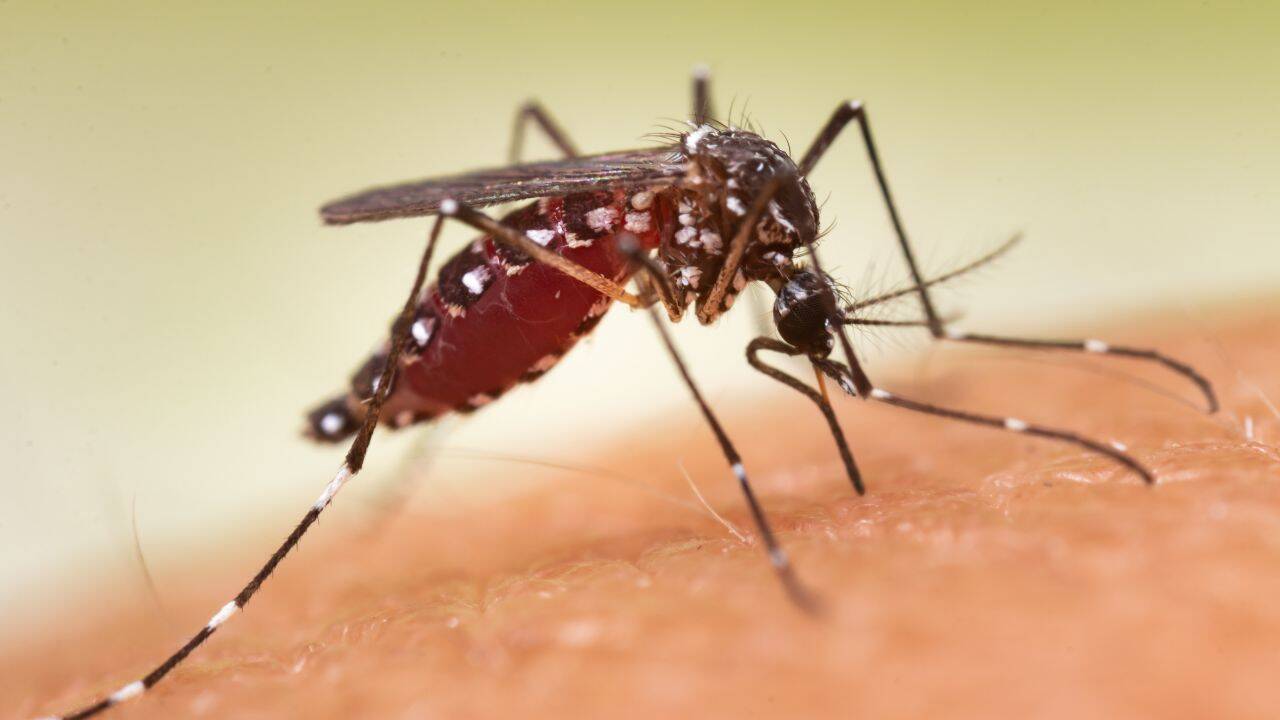
Routine suburban pest spraying has quietly engineered a public health threat right in American backyards. A long-term genetic tracking study of Asian tiger mosquitoes (Aedes albopictus) revealed that routine pyrethroid spraying caused knockdown resistance mutations to surge from nonexistent levels to 84% of sampled residential blocks within six years. Homeowners paying premium monthly subscriptions for yard treatments are not suppressing pest populations. They are accelerating natural selection. By wiping out fragile natural predators while spraying sublethal chemical doses, neighborhood spraying programs leave behind resilient, hyper-resistant biting populations.
This evolutionary trap is unfolding across affluent communities where private pest control has become as routine as lawn care. What began as a convenience has turned into a self-defeating chemical arms race that endangers municipal disease prevention.
The Genetic Mutation Driving Chemical Immunity
Pyrethroids are synthetic derivatives of natural compounds found in chrysanthemum flowers. They have long served as the primary tool for synthetic pest control due to their low mammalian toxicity and immediate knock-down effect. The chemical functions by targeting voltage-gated sodium channels in insect nerve cells, forcing those channels open, triggering paralysis and rapid death.
Repeated exposure to sub-lethal concentrations creates intense evolutionary pressure. Mosquitoes possessing a specific genetic variation—known as a knockdown resistance or kdr mutation—survive the initial spray. Researchers tracking the F1534S allele in North Carolina recorded its trajectory from zero baseline presence in 2016 and 2017 to an initial cluster in 2018, before spreading across 84% of sampled neighborhood blocks by 2023.
[Baseline: 0% Block Frequency (2016–2017)]
                    │
                    ▼
[First Resistance Cluster Detected (2018)]
                    │
                    ▼
[Widespread Resistance: 84% Block Frequency (2023)]
When 39% of tested mosquitoes in an area carry these resistant genes, the application of standard commercial sprays yields diminishing returns. The chemical wipes out weak specimens while sparing individuals with the altered sodium channels. The survivors mate, passing on the resistant trait to offspring that inherit immunity to standard extermination methods.
Wealth as an Acceleration Vector
Urban planning and socioeconomic status influence ecological outcomes in surprising ways. Data shows a strong positive correlation between higher property values and increased rates of insecticide-resistant mosquitoes.
Wealthier neighborhoods buy private pest control services at significantly higher rates. These recurring residential fogging services treat property perimeters on fixed calendar schedules regardless of actual insect density.
| Factor | Municipal Vector Control | Private Residential Spraying |
|---|---|---|
| Trigger | High mosquito counts or pathogen threat | Monthly calendar subscription |
| Application | Targeted ultra-low volume (ULV) fogging | Perimeter foliage barrier spraying |
| Product Rotation | Rotates chemical classes to delay resistance | Heavily relies on pyrethroids |
| Target Stage | Focuses heavily on larvae control | Targets adult insects |
| Socioeconomic Focus | Public health protection across all zones | High-income residential properties |
Private contractors focus on perimeter barrier treatments, spraying chemical residue onto foliage where adult mosquitoes rest during daylight hours. Over time, environmental degradation from sunlight and rain dilutes the active chemical compounds on leaf surfaces.
When mosquitoes encounter these weakened residues, the dosage is no longer strong enough to kill every insect. It is, however, ideal for selecting survival traits. Insects with mild resistance withstand the degraded dose, multiply, and establish a population immune to full-strength applications.
Ecological Collapse in the Backyard Ecosystem
Chemical spraying disrupts local predator-prey dynamics in ways that favor fast-breeding pests. Pyrethroids are broad-spectrum insecticides that do not distinguish between nuisance insects and beneficial species.
Spiders, dragonflies, predatory beetles, and parasitic wasps reproduce at far slower rates than Asian tiger mosquitoes. A single female Aedes albopictus lays hundreds of eggs in small water containers throughout her short lifespan. When chemical barrier treatments clear a yard, they eliminate natural predators far more effectively than target mosquitoes.
                 COMMERCIAL SPRAY APPLICATION
                              │
         ┌────────────────────┴────────────────────┐
         ▼                                         ▼
[Beneficial Predators]                    [Target Mosquitoes]
   • Spiders, Dragonflies                    • Rapid Reproduction
   • Slow Reproduction Rates                 • Survivors Carry kdr Gene
         │                                         │
         ▼                                         ▼
  [Populations Collapse]                  [Rapid Population Rebound]
         │                                         │
         └────────────────────┬────────────────────┘
                              ▼
           [Pest-Dominated Backyard Ecosystem]
Unintended environmental consequences compound over consecutive seasons:
- Predator Vacuum: Eliminating beneficial insects removes the biological control mechanisms that naturally regulate mosquito larvae.
- Rebound Effect: Surviving resistant mosquitoes reproduce rapidly without competition or predation, yielding larger populations after chemical treatments than existed before.
- Resource Abundance: Modern suburban yards feature automated irrigation systems, ornamental fountains, and heavy leaf mulching that trap standing water, providing ideal breeding grounds for resistant strains.
The Public Health Fall-Out
Resistance in suburban yards threatens public health systems during disease outbreaks. Public health agencies rely on pyrethroid sprays to interrupt transmission chains when mosquito-borne diseases like West Nile Virus, Dengue, or Zika emerge.
When municipal control teams attempt emergency adulticide spraying in areas where private residential fogging is common, the treatment fails to lower mosquito populations. The chemical tools public health departments depend on lose efficacy because private spraying programs have already rendered local mosquitoes immune.
Uncoordinated private spraying undermines coordinated public health responses. Agricultural applications are regulated to manage resistance, but residential pesticide use remains largely unmonitored. Millions of homeowners applying chemical treatments without oversight create widespread selection pressure across entire regions.
Dismantling the Barrier Spray Model
Addressing pyrethroid resistance requires shifting away from broad adulticide fogging toward biological and mechanical management techniques.
Source Reduction First
Removing standing water eliminates breeding grounds before eggs hatch. Asian tiger mosquitoes lay eggs in small volume containers like saucers, clogged rain gutters, corrugated drainage pipes, and yard debris. Emptying standing water every four to five days breaks the breeding cycle without applying synthetic chemicals.
Targeted Microbial Larvicides
For standing water that cannot be drained, natural bacterial agents offer precise control. Bacillus thuringiensis israelensis (BTI) produces crystal proteins that specifically disrupt the gut linings of mosquito and blackfly larvae while remaining harmless to humans, pets, fish, and beneficial insects. BTI prevents larvae from maturing into adult biters without triggering resistance to adulticide sprays.
Coordinated Community Action
Individual household efforts yield limited results if adjacent properties continue heavy chemical spraying or harbor standing water. Mosquito control demands neighborhood-wide efforts focused on source reduction, larvicide application, and physical barrier nets.
Relying on scheduled perimeter sprays provides a temporary sense of comfort while creating tougher, chemical-resistant mosquito populations over time. Breaking this cycle requires abandoning chemical shortcuts in favor of biological pest management that targets mosquitoes before they take flight.