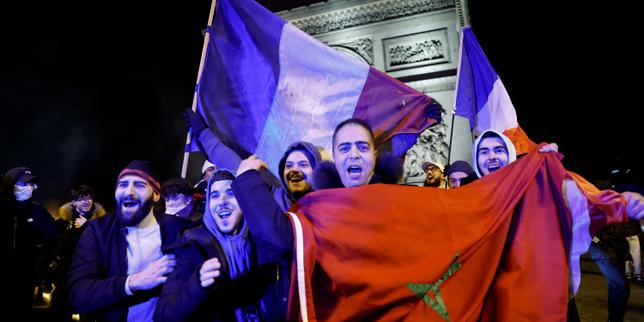
When Morocco met France in the semifinals of the 2022 World Cup, the explosions in the streets of Paris, Brussels, and Casablanca were not just celebratory fireworks. They were the auditory release of decades of colonial friction, migration patterns, and identity crises compressed into a ninety-minute sporting fixture. The mainstream media captured the spectacle of fans waving flags and lighting flares side by side. But surface-level camaraderie masked a much deeper, more volatile reality. This match was never just about football. It was a high-stakes mirror reflecting the complex, often painful relationship between a former colonial power and a diaspora caught between two worlds.
The pitch became a geopolitical chessboard where history, citizenship, and sporting loyalty collided.
The Illusion of the Friendly Derby
Media narratives ahead of the historic semifinal heavily pushed the concept of a friendly derby. Journalists pointed to the close ties between the two nations, the dual citizens playing for Morocco, and the shared language. This framing missed the point entirely. For millions of people of Moroccan descent living in France, the match forced a public interrogation of their allegiance.
France is home to a Moroccan diaspora numbering over one million. For decades, these communities have navigated systemic discrimination, economic marginalization, and debates over what it means to be truly French. When the Moroccan national team embarked on its historic run in Qatar, it triggered a massive wave of pride across the banlieues—the working-class suburbs surrounding major French cities.
This pride was not viewed neutrally by the French political establishment. Right-wing commentators and politicians immediately questioned the loyalty of dual-national fans. They suggested that celebrating a Moroccan victory was equivalent to rejecting France. The football fan became a political battleground. Lighting a firework was transformed from an act of sporting joy into a defiant statement of cultural survival.
Reclaiming History on the Pitch
To understand why beating France mattered so much to Moroccan fans, one must look at the historical ledger. France established a protectorate over Morocco in 1912, a period of colonial rule that lasted until 1956. The scars of that era shape economic and political relations today.
Football was introduced to Morocco during the protectorate as a tool of European modernization and control. Over half a century later, the Moroccan team used that exact tool to challenge European football hegemony. They became the first African and Arab nation to reach a World Cup semifinal.
The Recruitment War for Diaspora Talent
The battle for football supremacy begins long before the senior national teams take the pitch. It starts in the youth academies of Europe. Morocco's success was built on a deliberate, highly sophisticated scouting network targeting diaspora players born in France, Spain, the Netherlands, and Belgium.
- The Regulatory Shift: FIFA rules previously locked players into a national team system early. Subsequent amendments allowed players to switch allegiance if they had not played a competitive senior match, opening the door for Morocco to recruit elite talent trained in elite French academies.
- The Emotional Pull: The Royal Moroccan Football Federation shifted its strategy from merely scouting talent to building deep emotional connections with players and their families from a young age.
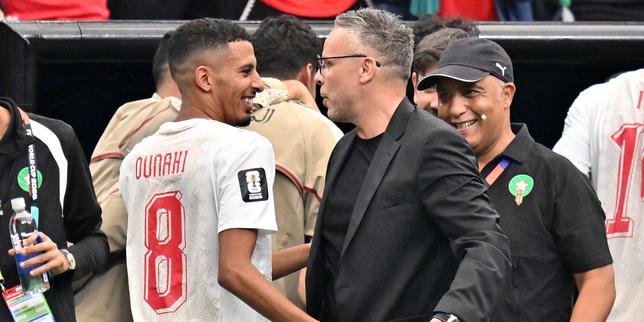
- The Strategic Execution: Players like Sofiane Boufal and Romain Saïss, both born in France, chose to represent their ancestral homeland. This talent drain directly challenges the French football ecosystem, which relies heavily on diaspora talent to maintain its global dominance.
This recruitment strategy represents a reverse migration of intellectual and physical capital. France invested the resources to train these athletes, but Morocco reaped the historic rewards on the global stage.
The Double Standard of Integration
The reaction to the post-match celebrations highlighted a glaring double standard in how fan behavior is policed and perceived in Europe. When French fans celebrated winning the World Cup in 2018, the chaos was labeled as national exuberance. When Moroccan fans took to the Champs-Élysées, the deployment of thousands of riot police was framed as a necessary measure against impending civil unrest.
This security response reflects a broader societal anxiety regarding the visibility of North African communities in public spaces. The football stadium and the public square are some of the few arenas where the diaspora can loudly assert its identity. By treating these celebrations primarily as security threats, authorities signaled that minority joy is inherently suspicious.
The tension also manifested within the French team itself. The current French squad is heavily comprised of players with African roots. When they win, they are celebrated as symbols of a successful, multicultural republic. When they lose, the public discourse frequently shifts toward their race and origins. Diaspora fans watch this dynamic closely. They recognize that acceptance in the metropole is often conditional on athletic perfection.
A New Football Order
The legacy of the Morocco-France fixture extends far beyond the final score in Qatar. It broke the psychological barrier that had long kept African and Arab nations in the periphery of global football management and execution.
Morocco did not achieve its success through luck. The nation invested heavily in infrastructure, constructing the Mohammed VI Football Academy, a world-class facility designed to develop homegrown talent to complement the diaspora recruits. This dual approach—leveraging elite European training while building domestic capability—provides a blueprint for the Global South to challenge traditional football superpowers.
The era of European football neocolonialism, where European clubs and federations dictate the terms of global talent distribution without challenge, is fracturing. The fireworks in Paris and Casablanca were not the end of a fairy tale. They were the opening salvo in a structural realignment of sports, politics, and identity. National associations that fail to understand the deep cultural ties of their diaspora populations will continue to lose elite talent to nations that embrace them fully.