The media loves a predictable narrative, especially when geopolitics intersects with football.
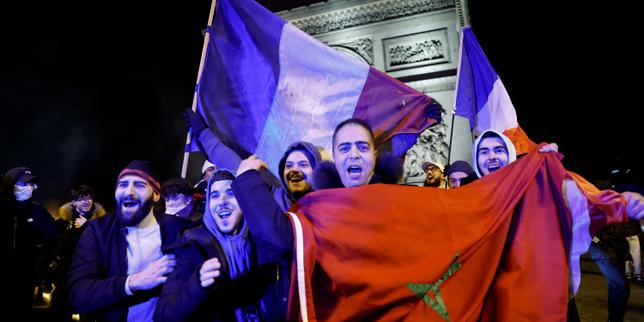
During the historic World Cup run that saw France face off against Morocco, mainstream commentators rushed to Paris neighborhoods like Barbès and the Champs-Élysées to hunt for a very specific story: the tortured soul. Out came the lazy profiles of Franco-Moroccan youth allegedly tearing themselves apart over which flag to wave. The coverage framed the semi-final as an existential crisis, a cultural tug-of-war where immigrants and their children were forced to choose a side, risking alienation either way.
It is a completely manufactured crisis.
The premise that belonging to two cultures creates a psychological gridlock during a 90-minute football match is flawed, patronizing, and fundamentally misinterprets how modern identity works. Having covered international football and migration politics for over a decade, I have seen pundits make this exact mistake during every major tournament—whether it is Turkey playing Germany or Algeria playing France.
The "dilemma" does not exist in the minds of the fans. It exists in the anxiety of onlookers who cannot grasp a fluid sense of identity.
The Flawed Premise of the "Divided Loyalties" Trap
Mainstream sociology often treats identity like a pie chart. If you give 50% to Morocco, you only have 50% left for France. This zero-sum logic dictates that a high-stakes match forces a brutal accounting mechanism where one side must win out.
That is not how diaspora communities experience life. Identity is not a pie; it is a multiplier.
When Morocco played France, the prevailing emotion in the Franco-Moroccan community was not agony. It was euphoria. For a community that frequently finds itself at the center of grueling political debates around integration and secularism, this match was a win-win scenario. If France won, their country of birth and daily life advanced to the final. If Morocco won, their heritage made history on the global stage.
To look at a community celebrating an unprecedented sporting achievement and see a "dilemma" is an incredible feat of narrative distortion. It assumes that fans view international football through a rigid lens of national allegiance, rather than what it actually is for diaspora communities: a celebration of visibility.
The Structural Reality Pundits Ignore
Let us look at the mechanics of modern football to dismantle this idea of strict national binaries. Look at the pitch itself. The Moroccan national team that reached the semi-finals was a masterclass in transnational mobility.
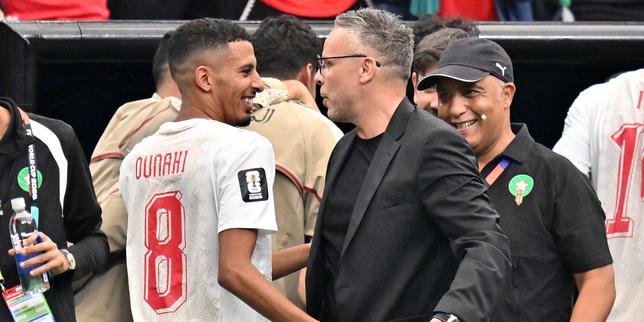
More than half of the squad was born outside of Morocco. Walid Regragui, the manager who masterminded the run, was born in Corbeil-Essonnes, a suburb of Paris. He played the majority of his professional career in the French league. Players like Hakim Ziyech, Achraf Hakimi, and Sofyan Amrabat grew up in the academies of the Netherlands, Spain, and Belgium.
The Moroccan team was quite literally a product of the European football infrastructure.
[European Youth Academies] ➔ [Transnational Talent Pools] ➔ [Moroccan National Team Success]
When a French-born Moroccan fan cheers for Morocco, they are cheering for a team built by the exact same urban realities and footballing cultures they grew up with in the banlieues of Paris or Lyon. It is not a rejection of France; it is an extension of a shared geographical and sporting experience. The distinction between "us" and "them" completely breaks down when the players themselves embody the exact same dual reality as the fans in the stands.
The Double Standard of Neutrality
We never apply this agonizing "identity crisis" narrative to white expatriates or wealthy dual citizens.
Imagine a scenario where a dual British-American citizen living in New York has to watch England play the United States in a World Cup group stage. The media covers it as a fun, lighthearted family rivalry. There are no hand-wringing op-eds questioning whether that individual is truly loyal to the US Constitution or British Crown.
The anxiety directed at the Franco-Moroccan community is deeply rooted in selective integration politics. The underlying demand is clear: absolute, performative assimilation. Any public display of joy for a North African nation is immediately scrutinized for signs of separatism.
This double standard forces a sports story to carry the weight of decades of post-colonial tension. But the fans themselves refuse to carry that burden. On the streets of Paris, the dual flags—red-and-green wrapped around blue-white-and-red—were not a sign of confusion. They were a declaration of comfort with multiplicity.
The Downside of the Counter-Narrative
To be completely fair, pretending that sports exists in a vacuum free of all tension is also a mistake. There are real frictions. Right-wing politicians routinely weaponize these sporting events to score cheap political points, pointing to rowdy post-match celebrations as evidence of an "uncivilized" population.
Furthermore, within the diaspora itself, peer pressure exists. A younger generation, feeling marginalized by mainstream French society, might lean performatively into their Moroccan identity during a match to signal defiance against a system they feel rejects them.
But acknowledging these social frictions is a far cry from accepting the mainstream thesis that the match caused a deep psychological crisis. The tension is political, injected from the outside by media structures and political actors who need conflict to sustain their coverage. The actual lived experience of the fans is one of dual pride, not dual paralysis.
Shift the Question Entirely
Stop asking dual citizens which country they want to win. It is a juvenile question that yields uninteresting answers.
Instead, look at how transnational communities are redefining what it means to belong to a modern nation-state. The France-Morocco match did not expose a fracture line in French society. It exposed the obsolescence of the old, nineteenth-century model of the nation-state that demands singular, unblinking loyalty to a single flag.
The kid from Paris wearing a Mbappé jersey while waving a Moroccan flag isn't confused. They understand the modern world far better than the pundits writing about them. They have doubled their chances of winning, expanded their cultural capital, and refused to be boxed into a simplistic narrative designed to make them feel out of place. The real dilemma belongs to a media apparatus that cannot understand a world where you don't have to choose between where you came from and where you are.
The match ended. France went to the final. Morocco won the hearts of the neutral world. And the Franco-Moroccan community went back to work the next morning, entirely intact, having enjoyed a footballing spectacle that belonged to them more than anyone else.