The ink on a military discharge paper is supposed to be permanent. It is meant to signal the end of a debt paid to the state, a closing of the ledger. But in South Korea, where the shadow of an unresolved war still dictates the rhythm of daily life, old ink can begin to bleed again. Decades after a soldier leaves the barracks, the past can catch up with him in the most public forum imaginable.
Consider a young conscript in the late 1970s. The military regime of Park Chung-hee is at its height. The barracks are brutal, the discipline absolute. For a young man navigating this high-pressure environment, a single week out of uniform without permission isn't just a administrative hiccup. It is a crime against the state. Now, fast forward more than forty years. That same young man is no longer an obscure conscript shivering in a guard tower. He is sitting in a polished leather chair, directing the entire nation's defense apparatus.
Then the ghost wakes up.
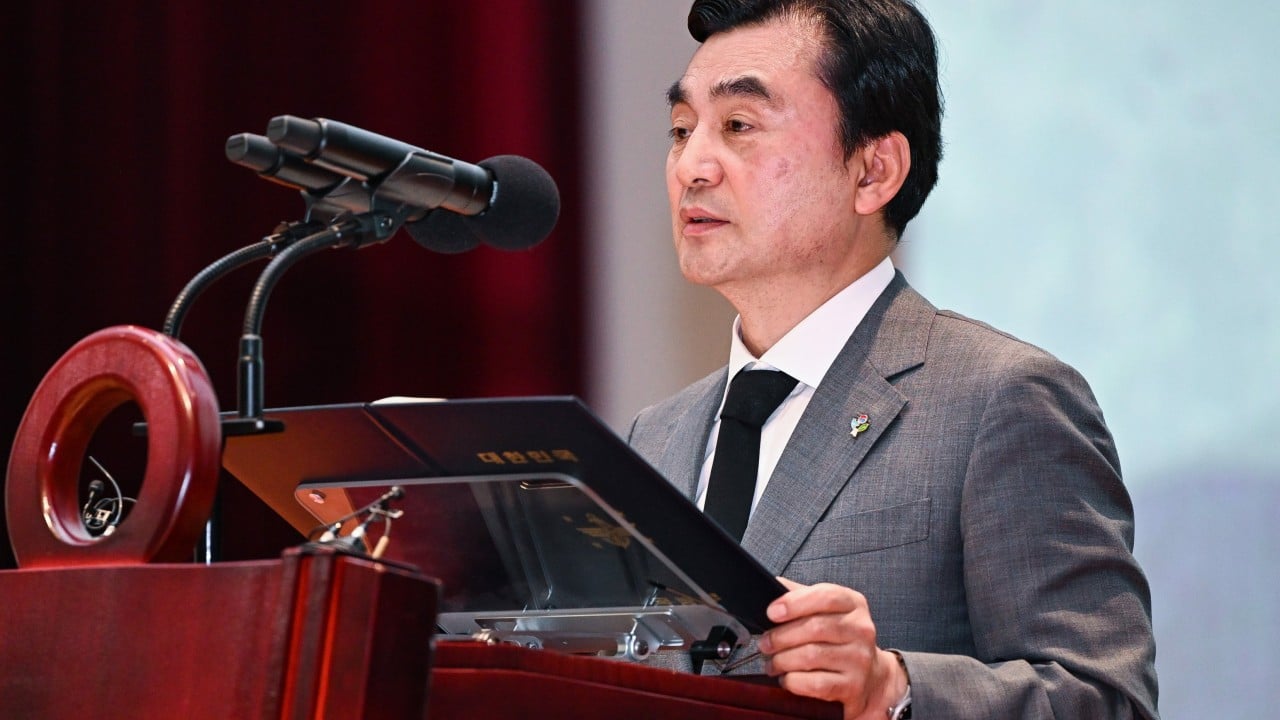
The current South Korean Defence Minister is finding out exactly how heavy a forty-year-old ghost can be. Recent allegations have surfaced, piercing through the armor of his long, decorated career. The accusation is simple yet devastating: army desertion during his youth. While the ministry scrambled to issue denials, labeling the claims as politically motivated distortions of a routine medical leave, the story tapped into a deep, raw nerve in the South Korean psyche.
To understand why a decades-old absence from a military unit can threaten to topple a modern cabinet minister, you have to understand the invisible contract that binds South Korean society.
Conscription is not a mere policy. It is a rite of passage. It is a shared sacrifice that cuts across class lines, binding the son of a billionaire to the son of a taxi driver. Every able-bodied young man must serve. They give up their youth, their freedom, and sometimes their mental health to sit on the border, staring through binoculars at a hostile neighbor. Because the sacrifice is universal, the anger at anyone suspected of dodging it is absolute.
When an ordinary citizen watches their son pack a bag for mandatory service, they do so with a heavy heart but a sense of duty. When a public official is accused of skipping out on that same duty, the reaction is visceral. It feels like a betrayal of the collective pact.
The official narrative from the defense camp paints a picture of bureaucratic misunderstanding. They speak of authorized medical leave, of hospital stays, of paperwork lost in the analog labyrinths of the 1970s military archives. They argue that an unblemished record of subsequent service proves his loyalty and dedication to the nation. It is a logical defense. Archives from that era are notoriously messy, handwritten logs prone to errors and rot.
But logic rarely wins against emotion in the court of public opinion.
Critics and political opponents are digging through old muster rolls and hospital records like archaeologists hunting for a fatal flaw. They point to gaps in the timeline. They question why certain permissions weren't logged through standard channels. In the architecture of South Korean politics, an accusation of draft dodging or desertion is the ultimate weapon. It is highly effective because it cannot be easily washed away by a press release.
The real tension lies in the contrast between the young man who allegedly walked away from his post and the older man who now commands the entire army. If the allegations are true, it creates a paradox. The man responsible for enforcing discipline, for signing the orders that send thousands of young men into harm's way, might have once broken the very rules he now embodies.
This is not just a political crisis for one man. It is a mirror reflecting South Korea's complex relationship with its own history. The late 1970s were a turbulent time, an era of authoritarian rule where the lines between legal orders and political coercion were often blurred. Many families have stories of relatives who fell through the cracks of the system, who were punished unfairly, or who used connections to escape the worst of the military's brutality.
When a story like this breaks, every citizen filters it through their own family history. They remember the cold nights on guard duty, the missed university semesters, the strict discipline. They ask themselves a fundamental question: Did we all play by the same rules?
The defense minister continues to deny the allegations, digging in his heels as the opposition calls for deeper investigations. The paperwork will be scrutinized, old witnesses will be called, and the archives will be ransacked for a definitive answer.
But some stains do not come out, no matter how clean the current uniform is. The controversy reminds us that in the theater of high-stakes politics, the most dangerous enemies are rarely the ones on the other side of the border. Often, they are the shadows we cast behind us, waiting for the right moment to step into the light.