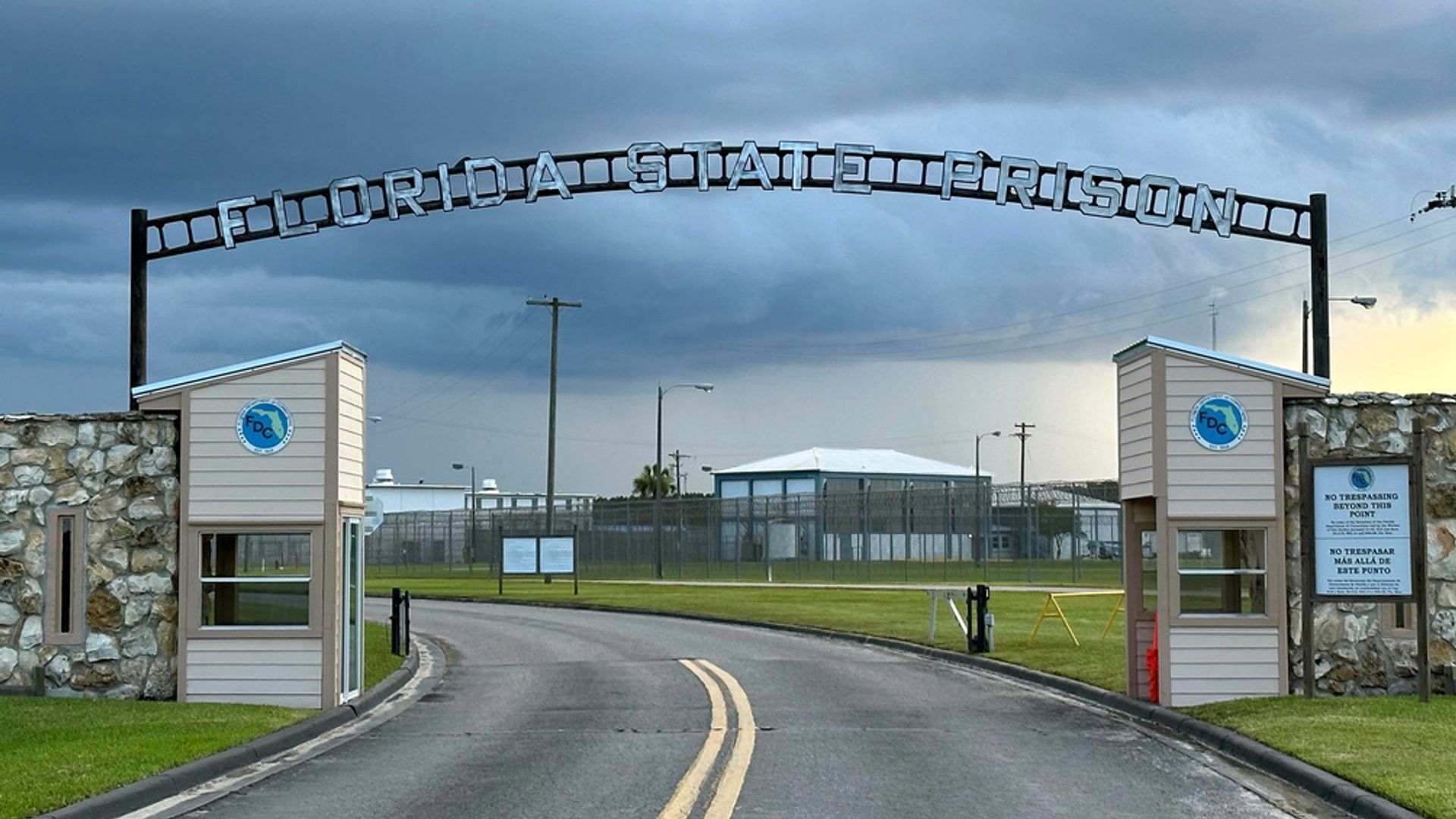
The state of Florida has signaled a grim return to form. On a Tuesday evening at Florida State Prison, officials administered a lethal injection to Michael Zack, marking the sixth execution in the state within a single calendar year. This surge in state-sanctioned killings represents a sharp pivot from years of relative dormancy and places Florida at the forefront of the national debate over the death penalty. Zack was convicted for the 1990 murder of Ravonne Smith, a crime of staggering brutality that occurred during a nine-day cross-county rampage. While the legal facts of the murder remained undisputed for decades, the execution itself serves as a flashpoint for the intersection of severe mental trauma and the unforgiving mechanics of the American justice system.
The acceleration of the execution schedule in Tallahassee is not a coincidence. After nearly three years without a single execution, the current administration has cleared the backlog with clinical efficiency. For the families of victims, this pace represents a long-overdue sense of finality. For advocates of judicial reform, it looks like a calculated political maneuver.
The Brutality of the 1990 Rampage
To understand why Michael Zack sat on death row for nearly thirty years, one must look at the trail of violence he left behind in late 1990. It began in Tallahassee, where Zack stole a vehicle from a construction site. His path eventually led him to a bar in Niceville, where he met Laurie Vaughan. He murdered her and left her body in a secluded area.
Shortly after, he met Ravonne Smith at a bar in Pensacola. After gaining her trust, Zack accompanied her to her home. It was there that the situation turned fatal. Zack beat, raped, and stabbed Smith with an oyster knife. He then stole her television and her car, attempting to pawn the items before he was eventually apprehended.
The legal proceedings were exhaustive. Zack was sentenced to life for the murder of Vaughan and received a death sentence for the murder of Smith. The decades of appeals that followed did not focus on his innocence—Zack admitted to the killings—but rather on his mental capacity and the circumstances of his upbringing.
Fetal Alcohol Syndrome and the Question of Competency
The core of the defense's final push to save Zack's life rested on a diagnosis of Fetal Alcohol Syndrome (FAS). His attorneys argued that his brain was functionally impaired from birth due to his mother’s heavy alcohol consumption during pregnancy. They contended that this impairment made him the functional equivalent of someone with an intellectual disability.
The Supreme Court has previously ruled that executing the intellectually disabled is a violation of the Eighth Amendment's prohibition against cruel and unusual punishment. However, the legal threshold for "intellectual disability" is strictly defined by IQ scores and adaptive functioning. Zack’s IQ scores frequently hovered just above the cutoff required for automatic exemption.
This created a legal grey area that Florida’s courts were unwilling to bridge. While experts testified that Zack possessed the impulse control of a child and suffered from permanent brain damage, the judiciary maintained that he did not meet the specific statutory requirements to be spared. The argument was not that he was "sane" in the traditional sense, but that he was "competent enough" to be executed under the letter of the law.
The Psychological Toll of the Long Wait
Decades on death row change a person, or at least they change the public’s perception of the crime. By the time Zack was led to the execution chamber, he was a 54-year-old man who had spent more than half his life behind bars.
The "death row phenomenon"—the psychological distress caused by decades of solitary confinement and the looming threat of death—is often cited by international human rights groups as a form of torture. In Zack's case, his defense argued that the state was essentially executing a different man than the one who committed the crimes in 1990. The prosecution, and the families of the victims, countered that the passage of time does not dilute the gravity of a life taken.
Florida’s Shifting Legal Standards
The context of this execution is inseparable from Florida's recent overhaul of its death penalty statutes. Earlier this year, the state moved away from the requirement of a unanimous jury recommendation for the death penalty. Now, a judge can impose a death sentence if at least eight out of twelve jurors agree.
While this change did not retroactively apply to Zack—who was sentenced under older rules—it reflects a broader trend in Florida toward making the death penalty easier to obtain and faster to carry out. The state is currently an outlier in a country where the overall trend is moving toward abolition or, at the very least, a moratorium on the practice.
The logistics of the execution itself have also come under scrutiny. Florida uses a three-drug cocktail intended to sedate, paralyze, and then stop the heart. Critics argue that if the initial sedative fails to work properly, the subsequent drugs cause excruciating pain that the prisoner cannot signal due to the paralytic. State officials maintain the process is humane and rigorously monitored, yet the lack of transparency regarding the source of the drugs continues to fuel litigation.
The Perspective of the Victims
Lost in the high-level legal maneuvering are the families who have lived in a state of suspended animation for thirty years. For the relatives of Ravonne Smith, every appeal and every stay of execution felt like a fresh wound. To them, the "machinery of death" is not a bureaucratic nightmare, but the only mechanism available for justice.
The argument for the death penalty in these cases often rests on the concept of "retributive justice." It is the idea that certain crimes are so heinous that the only proportional response is the forfeiture of the perpetrator’s life. When a case drags on for three decades, that sense of retribution is often replaced by a weary desire for the news cycle to simply stop mentioning the killer's name.
The National Landscape
Florida’s aggressive stance puts it in direct contrast with states like California, which has a massive death row population but hasn't carried out an execution since 2006. Nationally, the death penalty is becoming a regional phenomenon, concentrated heavily in a handful of states including Texas, Alabama, and Florida.
The federal government has also vacillated, with the previous administration resuming federal executions after a long hiatus, only for the current administration to implement a moratorium. This inconsistency creates a legal patchwork where a person's life can depend entirely on the state lines within which the crime was committed.
The Cost of Finality
There is a persistent myth that the death penalty is cheaper than life imprisonment. In reality, the cost of the specialized housing, the multi-decade appeals process, and the intense legal staffing required for capital cases makes it significantly more expensive for taxpayers.
Florida spends millions of dollars annually to maintain its execution apparatus. In a state with pressing needs in education and infrastructure, the financial burden of the death penalty is an increasingly difficult line item to justify for fiscal conservatives, regardless of their moral stance on the punishment itself.
The Final Minutes in Starke
On the day of the execution, Zack followed the standard protocol. He was granted a final meal and allowed visits from a spiritual advisor. Outside the prison gates, a small group of protesters gathered, holding a vigil in the humid Florida air. They were outnumbered by the media presence and the heavy security detail.
When the curtain opened to the observation room, Zack was already strapped to the gurney. His final statement was brief, expressing remorse for his actions and love for his family. As the chemicals entered his system, the room remained silent. Within minutes, he was pronounced dead.
The execution of Michael Zack did not resolve the debate over the death penalty in Florida; it merely added another data point to a year defined by lethal intensity. As the state moves toward its next scheduled date, the questions of mental health, judicial fairness, and the morality of state killing remain as sharp and jagged as the knife Zack used in 1990.
The state has proven it can move quickly when it chooses to. The backlog is shrinking, the needles are ready, and the political will in Tallahassee shows no sign of wavering. For those still on death row, the message is clear: the period of waiting is over, and the clock is now ticking with lethal precision.