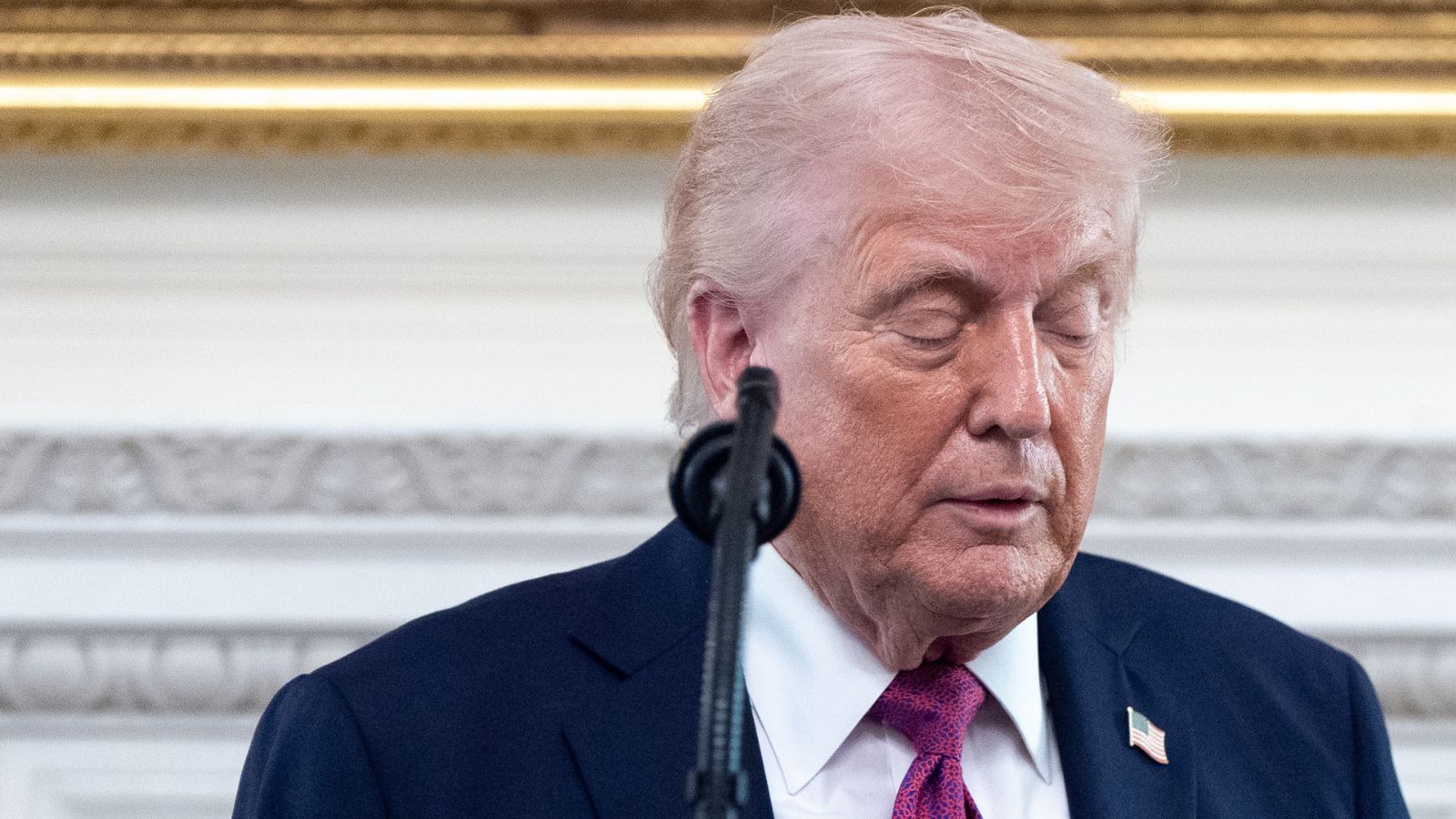
Donald Trump just put a very specific price tag on Iran's survival: $500 million a day. According to the president, that's exactly what Tehran's "fractured" leadership is bleeding every 24 hours while the U.S. Navy keeps the Strait of Hormuz under a total blockade.
It’s a staggering claim that frames the current Middle East standoff not just as a military chess match, but as a race against national bankruptcy. Trump’s message on Truth Social was blunt: Iran is "starving for cash," and their public threats to close the Strait are nothing more than a face-saving routine because the U.S. has already beaten them to the punch.
But is Iran actually losing half a billion dollars every single day? The math behind that number tells a wild story about the 2026 energy crisis and why this specific strip of water has become the world’s most expensive parking lot.
The logic behind the 500 million dollar claim
To understand Trump’s math, you have to look at what’s currently stuck behind the line. The Strait of Hormuz is the jugular vein of the global economy. Usually, about 20% of the world's oil flows through this narrow passage between Iran and Oman. When you factor in the massive spike in crude prices—which recently surged past $120 per barrel—the value of the cargo sitting on those tankers is astronomical.
If you calculate Iran’s potential export capacity at current peak market prices, combined with the "transit fees" they were reportedly trying to extort from commercial ships before the blockade, the numbers start to climb. Trump’s argument is that the "blockade" isn't just stopping oil; it’s stopping the lifeblood of a regime that's already dealing with internal unrest and unpaid police forces.
A fractured leadership under pressure
One of the more explosive parts of the president's latest update is the claim that the Iranian government is "seriously fractured." This isn't just rhetoric. Following the chaos earlier this year, including the reported death of the former Supreme Leader, the transition to his son’s leadership hasn't been smooth.
I’ve seen reports suggesting that the military and police in Tehran are complaining about missed paychecks. When the guys with the guns aren't getting paid, the people in power start to sweat. That’s the "SOS" Trump is talking about. He’s betting that the economic pain will force a deal before the military has to fire another shot.
Why the "Save Face" narrative matters
Iran has historically used the threat of closing the Strait as its ultimate trump card. By claiming that the U.S. has already effectively closed it via a naval blockade, Trump is stripping away Tehran's biggest leverage point. If the Strait is already "closed" to their exports, they can't threaten to close it anymore. They’re just stuck on the wrong side of the door.
The 2026 oil price shockwave
Let’s be real: this blockade isn't just hurting Iran. It’s a gut punch to the entire world. Since the conflict escalated in February, we've seen:
- Brent Crude prices jumping 10-13% in single-day trading sessions.
- QatarEnergy declaring force majeure on LNG exports, which has sent European gas benchmarks through the roof.
- A "grocery supply emergency" in Gulf states that rely on the Strait for 80% of their food.
For the average person, this means the price of everything—from the gas in your tank to the bread on your table—is tied to how long this "ceasefire with a blockade" lasts. Trump is using this economic pressure as a vice. He’s basically telling Iran, "You can have your $500 million a day back, but only if you play by my rules."
What happens if the deal fails?
The current ceasefire is a fragile thing. It was extended at the request of Pakistan, which is trying to play mediator in Islamabad. But Trump hasn't been shy about his "Plan B." He’s mentioned that the military is "raring to go" and has even floated the idea of targeting power plants and bridges if a unified proposal doesn't come from Tehran soon.
The risk here is a total regional meltdown. If the blockade continues indefinitely, Iran might feel it has nothing left to lose. Breaking a blockade by force is an act of war, and we've already seen thousands of casualties in this conflict.
The Jask Terminal factor
Interestingly, Iran has been trying to bypass the Strait entirely by using the Jask terminal, located outside the chokepoint. However, satellite imagery shows these exports are sporadic at best. It’s a tiny band-aid on a massive wound. Without the Strait, Iran’s economy simply doesn't have enough oxygen to survive long-term.
Your next steps in a volatile market
If you're watching this situation, don't just focus on the headlines. Watch the oil tickers and the news out of Islamabad. Here is how you should navigate the next few weeks:
- Watch the $100 Floor: As long as the Strait remains blockaded, don't expect oil to drop below $100. If talks in Islamabad fail, $150 isn't out of the question.
- Hedge for Inflation: We're looking at a sustained "energy tax" on the global economy. This isn't just about gas; it’s about the cost of shipping every physical product you buy.
- Ignore the Posturing: Both sides are going to claim they’re winning. The real metric of success is whether tankers start moving again. Until they do, the $500 million daily loss is a reality that Tehran has to deal with.
The clock is ticking on that ceasefire. Trump seems content to wait until the cash runs out, but the rest of the world is paying the price at the pump while he does.