Imagine waiting 52 years to see your country play on football's biggest stage, only to have your dream ripped away just weeks before kickoff.
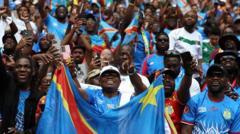
That is the crushing reality facing thousands of football fans from the Democratic Republic of Congo. For the first time since 1974, when the nation competed as Zaire, the Leopards have qualified for the FIFA World Cup. But an active outbreak of a rare Ebola strain in the eastern region of the country has triggered strict international travel policies. Now, fans who saved for years and bought match tickets find themselves completely blocked from entering the United States.
The situation has prompted the DR Congo Football Association to seek relief and ticket refunds from FIFA. It is a logistical nightmare, an absolute emotional gut-punch, and a reminder of how quickly public health crises can collide with global sports.
The 30 Day Border Lockdown
The trouble started when the U.S. Centers for Disease Control and Prevention issued a sweeping emergency order. The directive implements a 30-day entry ban on all foreign nationals who have been in the Democratic Republic of Congo, Uganda, or South Sudan within the previous 21 days.
The policy aims to mitigate the spread of the Bundibugyo ebolavirus variant. Unlike the more common Zaire strain, this particular variant does not have a widely available, approved vaccine. The World Health Organization recently designated the situation a public health emergency of international concern. Data from the European Centre for Disease Prevention and Control highlights the rapid escalation, reporting over 500 suspected cases and 130 deaths.
While the policy makes sense from a disease-containment standpoint, it creates a devastating double standard for the tournament.
- The Players: Safe in a European bubble.
- The Delegation: Subject to strict isolation, but cleared to play.
- The Fans: Completely barred from entry.
A senior U.S. State Department official confirmed the hard truth, stating that while the government expects the national team to participate, they do not anticipate any travel exemptions for Congolese fans.
Splitting the Team From the Nation
Logistically, the Leopards themselves will dodge the ban. The majority of the squad and French head coach Sébastien Desabre live and play professionally abroad, mostly in France and the English Premier League.
To keep their World Cup dreams alive, the federation completely overhauled its pre-tournament schedule. A planned three-day training camp and a massive public farewell ceremony in the capital of Kinshasa were abruptly canceled. Instead, the team is confined to a strictly monitored 21-day health bubble in Belgium.
From Belgium, they will fly directly to their tournament base in Houston, Texas, completely bypassing their home soil to ensure they comply with the 21-day clear window.
"There were three stages of preparation: in Kinshasa to say goodbye to the public, Belgium and Spain, and the third stage in Houston," team spokesman Jerry Kalemo told reporters. "Only one stage was canceled—the one in Kinshasa."
The remaining staff members who were still in Congo were rushed out of the country immediately after the CDC order dropped. If anyone in the official delegation breaks the bubble or sets foot in the DRC, their eligibility to enter the U.S. is canceled.
The Push for FIFA Ticket Refunds
The fans are left holding expensive, useless pieces of digital paper. Tickets for the 2026 World Cup are notoriously difficult to secure and represent a massive financial investment, especially when factoring in the cost of flights and accommodation that now must be canceled.
Because the ban is an absolute government mandate with zero exceptions, Congolese football authorities are appealing directly to FIFA for ticket relief. Fans did not back out because they changed their minds. They are legally barred from flying.
FIFA states it is monitoring the situation and maintaining close communication with the DR Congo Football Association regarding medical and security guidance. But the governing body has not yet publicly detailed a streamlined refund framework for the affected ticketholders. Historically, FIFA ticket terms are incredibly rigid, but a state-enforced health ban of this scale puts pressure on Zurich to do the right thing.
What Happens Next on the Pitch
Despite the heartbreak back home, the matches will go ahead. The Leopards are slotted into a brutal Group K alongside Portugal, Colombia, and Uzbekistan.
The team will continue their warm-up matches in Europe, facing Denmark in Liege, Belgium, and Chile in southern Spain. On June 11, they are scheduled to land in Houston to prepare for their opening match against Portugal on June 17.
If you are a fan currently impacted by this travel ban, your immediate next steps are clear. Do not wait for a formal announcement from FIFA. Log into your official FIFA Ticketing Portal account and submit a formal inquiry citing the CDC emergency travel ban. Concurrently, contact your airline and hotel providers immediately. Because this is triggered by an official WHO-declared public health emergency, many airlines are quietly triggering their force majeure policies, allowing for flight credits or full refunds that would normally be denied under standard ticket tiers.