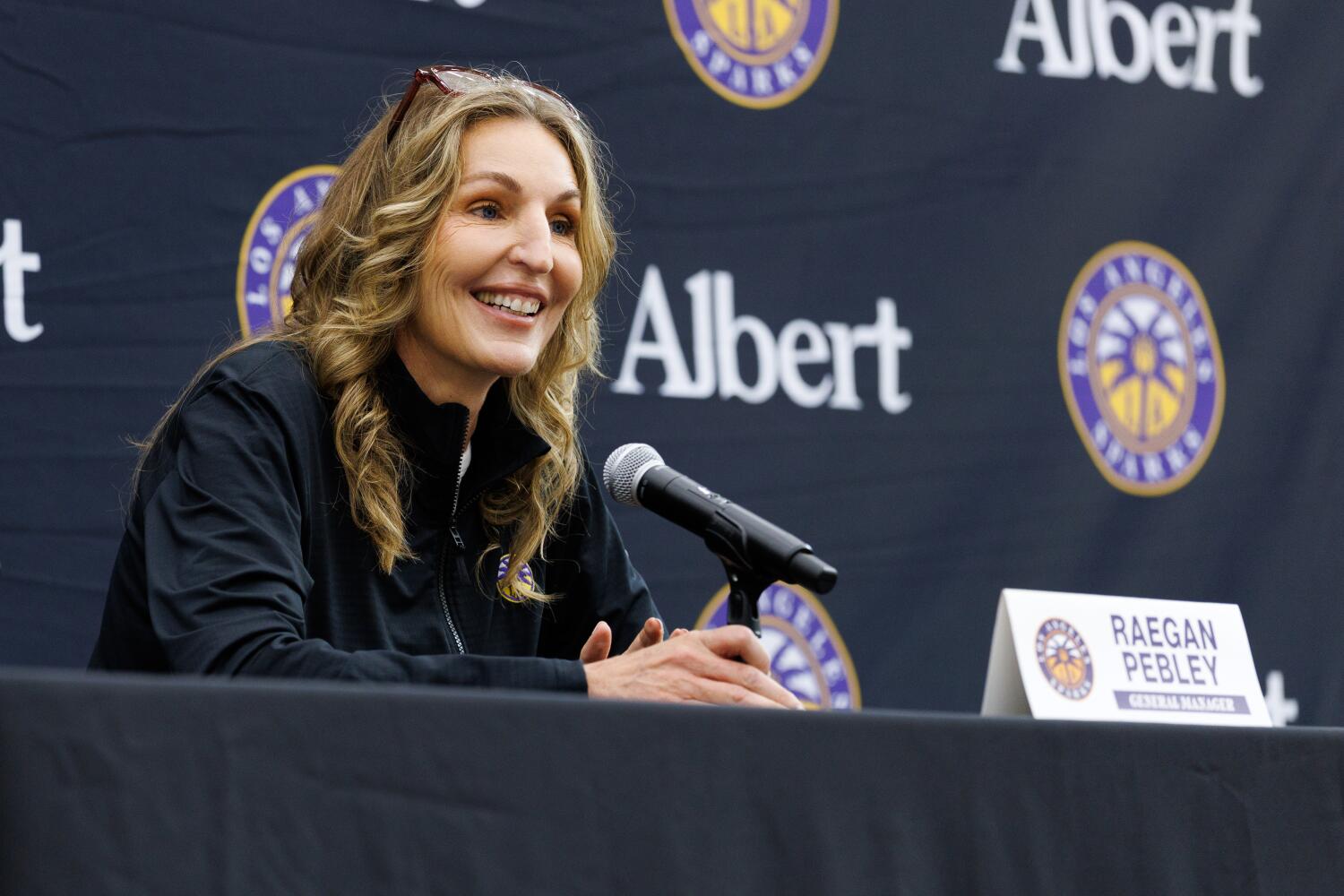
The midseason dismissal of Los Angeles Sparks General Manager Raegan Pebley highlights a fundamental reality of professional sports asset management: draft capital and high-profile trades yield zero enterprise value without structural roster alignment. Pebley’s departure, announced following a 10-11 start to the 2026 WNBA season, concludes a 39-66 executive tenure defined by high-variance roster churn.
To analyze the trajectory of the Sparks franchise under this regime, one must move past superficial narratives of a "lackluster season." The organizational failure was not merely a byproduct of on-court wins and losses; it was a systemic failure to execute a coherent rebuild timeline. Also making waves in this space: The Brutal Price of World Cup Glory.
The Strategic Misalignment Function
A sports franchise undergoing a rebuild operates under a strict resource allocation framework. Executive performance is measured by the optimization of draft equity, salary cap flexibility, and talent development timelines. The primary structural error of the Sparks front office was the constant oscillation between a long-term tanking strategy and short-term win-now maneuvers.
The tension within this strategy is visible across three specific execution variables: Additional insights regarding the matter are covered by FOX Sports.
1. Incompatible Talent Timelines
In the 2024 WNBA Draft, the organization selected foundational pillars Cameron Brink and Rickea Jackson. Standard roster construction dictated anchoring the salary cap to the rookie scale contracts of these core assets while accumulating complementary, age-aligned depth. Instead, subsequent transaction cycles introduced veteran pieces that compressed the developmental window. The 2025 acquisition of veteran guard Kelsey Plum, followed by the 2026 signings of Nneka Ogwumike and Erica Wheeler, signaled an aggressive push for immediate postseason contention that conflicted with the biological peak of the team's young core.
2. Premium Asset Liquidation
The structural flaw in the front office logic crystallized during the 2026 offseason. Trading forward Rickea Jackson—a cost-controlled, elite lottery asset—for veteran guard Ariel Atkins represented a complete subversion of the rebuilding model. The transaction traded away surplus future value for realized, declining production. The move failed to shift the Sparks into genuine championship contention while simultaneously depleting the club's long-term talent reserve.
3. Structural Roster Inefficiency
The rapid roster turnover created structural gaps in on-court production. The roster lacked the specialized skill sets—specifically perimeter spacing and rim protection outside of Brink—required to execute modern positional basketball. The frequent shuffling of personnel left head coach Lynne Roberts, hired in late 2024 to replace Curt Miller, with an incoherent distribution of positional value, resulting in a 21-23 record in 2025 and an unstable .476 winning percentage in 2026.
Quantitative Drift: The Cost of Executive Inexperience
Hired in January 2024 with a background exclusively in collegiate coaching, Pebley entered the front office without prior professional executive experience. The subsequent operational metrics reveal the cost of this steep learning curve:
- Gross Win-Loss Efficiency: A cumulative winning percentage of .371 (39-66) over two and a half seasons.
- The Playoff Drought Multiplier: The 10-11 record placed the team ninth in the WNBA standings, positioning the franchise to miss the playoffs for a sixth consecutive year—a historic low for a franchise holding three league championships (2001, 2002, 2016).
- Coach-to-GM Frictional Drag: Terminating Curt Miller after a disappointing 2024 campaign absorbed valuable organizational capital. While the Roberts appointment stabilized the team's floor, the structural flaws of the roster ultimately limited the ceiling of the coaching staff.
Operational Risk Analysis of the Co-GM Interim Model
The Sparks ownership group, led by managing partner Eric Holoman, has opted to split interim general managerial responsibilities between assistant GMs Zach Knowlton and Nate Nielsen. While this mitigates immediate operational disruption during a crucial four-game road trip, co-leadership models present distinct corporate risks.
First, divided decision-making authority dilutes accountability. In a league with a strict salary cap and limited roster spots, transaction execution requires a singular, decisive vision. Split management can lead to paralysis by analysis, particularly as the trade deadline approaches.
Second, agent-to-front-office communication channels become convoluted. Professional sports agencies prefer negotiating with a definitive decision-maker. A bifurcated front office risks miscommunicating asset valuations during contract or trade discussions.
The interim front office faces an immediate tactical mandate. The organization must decide within the next thirty days whether to liquidate expiring veteran contracts for future draft capital or hold the current roster in an attempt to capture the eighth seed. Given the historical weight of the franchise's legacy, the temptation to push for a marginal playoff appearance is high.
However, the data indicates that executing a hard pivot back toward an asset-accumulation model is the only path toward sustainable title contention. The interim regime must treat every veteran asset not aligned with Cameron Brink’s developmental horizon as a tradable commodity. True stabilization will not come from surviving the current road trip; it will come from ruthlessly correcting the asset mismatch left behind by the previous front office.