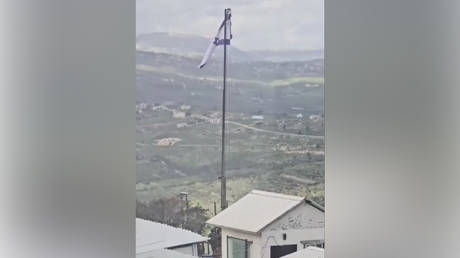
The sight of an Israeli flag flying within sight of a United Nations position in Southern Lebanon isn't just a provocative photo op. It's a calculated signal that changes the rules of the game for international peacekeeping. Recently, the Israeli Defense Forces (IDF) planted their national colors near a UNIFIL (United Nations Interim Force in Lebanon) outpost, and the reaction from New York to Beirut has been nothing short of explosive. This isn't some minor border dispute. It's a direct challenge to the safety of thousands of soldiers from across the globe who are caught in the middle of a war they aren't supposed to fight.
You've probably heard the UN's "grave concern" speeches before. They usually sound like white noise. But this time, the spokesman for UNIFIL didn't mince words. He called the move a risk to peacekeepers, and he's right. When one side of a conflict uses UN geography as a tactical backdrop or a shield, the neutrality that protects those blue helmets evaporates. For another view, read: this related article.
The IDF Flag and the Breakdown of the Blue Line
The "Blue Line" is supposed to be the invisible wall that keeps the peace. Since 2000, it has served as the withdrawal line between Israel and Lebanon. UNIFIL’s job is to monitor it. But an invisible wall doesn't stop a physical flag from being planted. By placing the Israeli flag in such proximity to a UN position, the IDF isn't just marking territory; they're blurring the line between their military objectives and the UN’s neutral mission.
Why does this matter to you? Because it makes the UN troops look like they're picking a side, even if they're just sitting in their barracks. Hezbollah, or any other militant group in the area, doesn't need much of an excuse to target a location. If they see an Israeli flag fluttering next to a UN watchtower, that watchtower becomes a target. The IDF knows this. The UN knows this. Yet, the flag stays. Further coverage on this matter has been published by The Washington Post.
The spokesman's warning reflects a reality on the ground that's getting messier by the hour. We’re seeing a shift from "peacekeeping" to "survival." When the IDF operates this close to international troops, the risk of "friendly fire" or accidental escalations skyrockets. It isn't just about the fabric of the flag. It's about the erosion of the international agreements that prevent a local skirmish from turning into a regional inferno.
Why Neutrality is Dying in Southern Lebanon
Peacekeeping relies on the consent of both parties. Right now, that consent is paper-thin. Israel argues that it has to clear out Hezbollah infrastructure that has moved right up to the UN’s front door. They claim that the UN hasn't done enough to enforce Resolution 1701, which was supposed to keep the area south of the Litani River free of any armed personnel except the Lebanese army and UNIFIL.
Israel’s frustration is visible. They feel the UN has been a passive observer while tunnels were dug and rockets were stockpiled. So, they've taken matters into their own hands. Planting a flag near a UN post is a way of saying, "If you won't clear this area, we will." It’s a bold, aggressive stance that prioritizes immediate military security over long-term diplomatic stability.
But here’s the flip side. If the UN can’t guarantee its own safety because the IDF is using its positions for cover or signaling, then the whole mission is effectively dead. We’re looking at a scenario where peacekeepers become hostages to the geography of the war. They can’t leave because the UN mandate requires them to stay, but they can’t stay without being in the direct line of fire.
The Human Cost of High-Stakes Posturing
Let’s talk about the soldiers in those outposts. They aren't just faceless "peacekeepers." They’re young men and women from Ireland, Italy, Indonesia, and Ghana. They’re thousands of miles from home, sitting in concrete bunkers while shells land nearby. When the IDF plants a flag next to them, it essentially paints a bullseye on their roof.
I’ve seen how these dynamics play out in conflict zones. It starts with a flag. Then it’s a temporary observation post. Then it’s a "security corridor." Before you know it, the neutral zone is a frontline. The UNIFIL spokesman highlighted that this puts personnel at risk, and that’s an understatement. It turns them into human shields by default.
- Risk of Miscalculation: A drone strike or artillery shell doesn't always hit its mark. The closer the IDF gets to UN positions, the higher the chance of a "mistake" that kills international troops.
- Political Fallout: If a UN soldier from a European or Asian nation is killed by IDF fire—or because the IDF used their position as a shield—the diplomatic backlash against Israel will be massive.
- Hezbollah’s Advantage: This situation gives Hezbollah a PR win. They can claim the UN is collaborating with Israel, justifying attacks on peacekeepers.
What Happens When the UN Loses Its Teeth
The UN has always been criticized for being "toothless," but it's important to understand what happens when it's gone. If UNIFIL is forced to withdraw because the risk is too high, there’s no buffer left. It’s total war. The presence of those blue helmets, however flawed, provides a layer of hesitation for both sides. Removing that layer is like taking the brakes off a car going downhill.
The IDF’s move with the flag is a symptom of a larger strategy. They aren't just fighting Hezbollah; they're reshaping the international perception of the border. By ignoring UN warnings and planting their flag, they're signaling that international law is secondary to their survival. It’s a stance that many in Israel support, but it's one that makes the rest of the world incredibly nervous.
We need to be honest about the failure of Resolution 1701. It didn't work. Hezbollah stayed, and now Israel is back. The UN is stuck in the middle of a failed policy, and the soldiers on the ground are paying the price. The flag incident is the clearest sign yet that the status quo is over.
Navigating the Fallout
You should keep a close eye on the troop-contributing countries. Watch for statements from Dublin, Rome, and Paris. If those governments decide the risk to their soldiers is too high, they’ll pull them out. That's the real danger here. Not just a flag, but the total collapse of the international presence in Lebanon.
If you’re following this, don't just look at the headlines about "tensions." Look at the maps. Look at how close these IDF positions are to the UN outposts. The closer they get, the more likely we are to see a tragedy that no one—not even Israel—actually wants.
The next steps for the international community are clear but difficult. There has to be a hard conversation about the UNIFIL mandate. It’s either going to get stronger "teeth" to actually push Hezbollah back, or it’s going to have to get out of the way. Sitting there as a backdrop for IDF flag-planting is the worst of both worlds.
Stay informed by checking the daily briefings from the UNIFIL Media Office and cross-referencing them with IDF operational reports. Don't take either side's word as gospel. The truth is usually found in the dangerous space between the two. The flag is just a piece of cloth, but in the tinderbox of Southern Lebanon, it's a match.