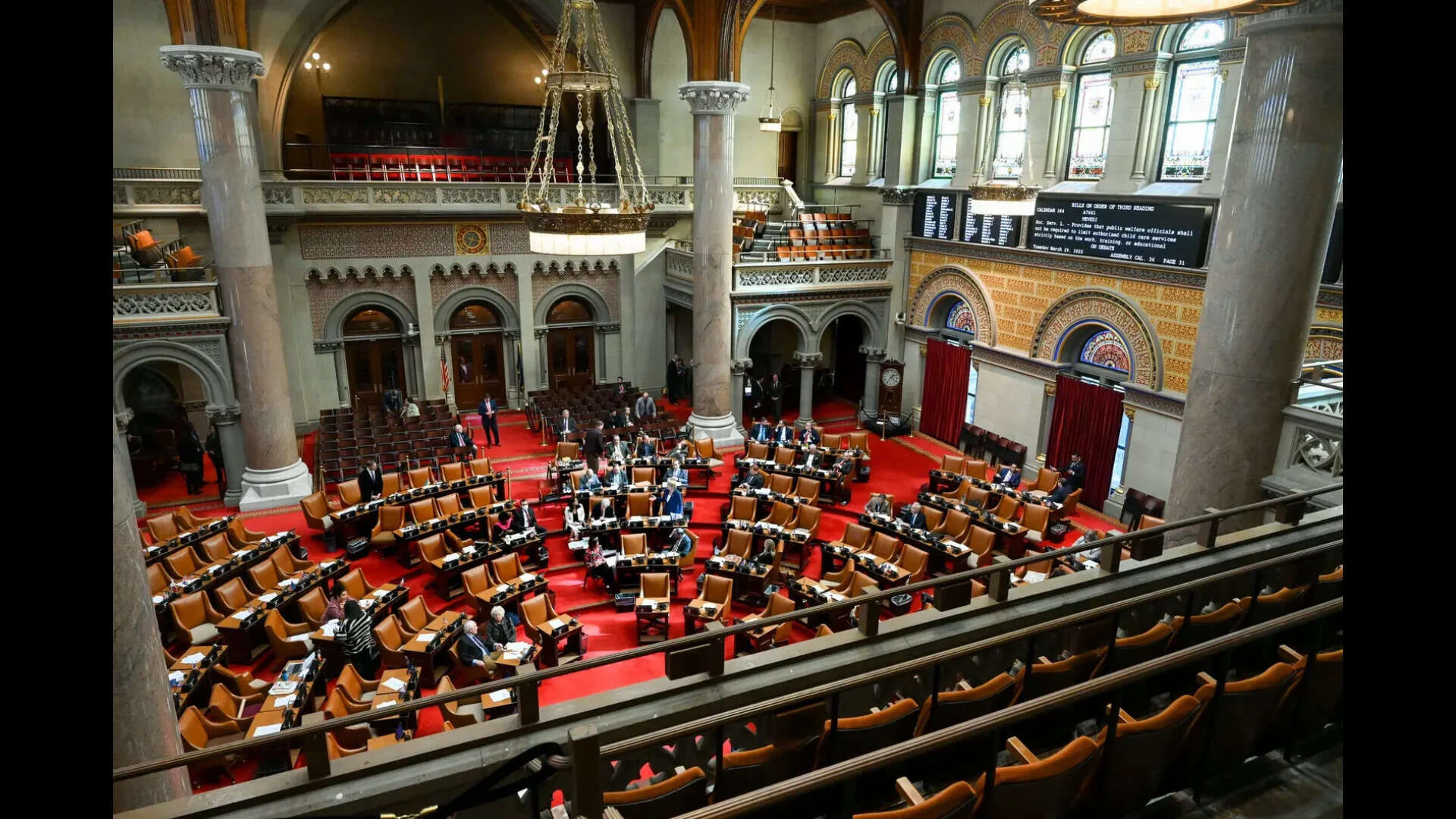
The failure of the New York State Legislature to advance explicit anti-caste discrimination bills reveals a fundamental structural friction between existing civil rights frameworks and contemporary diaspora politics (Charasala, n.d.). While popular media narratives often frame these legislative stalemates through the lens of identity politics or emotional communal testimony, the operational reality is governed by a distinct legal and strategic bottleneck. Legislative bodies do not merely vote on intent; they vote on statutory definitions, constitutional vulnerabilities, and litigation mechanics.
To evaluate why caste-specific amendments fail to clear legislative hurdles in progressive jurisdictions like New York, analysts must move past partisan rhetoric and evaluate the underlying structural architecture. This phenomenon is best understood by deconstructing the legislative mechanics, the asymmetric incentives of the lobbying coalitions, and the internal legal friction that occurs when importing an external social stratification system into American jurisprudence.
The Tri-Partite Structural Bottleneck
The legislative inertia surrounding caste discrimination bills in New York can be mapped to three structural bottlenecks that complicate the amendment of existing human rights laws.
1. The Statutory Redundancy Vector
The primary institutional argument against introducing "caste" as a standalone protected category is the statutory redundancy vector. Under New York Executive Law § 296 and Title VII of the Civil Rights Act of 1964, individuals are already protected against discrimination based on race, color, national origin, religion, and creed (Charasala, n.d.; Carle, 2010).
Legal counsels within legislative bodies operate under the principle of legislative economy. If an injury can be structurally addressed through an expansive interpretation of existing categories—such as tracking caste discrimination back to national origin or ancestry—adding a highly specific sub-category introduces statutory bloat.
Opponents of separate bills leverage this by arguing that explicit inclusion implies that existing laws are fundamentally broken, rather than merely under-enforced (Levinson, n.d.).
2. The Definitional Asymmetry Problem
A major hurdle for policy drafting teams is the definitional asymmetry problem. Unlike "race" or "sex," which possess established, albeit socially constructed, parameters in Western law, "caste" lacks a universally accepted statutory definition within American jurisprudence (Miller, n.d.).
Drafting a definition that is broad enough to cover global stratification systems (such as those in South Asia, East Asia, or West Africa) yet precise enough to survive vagueness challenges under the Due Process Clause creates a severe drafting bottleneck.
If the definition is explicitly tied to South Asian contexts, it faces immediate strict scrutiny under the Equal Protection Clause for targeting a specific ethnic minority group. If it is written too broadly, it risks transforming every corporate or institutional hierarchy grievance into a potential protected-class lawsuit.
3. The Constitutional Vulnerability Matrix
The third bottleneck involves the intersection of administrative law and the First Amendment. Prominent advocacy groups, such as the Hindu American Foundation, have established a highly effective litigation blueprint centered on the Free Exercise Clause and civil rights protections against national origin discrimination (Ram, n.d.).
The core legal argument posits that by explicitly identifying caste—a concept historically and sociologically intertwined with Hinduism in public consciousness—the state creates an essentialist caricature of a specific religious and ethnic minority (Ram, n.d.).
This introduces an acute structural liability for the state: any bill passed risks an immediate federal injunction on the grounds that it violates the Establishment Clause by requiring state agencies to referee internal theological or cultural classifications.
Asymmetric Incentive Mechanics and the Coalition Deficit
The legislative trajectory of New York's anti-caste initiatives demonstrates a stark asymmetry in lobbying mechanics between pro-amendment coalitions and anti-amendment organizations. Understanding this dynamic requires looking at the concentration of costs and benefits across both interest groups.
The pro-amendment coalition, largely led by Bahujan and Dalit rights organizations alongside progressive civil rights allies, operates on a highly distributed incentive model. The benefit they seek is systemic legal recognition and an explicit avenue for civil litigation in cases of workplace or housing discrimination (Charasala, n.d.). However, because the South Asian diaspora is geographically dispersed across New York's downstate tech, financial, and medical corridors, mobilizing a concentrated, unified voting bloc within specific legislative districts remains difficult.
Conversely, the anti-amendment coalition features a highly concentrated incentive model. For conservative diaspora organizations, the perceived cost of the legislation is asymmetric and existential: they argue that the bill codified a structural stigma, effectively creating a legal presumption that South Asian managers are uniquely prone to intra-community bias (Ram, n.d.).
This perceived high stakes environment mobilizes a highly disciplined, affluent, and politically integrated donor class. Because these organizations can concentrate campaign contributions, legal talent, and targeted grassroots pressure on key suburban swing districts—particularly in parts of Long Island, Queens, and the Hudson Valley—they exert an outsized veto power over committee chairs.
This asymmetry alters the risk-reward calculus for state legislators. For a typical committee chair, advancing an anti-caste bill yields marginal political upside among the general electorate, who are largely unfamiliar with the nuance of the issue. However, doing so incurs a guaranteed, highly organized, and well-funded electoral backlash from an influential segment of a key immigrant constituency. Under standard public choice theory, when benefits are diffuse and costs are concentrated, the legislative default is structural paralysis.
The Cost Function of Alternative Dispute Vectoring
Because explicit statutory paths remain blocked in New York, the fight over caste discrimination has shifted toward alternative administrative and corporate dispute vectors. This operational shift bypasses the legislature entirely, substituting statutory amendments with administrative reinterpretations.
The primary mechanism for this shift is the deployment of disparate impact theory by state enforcement agencies and corporate compliance departments (Carle, 2010). Rather than waiting for the legislature to add "caste" to the text of the law, litigants use existing prohibitions on "national origin" or "ancestry" to capture caste-based harms (Charasala, n.d.).
[Statutory Gridlock] ---> [Corporate Policy Modification] ---> [Internal Adjudication Vector]
          |                                                             |
          v                                                             v
[Legislative Failure]      [Administrative Reinterpretation]         [High Arbitrage / Low Transparency]
This structural workaround changes the cost function of discrimination claims for employers in two ways:
- The Shift to Private Adjudication: Major tech firms and universities operating in New York have increasingly updated their internal codes of conduct to explicitly ban caste discrimination, treating it as an internal compliance issue rather than a statutory liability. This insulates organizations from public litigation while signaling progressive alignment to employees.
- Information Arbitrage and Enforcement Variance: Because these corporate policies are decoupled from uniform statutory definitions, enforcement varies wildly between organizations. This creates a fragmented compliance environment where a worker’s protection depends entirely on their employer's internal policy framework rather than standardized state protection.
This administrative shift carries structural limitations. While internal corporate policy updates offer immediate, localized remediation for white-collar workers in tech or academia, they offer virtually zero protection to precarious labor forces in the service, domestic, or logistical sectors. These vulnerable populations rely exclusively on the explicit statutory text enforced by state agencies like the New York State Division of Human Rights. By forcing the issue out of the legislature and into corporate human resource departments, the current strategy inadvertently deepens the protection gap between high-income tech professionals and low-wage immigrant laborers.
The Operational Playbook for Future Civil Rights Policy
For civil rights strategists, labor organizers, and policymakers seeking to address intra-community discrimination within immigrant populations, the New York stalemate offers a clear operational lesson: seeking explicit, identity-specific statutory additions in a hyper-polarized legislative environment is a high-cost, low-yield strategy.
The optimal path forward lies in a fundamental pivot toward structural neutrality. Instead of drafting legislation around the politically charged term "caste," policy teams should focus on expanding universally understood categories such as "ancestry," "lineage," or "inherited social status."
By anchoring protections within an expanded definition of ancestry, policymakers can neutralize the constitutional vulnerabilities associated with the Free Exercise Clause. This neutral phrasing prevents opposing coalitions from claiming that a specific ethnic group or religion is being singled out by the state (Ram, n.d.). Furthermore, it broadens the advocacy coalition by naturally extending protections to other global diaspora groups who experience distinct forms of lineage-based stratification, thereby solving the coalition deficit that doomed the New York bills.
References
Carle, S. D. (2010). A social movement history of Title VII disparate impact analysis. SSRN Electronic Journal. https://doi.org/10.2139/ssrn.1538525
Cited by: 111
Charasala, P. (n.d.). Caste discrimination in NY - Starting a conversation. Scholarship@Cornell Law.
Cited by: 0
Levinson, S. V. (n.d.). Under what circumstances is "caste" likely to be useful as an analytic concept (and should we care)?. Scholarly Commons at Boston University School of Law.
Cited by: 3
Miller, J. L. (n.d.). Transgender teens face discrimination from gender-affirming affirmative action in college admissions is struck down by Michael. New Jersey State Bar Foundation.
Cited by: 29
Ram, S. (n.d.). Casteism and the Hindu far-right: A statutory proposal for adding caste as a protected class to Title VII. Columbia Human Rights Law Review, 57(2).
Cited by: 0