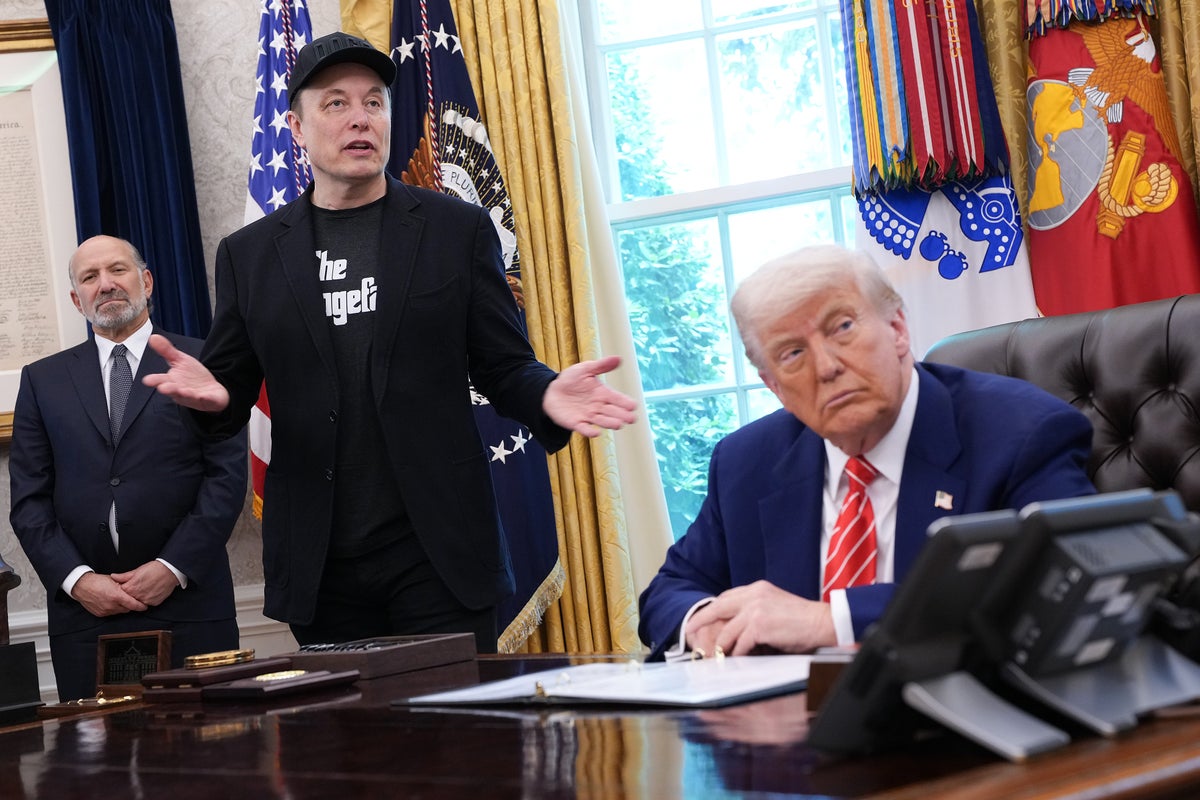
The headlines played exactly how Elon Musk wanted them to.
"Billionaire offers to save the day; Bureaucracy says no." It’s a seductive narrative for the libertarian-leaning tech crowd. It paints the federal government as a stagnant, ungrateful machine that would rather let its workers go hungry during a Department of Homeland Security shutdown than accept a check from a private citizen. If you found value in this article, you might want to check out: this related article.
But the "legal challenges" cited by the White House weren't just red tape or petty ego. They were the final guardrails against a total collapse of public accountability.
If you think the government was being "difficult" by turning down Musk’s offer to pay TSA salaries, you don’t understand how power works. You’re looking at a $50 million PR stunt and mistaking it for a policy solution. For another perspective on this story, check out the latest coverage from Reuters Business.
The moment a private individual starts cutting checks to federal agents, the agent no longer works for the taxpayer. They work for the individual.
The Myth of the "Clean" Donation
The common argument is simple: The workers are suffering, Musk has the cash, so just let him pay them. It’s "common sense," right?
Wrong. In the world of federal appropriations, there is no such thing as a "clean" gift. The Antideficiency Act (31 U.S.C. § 1341) isn't some obscure suggestion; it’s the bedrock of civilian control over the military and law enforcement. It forbids the government from accepting voluntary services or funding outside of what Congress has specifically authorized.
Why? Because the power of the purse is the only real power the people have left.
Imagine a scenario where a defense contractor offers to "bridge the gap" for the Pentagon during a budget stalemate. Or a pharmaceutical giant offers to cover the payroll for the FDA's inspectors during a lapse in funding. We wouldn't call that "generosity." We would call it a corporate takeover of the regulatory state.
By rejecting Musk, the administration wasn't sticking it to a visionary; they were preventing the precedent of "Sovereignty for Sale."
The Liability Nightmare Nobody Mentions
Let’s talk about the logistics that the "let him pay" crowd ignores.
If Musk pays a TSA agent's salary, who is liable when that agent misses a weapon in a carry-on? Does the Federal Tort Claims Act still apply? If the agent is injured on the job while being paid by a private citizen, does the government's workers' compensation kick in, or is that now Musk’s problem too?
When you privatize the payroll of a security agency, you complicate the chain of command until it snaps. A TSA agent is a federal officer with the authority to search, seize, and detain. That authority is derived from the state. If the state isn't the one providing the compensation, the legal justification for that authority enters a gray zone that would keep constitutional lawyers in business for a century.
I’ve seen tech founders try to "disrupt" highly regulated industries—from healthcare to aerospace—by ignoring these foundational legal structures. They treat laws like software bugs that can be patched in the next release. But constitutional law isn't a beta test. You can't "move fast and break things" when the thing you’re breaking is the chain of custody for national security.
The Hostile Takeover of Public Sentiment
Musk knows the offer was impossible to accept. That’s the point.
This wasn't a genuine attempt to help workers; it was a tactical maneuver to highlight government incompetence. By making an offer he knew would be rejected, he shifted the blame for the shutdown’s impact from the political actors in D.C. to the "stubborn" executive branch.
It’s a classic move:
- Identify a point of public friction (TSA lines, unpaid workers).
- Offer a flashy, simplistic solution that bypasses established law.
- Wait for the inevitable rejection.
- Use the rejection to fuel the narrative that "government is the problem."
If Musk actually wanted to help TSA workers, he could have donated $50 million to a 501(c)(3) nonprofit dedicated to federal employee relief. He could have set up a private grant system for families struggling with rent. He didn't. He offered to "pay the workers" directly—an act that specifically triggers the most rigid legal prohibitions in the federal handbook.
He didn't want to solve the problem. He wanted to own the optics of the failure.
The Danger of Feudalism 2.0
We are drifting toward a new era of techno-feudalism, where the wealthiest individuals provide the services the state can no longer manage. We see it in Starlink’s role in global geopolitics and in private "police forces" patrolling wealthy neighborhoods.
Accepting Musk’s offer would have been a massive leap toward that reality.
If the billionaire class starts paying for the "security" of the nation, the nation’s security will inevitably align with the billionaire class’s interests. When the government pays a salary, the employee’s loyalty is—at least theoretically—to the public interest and the Constitution. When a CEO pays that salary, the loyalty is to the benefactor.
The shutdown was a failure of governance, yes. It was a disgrace that workers were forced to work without pay. But the solution isn't to allow a single man to buy the loyalty of the front-line security of every airport in America.
Stop Asking "Why Won't They Let Him Help?"
The question itself is flawed. It assumes that "help" is a neutral act.
In the arena of state power, help is influence. Influence is control.
People ask: "Wouldn't you want to get paid if you were a TSA agent?" Of course. Every worker deserves their paycheck. But they deserve a paycheck from the government they serve, not a "gift" from a man who is simultaneously bidding on billions of dollars in federal contracts through SpaceX and Tesla.
The conflict of interest isn't just a footnote; it’s the whole story. You cannot be the government's biggest contractor and its primary financier at the same time. That’s not a partnership; that’s a monopoly on the state itself.
The "legal challenges" weren't an excuse. They were a confession that the government is still, for now, accountable to something other than the highest bidder.
Stop looking for a billionaire savior to fix the cracks in the system. The cracks are there because we’ve stopped demanding a functional government, and no amount of private charity can buy back a democracy once you’ve auctioned off its basic functions.
The White House didn't fail by saying no. They succeeded in preventing the TSA from becoming a subsidiary of X.
Don't celebrate the "offer." Fear the day it's finally accepted.