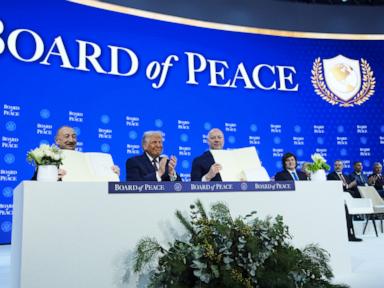
The room in Geneva smelled faintly of old paper and damp wool. Outside, the rain was relentless, blurring the neoclassical facades into streaks of gray. Inside, a group of people sat around an oval table, their faces illuminated by the harsh glow of laptop screens. They called themselves the Board of Peace. The name sounded grand, almost mythological, but the reality was far more fragile. These were not soldiers. They were lawyers, retired diplomats, and human rights advocates. They possessed no armies, no drones, no economic sanctions.
All they had was a piece of paper and a desperate, audacious plan.
They were drafting an appeal to the United Nations Security Council. The core demand was straightforward, yet staggering in its implications: the international community must exert maximum pressure on Hamas to disarm. To the casual observer tracking the conflict through erratic social media feeds, it seemed like just another bureaucratic gesture, a drop of ink in an ocean of blood. But to understand why this specific movement matters, one must look past the sterile language of international law and look into the quiet kitchens of Gaza and the fortified shelters of southern Israel.
We often view geopolitical conflicts through the lens of macro-politics. We talk about factions, state actors, ideological blocks, and military capabilities. We look at maps shaded in contrasting colors, as if human lives could be neatly categorized by a cartographer. This macro-view is comfortable. It detaches us. It allows us to analyze tragedy as if it were a game of chess.
But peace is never a macro-concept. It is deeply, painfully micro.
The Anatomy of an Iron Grip
To comprehend why the Board of Peace is taking this specific gamble, consider a hypothetical composite of reality: a young man named Tariq living in Khan Younis.
Tariq does not care about geopolitical alignments. He cares about the fact that his bakery has been destroyed twice in five years. He cares that his younger sister wakes up screaming every time a truck backfires. In Tariq’s world, the presence of weapons is not an abstract symbol of resistance; it is an omnipresent tax on existence. When a militant group operates within a densely populated civilian enclave, every basement becomes a potential target, every school a shield, every hospital a focal point of anxiety.
The conventional narrative often suggests that weapons provide security. We are conditioned to believe that a community is safe only when it is armed to the teeth.
History tells a different story.
When an asymmetric militant force holds a monopoly on violence within a blockaded territory, the first victims are almost always the people they claim to protect. The weapons do not just point outward toward an enemy; they point inward, establishing a regime of fear where dissent is equated with treason. For decades, the civilian population of Gaza has been trapped in a terrible pincer movement: squeezed on one side by a crushing economic blockade and military strikes, and held hostage on the other by an internal leadership that views civilian casualties not as a tragedy to be avoided, but as a strategic asset to be leveraged in the court of global public opinion.
The Board of Peace recognized this fundamental asymmetry. Their petition to the UN Security Council is built on a simple, uncomfortable truth: you cannot build a sovereign, thriving society while a non-state actor holds veto power through the barrel of a gun.
The Illusion of the Status Quo
There is a pervasive cynicism that blankets the United Nations. We see the vetoes. We watch the televised walkouts. We read the resolutions that gather dust in the archives of New York and Geneva. It is easy to dismiss this new initiative as an exercise in futility.
Why bother? What can a resolution achieve against decades of deeply entrenched hatred?
The answer lies in the nature of international legitimacy. Weapons require fuel. Not just literal gasoline or explosives, but the political and financial oxygen that allows them to exist. Hamas does not manufacture its entire arsenal from salvaged water pipes. It relies on a complex, subterranean network of international financing, state sponsorship, and ideological tolerance.
By demanding that the UN Security Council formally pressure Hamas to disarm, the Board of Peace is attempting to choke that oxygen supply.
Consider what happens when the highest body of international security shifts its stance. It forces a choice upon the nations that have historically looked the other way, or worse, actively funded the militancy. It transforms the conversation from a debate about territorial borders into a stark question of human rights: can a group claim to represent a people while actively maintaining an infrastructure that guarantees their destruction?
The skeptics will argue that disarmament is a fantasy. They will point to the failed disarmament campaigns of the past, from the Balkans to East Africa. They are right to be skeptical. Disarmament is messy, dangerous, and rarely perfectly executed. But the alternative is the preservation of a status quo that has proven itself to be a meat grinder for human potential.
The Invisible Stakes
Let us step away from the diplomatic chambers and look at the other side of the concrete wall.
Imagine a woman named Miriam living in a kibbutz just a few kilometers from the Gaza border. For Miriam, the threat is not an airstrike announced by a siren; it is the sudden, violent rupture of her domestic reality. It is the knowledge that beneath the soil she farms, tunnels may have been dug. It is the awareness that her children have a fifteen-second window to reach a bomb shelter when the red alert sounds.
Miriam and Tariq have never met. They likely never will. If they did, the weight of their respective griefs might make conversation impossible. Yet, their fates are tied together by a single knot: the presence of an unaccountable, armed faction that profits from permanent instability.
When the Board of Peace presents its case to the Security Council, they are representing the silent majority on both sides of the border who are exhausted by the theater of violence. They are arguing that the presence of thousands of rockets and illicit small arms is the single greatest barrier to any meaningful peace process.
It is an argument based on a clear historical precedent. True peace initiatives only succeed when the capacity to wage war is dismantled, or at least severely curtailed. Look at Northern Ireland. The Good Friday Agreement was a masterpiece of political compromise, but it would have collapsed into a heap of ash if it had not been accompanied by the verifiable decommissioning of paramilitary weapons. The weapons had to go first, because as long as the guns remained on the table, every political negotiation was merely a ceasefire in disguise.
The situation in Gaza is admittedly different, far more complex, and infinitely more volatile. But the psychological principle remains identical. Fear cannot negotiate. A community living under the constant threat of imminent annihilation cannot engage in the slow, agonizing work of reconciliation.
The Long Road to New York
The document drafted in that rain-slicked Geneva room will soon make its way to New York. It will be translated into six official languages. It will be bound in blue folders. It will be passed across desks to people who have spent their entire lives mastering the art of diplomatic evasion.
There will be debates over specific words. Phrases will be softened to appease specific global powers. The word "demand" might become "urge." The phrase "immediate disarmament" might be diluted to "a structured framework for the reduction of hostilities." This is the tedious, soul-crushing machinery of global governance. It is easy to lose heart during this process. It is easy to look at the bureaucratic editing and conclude that the human element has been entirely erased.
But the real power of this initiative does not lie in the final, watered-down text that the Security Council votes upon.
It lies in the fact that the question is finally being asked directly. It forces a confrontation with reality. For too long, the international community has treated the militancy in Gaza as a permanent weather condition—an unfortunate, violent storm that must be endured but cannot be changed. The Board of Peace is rejecting that fatalism. They are asserting that the militarization of Gaza is a human choice, and because it is a choice, it can be undone.
The journey ahead is long and fraught with failure. There will be more violence. There will be more moments where the cynical view seems like the only rational one. But as the delegates prepare to take the floor in New York, they carry with them the quiet, desperate hopes of people who are tired of living in the shadow of an endless war.
The rain in Geneva eventually stopped, giving way to a pale, uncertain twilight. The papers were packed into briefcases. The laptops were closed. The work was done, or rather, the true work was just beginning. It was a small step, a single petition in a world louder than ever. But sometimes, it is the quietest voices, speaking with the absolute clarity of human truth, that finally cause the empires to listen.