The sound of a collapsing building is not like the movies. There is no choreographed crescendo, no rhythmic orchestral swell to warn the senses. It is a jagged, mechanical scream of rebar tearing through concrete, followed by a thud so deep it vibrates in the marrow of your teeth. Then comes the dust. It is a gray, suffocating ghost that turns the midday sun into a dim, sickly copper coin.
In Lebanon, this sound has become the metronome of daily life.
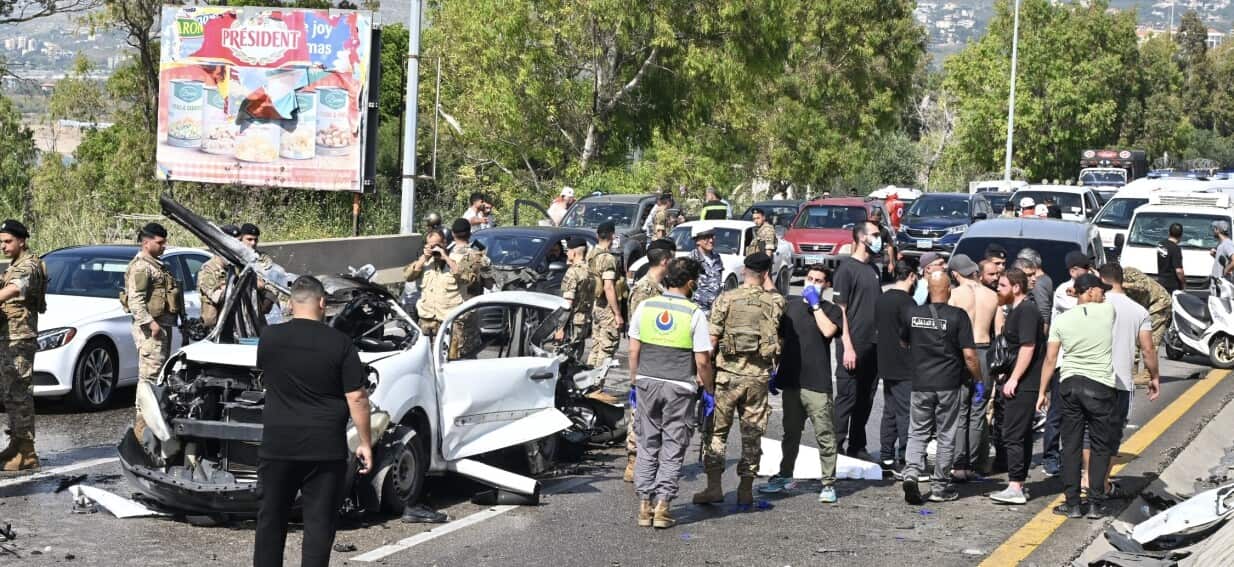
On a Tuesday that should have been defined by the mundane—the scent of strong coffee, the haggling over the price of bread, the sharp click of heels on pavement—the air instead filled with the static of tragedy. Seventeen lives ended in the blink of a shutter. Seventeen stories, each with its own specific geometry of love, debt, and ambition, were flattened into a single, sterile digit reported by the Lebanese Health Ministry.
Statistics are a sanctuary for the mind. They allow us to process horror without feeling the heat of the fire. But behind the report of seventeen dead in Israeli strikes across Lebanon lies a reality that defies the tidiness of a spreadsheet.
The Architecture of a Loss
Consider a hypothetical man named Elias. He is not a combatant. He is a grandfather who spent forty years teaching mathematics in a school that no longer has windows. When the strike hits the neighboring apartment block in a crowded suburb of Beirut, Elias isn't thinking about geopolitics or the shifting front lines of a regional shadow war. He is thinking about the leaky faucet in his kitchen.
When the munitions find their mark, the "collateral" isn't just the physical structure. It is the history of the room. The height marks penciled onto a doorframe for grandchildren who are now running for a border that feels a thousand miles away. The smell of za'atar that permeated the curtains.
The Israeli military maintains that these strikes are precision operations targeting Hezbollah infrastructure—launchpads, weapon caches, and command hubs nestled within the dense urban fabric. From a military strategic perspective, the logic is cold and calculated. But on the ground, "precision" is a relative term when a five-hundred-pound bomb meets a residential street.
The geometry of the blast doesn't care about the intent of the pilot. It follows the path of least resistance through hallways and bedrooms.
The Geography of Fear
The strikes weren't contained to a single street corner. They blossomed like dark flowers across the map of Lebanon. From the rolling hills of the south to the Bekaa Valley and the bruised heart of Beirut’s southern suburbs, the geography of the country is being rewritten by fire.
The health ministry's tally—seventeen dead, dozens more wounded—paints a picture of a nation under a surgical yet relentless siege. In the south, villages that have stood for centuries are being emptied. People pack their lives into the trunks of battered sedans: a sewing machine, a stack of photo albums, a gallon of olive oil pressed from trees that may not be there when they return.
They drive north toward a relative safety that feels increasingly like an illusion.
The human mind is resilient, but it has a breaking point. When you live in a landscape where the sky can turn lethal at any moment, the concept of "home" shifts. It ceases to be a place of permanence and becomes a temporary shelter. You start watching the birds. If they take flight suddenly, your heart rate spikes. You listen to the hum of drones—a persistent, buzzing anxiety that never truly leaves the back of your skull.
The Invisible Stakes
Why does this matter to someone sitting thousands of miles away, sipping a latte in a quiet suburb?
Because Lebanon is a mirror. It is a tiny, fractured, beautiful country that represents the delicate balance of a dozen different faiths and histories. When it burns, it isn't just a local tragedy; it is the fraying of a global thread.
The escalation between Israel and Hezbollah has moved past the stage of "border skirmishes." We are witnessing a deepening of a conflict that threatens to pull the entire region into a vortex. Every strike that claims seventeen lives—or ten, or fifty—adds a layer of sediment to the cycle of retribution.
Violence has a long memory. The children who crawl out from under the dust of today’s strikes are the authors of tomorrow’s history. When they look at the rubble of their homes, they aren't learning about the complexities of international law or the nuances of "proportionate response." They are learning the language of the crater.
The Cost of the Silence
In the aftermath of the strikes, there is a specific kind of silence. It occurs after the sirens have faded and before the mechanical diggers arrive to begin the grim task of searching for survivors. It is the silence of a neighborhood that has been exhaled.
Rescue workers, often volunteers with nothing but their bare hands and a few shovels, move through the wreckage. They are looking for signs of life, but more often, they find the artifacts of it. A single shoe. A school notebook with a half-finished essay on the cedars of Lebanon. A cell phone that won't stop ringing, the screen displaying a name like "Mama" or "Habibi."
No one answers those calls.
The seventeen people killed on this particular day will eventually be replaced in the news cycle by the victims of the next day. The headlines will shift. The world will look toward the next crisis, the next election, the next celebrity scandal.
But for the families left behind, the clock has stopped. They are trapped in the moment the dust rose. They are the ones who have to figure out how to bury their dead when the cemeteries are full and the roads are blocked by craters. They have to explain to a five-year-old why they can’t go back for their favorite toy.
The Breaking of the Pulse
Lebanon’s healthcare system, already reeling from years of economic collapse and the scars of the 2020 port explosion, is being pushed toward a total cardiac arrest. Doctors who haven't been paid in months are performing surgeries by the light of smartphones because the fuel for the generators has run out.
Every new strike brings a fresh wave of trauma to emergency rooms that are already drowning. It is a war of attrition played out on the bodies of civilians.
There is a tendency in the West to view the Middle East as a place where violence is inevitable—a "landscape of ancient hatreds." This is a lie we tell ourselves to feel better about our indifference. The people dying in these strikes are not "ancient." They are modern. They are programmers, shopkeepers, students, and nurses. They use Instagram. They worry about their carbon footprint. They want the same things everyone else wants: a quiet night, a full table, and a future that isn't measured in the distance between them and the nearest bomb shelter.
The tragedy of the seventeen isn't just that they died. It is that their deaths were preventable. They are the victims of a failure of imagination—a failure by the international community to find a language other than high explosives to settle a dispute.
As night falls over Beirut, the city is dark. Power cuts have seen to that. But if you look toward the horizon, you can see the occasional flash of a distant explosion, a silent bloom of orange against the purple sky. Each flash represents a life, a home, or a dream being extinguished.
In the morning, the health ministry will release a new number. We will read it. We will perhaps sigh. Then we will turn the page, while somewhere in a dusty street, a man sits on a pile of broken concrete, holding a set of keys to a door that no longer exists.