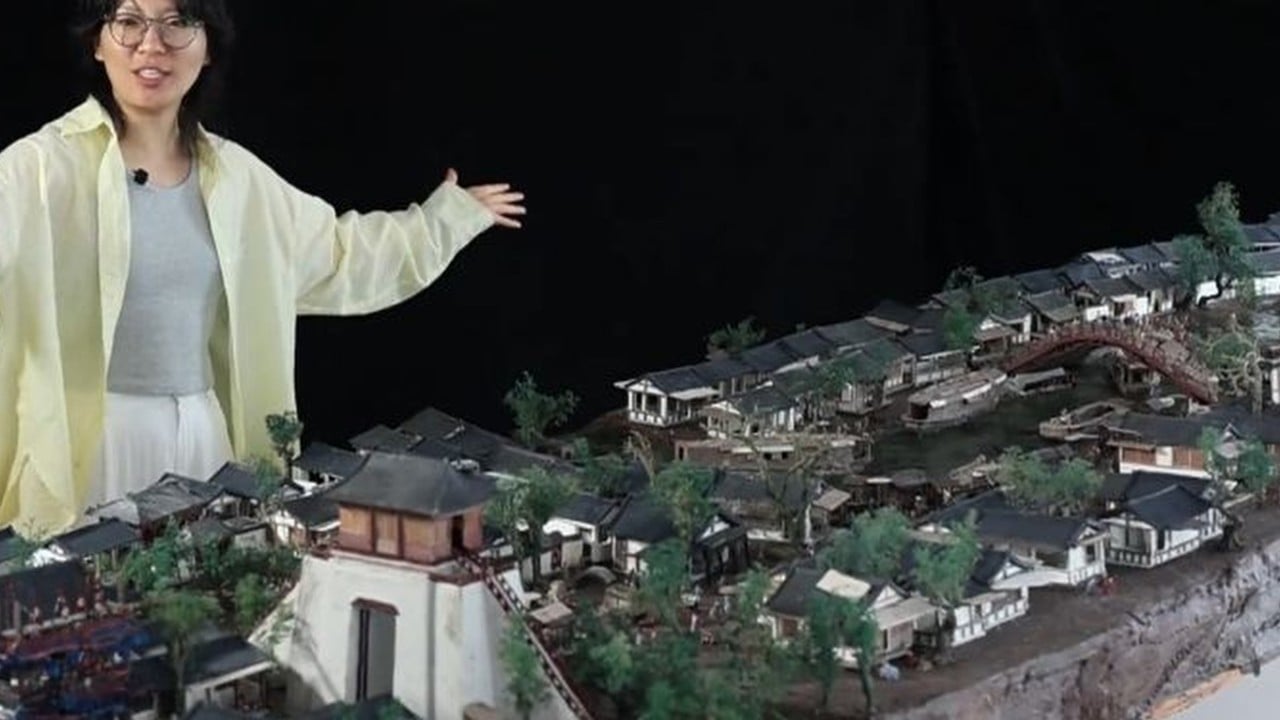
The internet is currently swooning over a video of a Chinese artisan who used 60 kilograms of chocolate to recreate a 3D replica of a classic ancient painting. It racked up over a million likes. The comments sections are a wasteland of breathless awe, calling it a masterclass in patience, a triumph of traditional culture, and a monument to culinary skill.
They are entirely wrong.
What you are actually witnessing is not the pinnacle of pastry art. It is the commodification of a medium. It is an expensive, structurally unstable stunt disguised as cultural preservation. When we celebrate a woman spending weeks carving a brittle, temperature-sensitive medium into an un-consumable landscape, we are cheering for the death of actual culinary innovation.
We have entered an era where food is no longer judged by how it tastes, how it feels on the tongue, or how it respects the ingredients. Instead, it is judged by how well it performs in an algorithmic feed. This is a massive step backward for gastronomy.
The Illusion of Value in Scale and Waste
The collective obsession with this 60-kilogram chocolate monolith relies on a basic logical fallacy: that massive scale plus exhausting labor equals high art.
Let us look at the mechanics of what actually happened. Chocolate is a temperamental, crystalline structure. To manipulate it on a massive scale requires keeping it at specific temperatures, melting it down, and often introducing stabilizing agents or using lower-quality "compound" chocolate that lacks real cocoa butter. Why? Because high-quality couverture chocolate is too finicky for structural engineering at that weight.
So, what is the end product? Sixty kilograms of stale, over-manipulated, likely inedible cacao derivative. It sits in a gallery or a studio until it collects dust, blooms from moisture, and is eventually thrown into a bin.
I have spent fifteen years working in and advising high-end hospitality brands. I have seen marketing departments throw tens of thousands of dollars at celebrity pastry chefs to build giant chocolate logos or sugar sculptures for a launch party. Every single time, the script is the same. The crowd gasps. The phones come out. The Instagram metrics spike. Then, at midnight, the cleaning crew breaks the sculpture apart with a hammer and shoves it into black trash bags.
It is a vanity metric rendered in fat and sugar.
Celebrating this waste under the guise of "honoring ancient culture" is a scam. True ancient Chinese art—whether we are talking about Song Dynasty landscape paintings or intricate porcelain—was built on mediums meant to endure. Paper, silk, clay, jade. To translate those timeless traditions into a hyper-perishable, Western-imported confectionery medium is not a tribute. It is a fundamental misunderstanding of both the source material and the food itself.
The Algorithm is a Terrible Head Chef
Why do digital audiences fall for this every single time? Because social media platforms reward optical illusion over sensory reality.
If you look at the questions people ask about these viral stunts, they are always superficial.
- How long did it take to make?
- How much did the materials cost?
- How do they keep it from melting?
Notice that nobody asks the most fundamental culinary question: How does it taste?
By removing flavor, texture, and temperature from the equation, viral food art reduces a complex, multi-sensory discipline into a flat, two-dimensional image. It turns chefs into sculptors who happen to use edible clay. But chocolate is an atrocious sculpting medium compared to marble, bronze, or polymer clay. It is soft, it degrades, and it reacts poorly to human touch.
When you praise a chef for making chocolate look like wood or stone, you are praising them for denying the very nature of the ingredient. Excellent pastry work should highlight the gloss, the snap, the melting point, and the deep, complex flavor profile of the bean. If your goal is simply to make a 3D replica of an ancient scroll, use resin. It lasts longer, costs less, and does not waste agricultural resources.
But resin does not get a million likes. The viral loop requires the gimmick of "edibility," even when the object is entirely inedible in practice.
The Hidden Cost of Visual Hype
This shift toward visual-first food culture has real, damaging consequences for the culinary industry.
+-----------------------------------+-----------------------------------+
| Viral Stunt Pastry                | Authentic Gastronomy              |
+-----------------------------------+-----------------------------------+
| Prioritizes optical impact on a   | Prioritizes flavor balance and    |
| small screen.                     | texture contrast.                 |
+-----------------------------------+-----------------------------------+
| Relies on low-quality, stable     | Utilizes high-quality, fresh,     |
| ingredients for structure.        | volatile ingredients.             |
+-----------------------------------+-----------------------------------+
| Evaluated by millions of untutored| Evaluated by the immediate,       |
| digital viewers.                  | physical human sensory experience.|
+-----------------------------------+-----------------------------------+
When young pastry cooks enter the industry today, many do not want to master the perfect brioche, the flawless soufflé, or the delicate balance of a balanced fruit tart. They want to learn how to spray-paint colored cocoa butter onto silicone molds. They want to build giant structures held together by internal PVC pipes and hot glue.
Imagine a scenario where a young apprentice spends six months learning how to build a giant chocolate dragon for TikTok instead of learning the foundational chemistry of fermentation or the precise temperature control needed for a perfect glossy ganache. When that apprentice enters a real, high-volume kitchen, they are useless. They cannot execute service. They cannot scale recipes for taste. They only know how to build props.
The industry is facing a massive skills shortage in foundational cooking, yet we are drowning in content creators who call themselves chefs because they know how to use a Dremel tool on a block of white chocolate.
Redefining the Standard of Culinary Mastery
True mastery is not about fighting the ingredient to force it into a shape it was never meant to hold. It is about working within the constraints of the medium to achieve sensory perfection.
Take the classic French croquembouche or the traditional Chinese sugar-blowing (chuichang). While these involve structural design, they are built to be consumed immediately. The sugar is blown thin so it shatters delightfully in the mouth. The choux pastry is filled with fresh pastry cream. The structure is a byproduct of the tradition, not a monument to the creator's ego.
If we want to protect the integrity of culinary arts, we need to stop rewarding pure spectacle. The next time you see a video of someone using 100 pounds of butter to carve a life-sized motorcycle or a massive block of chocolate to recreate an ancient artifact, do not click the heart button.
Ask yourself why the creator chose a medium destined for the garbage can, and whether the industry they are representing is being elevated, or simply exploited for views.
Stop treating the kitchen like a prop department. Food is meant to nourish, to delight the palate, and to be consumed. The moment it becomes permanent, inert, and purely visual, it ceases to be food. It becomes a monument to vanity, and it deserves to melt.
,webp/018/771/129/526x298.5.webp)