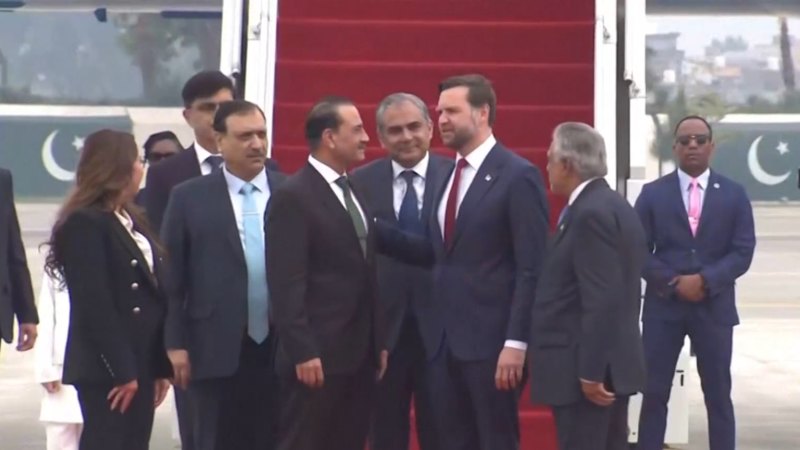
Negotiating with Tehran right now feels like trying to catch smoke with your bare hands. One day we’re hearing about a historic two-week ceasefire mediated by Pakistan, and the next, the Strait of Hormuz is a parking lot for warships. If you’re confused by the headlines, you’re not alone. The situation between Washington and Tehran has shifted from a "cold war" to a very hot, messy conflict that has global oil prices screaming and diplomats scrambling for an exit that doesn’t exist yet.
The truth is, the current ceasefire—which officially started around April 8, 2026—is basically a name-only agreement. While President Trump has been posting on Truth Social about "unconditional surrender" and "making deals," the reality on the water is a naval blockade. We’re at a point where the core demands of both sides are so diametrically opposed that "negotiation" is a generous word for what’s actually happening.
The Strait of Hormuz Standoff
You can't talk about these negotiations without talking about the world's most important chokepoint. Iran’s strategy hasn't changed in decades, but their execution has become much more aggressive. By restricting shipping in the Strait of Hormuz, they’ve managed to double jet fuel prices in a matter of months. I've seen reports of Asian airlines "tankering" fuel—carrying extra weight just to make sure they can get back home—because they can't rely on local supplies.
The US demand is simple: open the Strait. Iran’s counter-offer? They’ll open it, but only if every single sanction is lifted and US forces leave the Middle East entirely. It’s a classic Iranian "all or nothing" gambit. Washington responded by initiating a full naval blockade on April 13. When you have the US Navy turning around tankers and Iran threatening to "blast" back, a two-week ceasefire feels more like a breather before the next round of strikes than a path to peace.
Why the Nuclear Issue is a Black Box
For years, the IAEA was our eyes and ears inside Iran. That’s over. As of early 2026, the International Atomic Energy Agency has been locked out of several key facilities, including the new Isfahan Fuel Enrichment Plant (IFEP). We’re basically flying blind.
The E3 (France, Germany, and the UK) are sounding the alarm because Iran is the only non-nuclear weapon state producing 60% highly enriched uranium. In plain English, they're sitting on enough material for multiple "significant quantities"—the technical term for "enough for a bomb."
- The US Stance: Total dismantlement of the enrichment program.
- The Iranian Stance: They claim their program is for "civilian use," despite the lack of any credible power plants that need 60% uranium.
- The Reality: Negotiations can't work when one side won't even let the inspectors in the front door to see what they're actually negotiating about.
The Proxy Problem and Domestic Chaos
Inside Iran, things are just as volatile. The regime isn't just fighting the US; they're fighting their own people. After the mass protests in January 2026, the Islamic Republic started "importing" their proxies—Iraqi militias and Afghan fighters—to help crush domestic dissent.
This creates a massive hurdle for any diplomatic breakthrough. The US wants Iran to stop funding groups like Hezbollah and the PMF. However, the Iranian leadership sees these groups as their "insurance policy" against both Israel and their own citizens. If they give up the proxies to satisfy a US deal, they lose their grip on power at home. It’s a survival mechanism, not a bargaining chip.
Economic Warfare and the Blockade
Sanctions used to be the primary tool, but we've moved past that. The US is now targeting the "Ghost Fleet"—the shadow network of tankers that ships Iranian oil to China. By using a physical naval blockade, the US is trying to cut off the regime's oxygen supply in real-time.
Don't expect a quick resolution. Iran has survived "Maximum Pressure" before, but they've never faced a combined internal uprising and a total maritime shutdown. They’re betting that global oil prices will get so high that the West will blink first. Meanwhile, the US is betting that the Iranian economy will collapse before the world runs out of jet fuel.
What Happens Next
If you're looking for a peaceful "Grand Bargain," don't hold your breath. The Islamabad talks scheduled for this week are likely to be more about managing the conflict than ending it.
Here is what you should actually watch for:
- The 45-day window: If Pakistan can't get both sides to agree to a Phase 2 negotiation structure by May, expect the naval skirmishes to escalate into full-scale kinetic strikes on Iranian energy infrastructure.
- IAEA Access: If Iran doesn't allow inspectors into Isfahan, the US and Israel will likely view the nuclear program as "beyond diplomacy."
- Oil Inventories: Watch the fuel reserves in Europe and Asia. If they dip below critical levels, the pressure on the US to "do something" (either strike or settle) will become unbearable.
The ceasefire is a fragile lid on a boiling pot. Right now, both sides are just waiting to see who gets burned first. Keep an eye on the Strait of Hormuz; that's where the real story is written.


:strip_icc()/pic2513216.jpg)