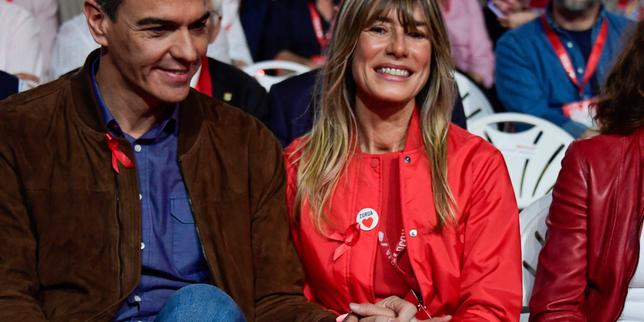
The corridors of Moncloa Palace are built to absorb sound, but they cannot quiet the steady, rhythmic ticking of a legal clock.
For years, Begoña Gómez was a figure defined by quiet influence. Unlike her husband, the charismatic and battle-tested Spanish Prime Minister Pedro Sánchez, she did not seek the harsh spotlight of the parliamentary floor. She navigated the elite circles of Madrid’s academic and business sectors with a polished, low-profile focus. But power has a way of casting long shadows, and in the high-stakes theater of Spanish politics, those shadows eventually demand an explanation. Expanding on this theme, you can find more in: The Transnationalization of Dissensus: Analyzing the Geopolitical Leverage of Local Government Interventions.
On July 16, 2026, the Madrid Provincial Court cleared away the remaining legal fog, ruling that Begoña Gómez will officially stand trial before a citizen jury.
She will face prosecutors on two serious criminal charges: influence peddling and the embezzlement of public funds. While the court threw out two lesser allegations of business corruption and trademark misappropriation—and returned her passport, allowing her to breathe outside Spanish borders once again—the emotional and political damage was already done. The bulk of the case remains. Experts at BBC News have shared their thoughts on this matter.
This is no longer a political headache. It is a trial.
The Weight of the Dock
To understand how a prime minister’s spouse ends up facing a jury of ordinary citizens, one must look past the dry legal jargon of "influence peddling" and focus on the human currency of access.
Imagine a prestigious public institution like the Complutense University of Madrid. It is Spain’s oldest, most revered academic sanctuary. In this world, a University Chair is not merely a title; it is a monument to a lifetime of rigorous scholarship. Yet, shortly after her husband ascended to the presidency in 2018, Gómez was appointed to co-direct a new master’s program and eventually secure an extraordinary chair in "Competitive Social Transformation."
Her defenders saw a modern, capable woman bringing corporate expertise to academia. Her critics saw something far more cynical: the monetizing of a proximity to power that no ordinary academic could ever hope to replicate.
The heart of the prosecution's case does not lie in a single dramatic backroom deal. Instead, it is built on the slow accumulation of leverage. Investigators focused on whether public funds, university resources, and personal connections were blended to advance private interests. When does mentorship cross the line into patronage? When does a premier's spouse transition from an independent professional to a conduit for private gain?
These are the quiet, uncomfortable questions that Spain’s legal system has spent two years trying to untangle.
A Palace Under Siege
The psychological toll of this investigation has vibrated through the very top of Spain’s government.
For Pedro Sánchez, this is intensely personal. He has built his entire modern political brand on being the man who cleaned up Spanish politics, having swept into power in 2018 on the heels of a massive corruption scandal that brought down the previous conservative administration. Now, the contagion is inside his own home.
The strain is visible. Back in April 2024, when investigating judge Juan Carlos Peinado first opened the probe, Sánchez did something unprecedented: he suspended his public duties for five days, retreating into deep isolation to contemplate whether he should resign to protect his family. He chose to fight. He chose to stay. But the cost of staying has been a relentless, grinding war of attrition.
Sánchez’s administration has consistently maintained that his wife is entirely innocent. His office decries the trial as a coordinated campaign of political harassment, orchestrated by far-right organizations using "fake news" to destabilize a progressive government.
But the political landscape of Madrid is unforgiving. To the ordinary Spanish citizen watching the news, the nuances of dropped charges and returned passports matter less than the raw, human image of the Prime Minister's wife being ordered to sit in the dock.
The Invisible Ripples
The upcoming trial is not happening in a vacuum. It is the centerpiece of a larger, systemic crisis threatening to swallow Spain's minority coalition government.
Consider what happens next: the trial will not be decided by seasoned judges who are immune to the emotional gravity of the political arena. It will be decided by a jury of ordinary citizens. These are people who feel the daily pinch of inflation, who navigate the bureaucracy of Spanish life, and who will be asked to look at Begoña Gómez and decide if she used her unique position to play by a different set of rules.
If the trial ends in a conviction, the political architecture of Spain will fracture. Sánchez's allies are already wavering, and the conservative opposition is smelling blood in the water, demanding immediate resignations and early elections.
But beyond the tactical political maneuvering, there is a deeper, more profound human tragedy at play. It is the story of how quickly the trappings of ultimate success can transform into a cage. For years, Gómez and Sánchez walked the world stage as a formidable, modern partnership. Today, they are fighting a defensive rearguard action against a clock that cannot be stopped.
The courtroom doors will eventually swing open, the jury will take their seats, and a story that began in the quiet offices of Madrid’s academic elite will find its final, loud resolution in the hands of the very public they were sworn to serve.