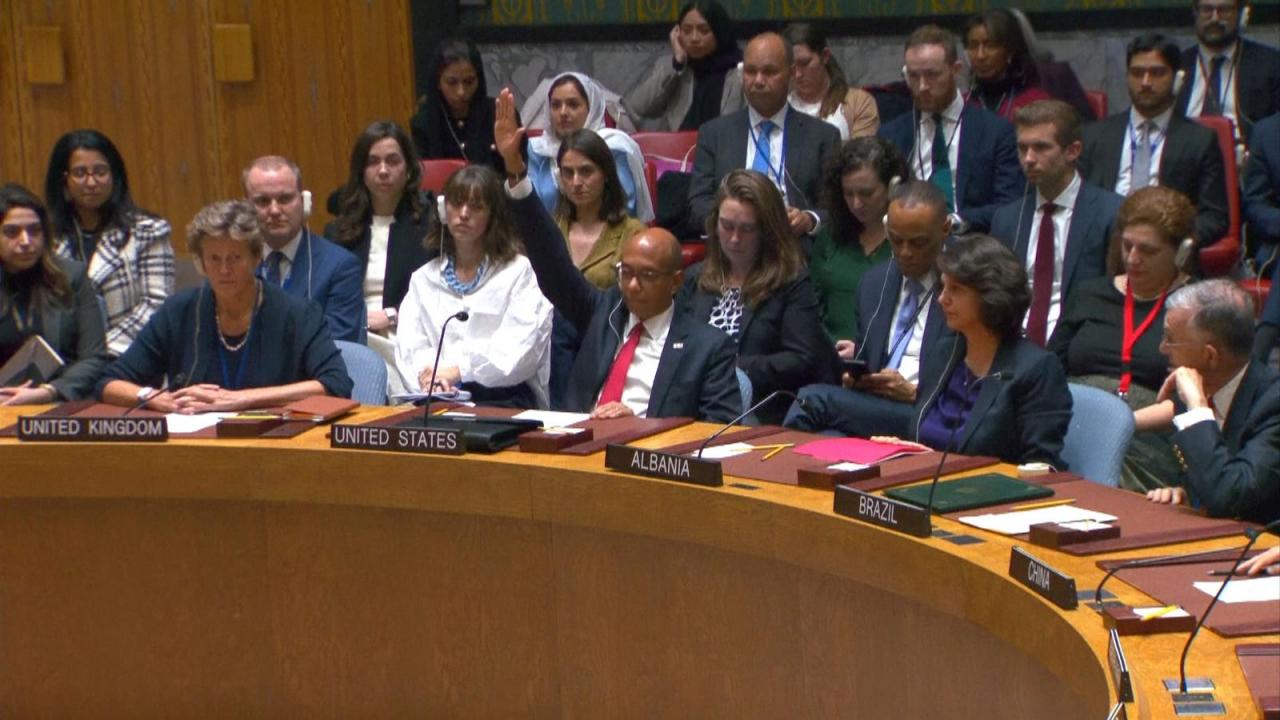
Washington just hit a wall at the United Nations. If you’ve been watching the headlines, you know the US tried to push through a resolution to secure the Strait of Hormuz. It didn't work. Russia and China used their veto power to shut the whole thing down. This isn't just another day of bickering in New York. It’s a loud signal that the old ways of managing global shipping lanes are dying. When two superpowers block a move to "protect" one of the world's most vital chokepoints, they aren't just voting against a piece of paper. They're voting against American leadership in the Middle East.
The Strait of Hormuz is a narrow stretch of water. It’s barely 21 miles wide at its thinnest point. Yet, about 20% of the world’s liquid petroleum passes through it every single day. If that door closes, the global economy doesn't just stumble; it breaks. The US argued that a UN-backed mission was needed to stop "interference" with commercial vessels. Moscow and Beijing saw it differently. They saw a Trojan horse designed to let the US Navy set up a permanent toll booth in Iran's backyard.
The Veto That Changed the Room
This wasn't a surprise, but the bluntness of it was. Russia and China didn't just abstain. They killed it. Their logic is simple: they think the US is the one actually causing the instability. By trying to formalize a maritime security construct under the UN flag, the US hoped to get international buy-in for its "Maximum Pressure" style tactics.
The Kremlin’s representative didn't hold back. He called the resolution a "politicized attempt" to justify foreign military presence. China followed suit, emphasizing "sovereignty" and "regional solutions." Translated from diplomat-speak, they told the US to stay in its own lane. They don't want a UN resolution that could be used later to justify sanctions or military strikes if a tanker gets bumped.
I’ve seen this play out before. The US tries to build a "coalition of the willing," finds the "willing" list is getting shorter, and then heads to the UN to get a stamp of legitimacy. When that fails, the narrative shifts. Now, the US is left with two choices: go it alone with a few allies or admit that it can't dictate the rules of the Persian Gulf anymore.
Why China and Russia Are Risking the Oil Flow
You’d think China would want the Strait open at all costs. They’re the world's biggest oil importer. A spike in prices hits them harder than anyone else. So why veto?
It’s about the long game. Beijing is tired of the US dollar and the US Navy controlling the terms of trade. They’re betting that they can negotiate directly with Iran and regional players to keep their own tankers moving. They don't want to help the US look like the world's policeman. For China, a little bit of shipping uncertainty is a price worth paying if it means eroding American dominance.
Russia has different motives. They love high oil prices. Every time there’s a "security crisis" in the Middle East, the price of Brent crude ticks up. That's more money for the Kremlin's coffers. Beyond the math, it’s about leverage. By blocking the US, Russia proves to regional powers like Iran and Saudi Arabia that Washington isn't the only door you have to knock on to get things done.
The Reality of Maritime Security in 2026
We have to stop thinking about the Strait of Hormuz as a purely technical shipping problem. It’s a geopolitical chessboard. The US pushed for "freedom of navigation," which sounds great in a textbook. In reality, it means the right to fly drones and sail destroyers wherever they want.
Iran claims the waters are their responsibility. They’ve spent years developing "swarm" tactics with fast boats and sea-skimming missiles. They know they can’t win a traditional naval battle against a US carrier group. They don't have to. They just have to make it too expensive and too risky for insurance companies to cover the tankers.
When the UN fails to act, the burden shifts to private industry. Shipping companies are now looking at "war risk" premiums that are skyrocketing. Some are even considering rerouting, though there aren't many good alternatives to Hormuz. You can't just drive a supertanker over a mountain.
The End of the Unipolar Moment
This veto is the clearest evidence yet that the "unipolar moment" is over. For decades, if the US said a waterway needed "protecting," the world fell in line. Not today.
We’re seeing a fragmented world. Different regions are starting to build their own security rules. The Gulf states themselves are split. Some want the US umbrella. Others, like the UAE and Qatar, are increasingly playing both sides, talking to Beijing as much as they talk to Washington. They see the writing on the wall. They know that if the US can't even pass a resolution at the UN, its ability to actually stop a conflict is in question.
The US military is still the most powerful on the planet. Nobody doubts that. But military power doesn't always translate to diplomatic results. If you can't get the international community to agree on basic shipping rules, your aircraft carriers start to look like very expensive relics of a different era.
What This Means for Your Wallet
Don't expect gas prices to drop anytime soon. This diplomatic deadlock creates a "risk premium" that’s here to stay. Traders hate uncertainty. When they see the UN Security Council in a deadlock, they price in the possibility of a "kinetic event"—that's a polite word for a war.
If you’re invested in energy or logistics, you need to watch the "shadow fleet." These are the tankers operating outside of standard regulations, often moving Russian or Iranian oil. With no UN-sanctioned security mission, this shadow fleet is going to grow. It makes the seas more dangerous and the data more unreliable.
What Happens Next
The US isn't going to pack up and go home. Expect them to double down on "Operation Prosperity Guardian" or some new variation of it. They’ll try to bypass the UN by signing bilateral deals with smaller nations. But without the UN’s "Blue Helmet" legitimacy, these missions will always look like an occupation to half the world.
Watch the naval drills. Russia, China, and Iran have already started doing joint exercises in the Gulf of Oman. That’s the real answer to the US resolution. They’re building an alternative security structure. It’s messy, it’s dangerous, and it’s definitely not what Washington wanted.
Stop waiting for a "return to normal" in the Middle East. The veto wasn't a glitch; it was the new operating system. The US lost this round, and the consequences will be felt at every gas pump and in every shipping container for years. Keep an eye on the insurance markets and the bunkering hubs in Singapore and Fujairah. That’s where the real story of the Strait of Hormuz is being written now, far away from the polished tables of the UN.



