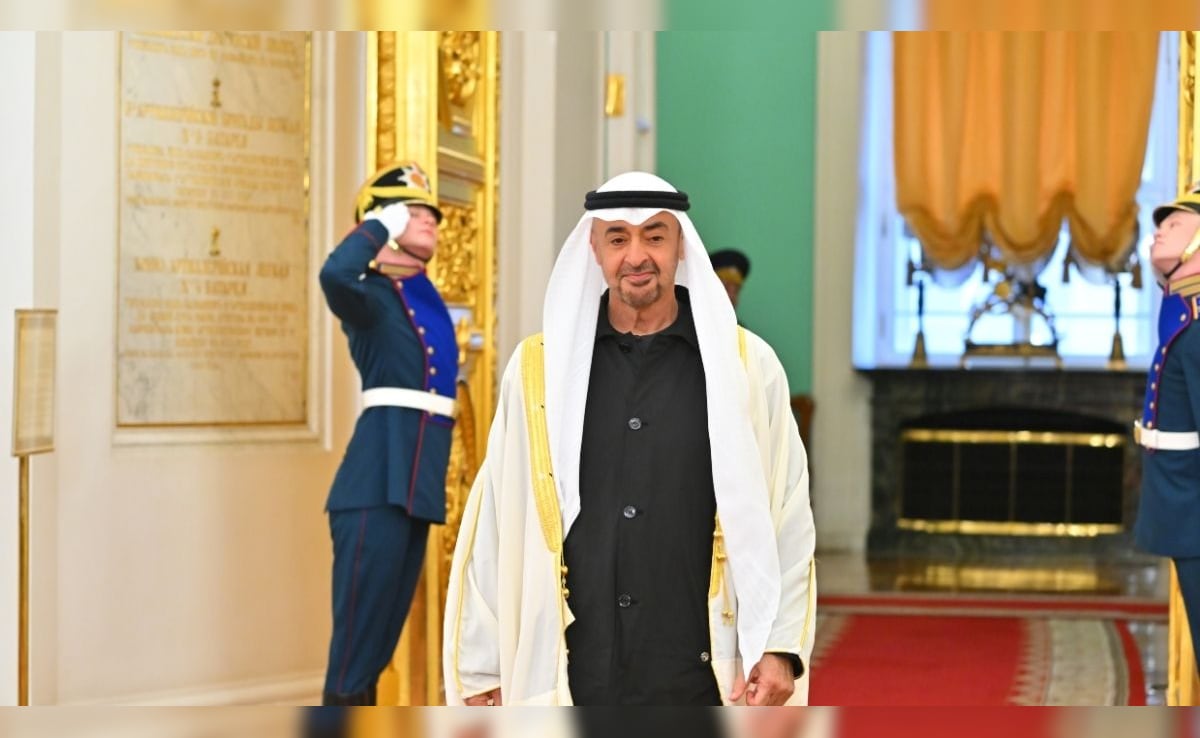
Abu Dhabi isn't just changing its foreign policy. It’s burning the old playbook. For decades, the "Arab Order" was a convenient, if often hollow, framework for regional stability. It relied on a consensus that rarely existed and a Cairo-centric gravity that’s long since faded. Today, the United Arab Emirates (UAE) has decided that waiting for a collective Arab response to modern crises is a recipe for stagnation. They’re moving fast, breaking things, and carving out a sphere of influence that looks more like a corporate global network than a traditional diplomatic bloc.
If you're looking at the Middle East and seeing the same old rivalries, you're missing the shift. The UAE has effectively filed for divorce from the old ways of doing business in the Levant and North Africa. This isn't a temporary spat. It’s a fundamental realization that the Arab League era is over. The UAE's leadership sees a world defined by tech, logistics, and hard-nosed transactionalism. They don't want to be the "little brother" in a failing Pan-Arab project. They want to be the hub of a new, globalized Middle East.
Why the old Arab Order failed the Emirates
The Arab Order was built on the idea of collective security and shared political identity. It sounded great in 1950. By 2020, it was a ghost. The UAE watched as the traditional power centers—Egypt, Iraq, and Syria—struggled with internal collapse or economic decay. To the thinkers in Abu Dhabi, hitching their wagon to these states felt like anchoring a speedboat to a sinking freighter.
You can see the frustration in how the UAE handled the Abraham Accords. They didn't wait for a consensus that would never come. They didn't ask for permission from the Arab League. They prioritized their own national security and economic diversification. They saw an opportunity to bring Israeli tech and security cooperation into the Gulf, and they took it. That’s the "UAE First" policy in action. It’s pragmatic. It’s unsentimental. Some call it betrayal, but in Abu Dhabi, they call it survival.
Think about the sheer speed of their pivots. One year they're leading the charge against Qatar; the next, they're hosting the Emir in Dubai. One decade they're the loudest voices against Iran; the next, they’re sending trade delegations to Tehran. This isn't indecision. It’s a hyper-active pursuit of interest that treats traditional alliances as temporary tools rather than sacred bonds.
The logic of the transactional state
The UAE operates less like a country and more like a massive, sovereign venture capital fund. Every move has a Return on Investment (ROI) attached. When they invest billions in Egyptian infrastructure or Mediterranean ports, they aren't doing it out of "Arab brotherhood." They're securing supply chains. They're making sure that when the world shifts away from oil, the UAE is the toll-collector for global trade.
This shift has created a massive gap between the UAE and its neighbors, particularly Saudi Arabia. While Riyadh is trying to reform its entire society through Vision 2030, the UAE is already living in the future it built twenty years ago. This lead gives them the confidence to ignore the old rules. They don't need the Arab League to validate their status. Their status is validated by the fact that every major tech CEO and global financier has a home in Dubai.
We see this in Sudan, Libya, and Yemen. The UAE doesn't follow the "non-interference" mantra that older diplomats love to talk about. They intervene where they see a chance to curb political Islam or secure a strategic coastline. They've backed different horses than their "allies" because their goals are different. They want a region that's stable enough for business, even if it means backing strongmen who the rest of the world finds distasteful.
Logistics as the new religion
If you want to understand the UAE’s break from the Arab Order, look at a map of DP World’s ports. From Berbera to Piraeus, the Emirates are building a maritime empire. This is the "Great Gulf Divorce" in physical form. While other Arab nations are bogged down in sectarian disputes or border squabbles, the UAE is busy owning the infrastructure that connects the East to the West.
The Mediterranean pivot
Abu Dhabi's interest in the Mediterranean is a perfect example of their new direction. They've invested heavily in Greece and Cyprus. They’re looking at North African energy. Why? Because the Arab world isn't enough for them anymore. They see themselves as a bridge between India and Europe. The "India-Middle East-Europe Economic Corridor" (IMEC) is the dream they’re chasing. In that dream, the old Arab political disputes are just noise.
This creates tension. It makes people in Amman, Beirut, and Damascus feel left behind. And frankly, they are. The UAE has decided that the cost of carrying the rest of the region’s problems is too high. They’d rather spend that political capital on building a "Mini-Singapore" that functions while the rest of the neighborhood burns.
Security outside the American umbrella
For a long time, the Arab Order relied on the US being the "policeman" of the Gulf. The UAE doesn't trust that anymore. They’ve watched the US pivot toward Asia and seen the inconsistent responses to regional threats. Their "divorce" from the old order includes a divorce from total dependence on Washington.
- They buy Chinese drones.
- They court Russian investors.
- They join the BRICS+ group.
These aren't random acts. They’re a calculated diversification of risk. If the Arab Order can't protect them, and the US won't guarantee their security, they'll build a multipolar network of protectors. It’s messy and it frustrates the State Department, but it’s the only logical move for a small, wealthy state in a chaotic part of the world.
The risk of being the outlier
Being the trailblazer is lonely and dangerous. By breaking from the Arab consensus, the UAE has made enemies. They’ve sparked a heated competition with Saudi Arabia for regional dominance. This isn't a shooting war, but it’s a fierce economic and diplomatic battle. Who gets the regional headquarters? Who controls the aviation market? Who is the "true" leader of the Gulf?
The UAE is betting that their head start is insurmountable. But they're also betting that the rest of the Arab world won't eventually coalesce against them. If you’re the one who broke the "unity," you're the one everyone blames when things go wrong.
The Qatar lesson
Remember the blockade of Qatar? It was a moment where the UAE tried to force a certain type of regional order. It didn't work. Qatar survived, and the UAE eventually had to back down. That taught them a lesson: you can’t force others to follow your vision of the "new order." You just have to be so successful that they have no choice but to deal with you on your terms.
What this means for the region’s future
We are moving toward a "Fragmented Middle East." There won't be one "Arab Order" anymore. There will be circles of influence. You'll have the UAE-led network of trade and tech-focused states. You'll have the Saudi-led traditionalists. You'll have the Iranian-led "Axis of Resistance."
The UAE's break is the first domino. Other states that can afford it will likely follow suit, prioritizing their own economic survival over Pan-Arab slogans. This makes the region more transactional and perhaps less prone to massive, cross-border wars, but it also makes it much more cynical.
If you’re a business leader or a diplomat, stop looking at the Arab League. It’s a museum. Start looking at the bilateral deals being signed in Abu Dhabi. That’s where the power is. The "Great Gulf Divorce" is final, and the UAE has already moved into a much more expensive apartment in a better neighborhood.
Keep a close eye on the development of the "Middle Corridor" and the UAE's investments in Central Asia. These are the true indicators of where their loyalty lies. They aren't looking back at the 20th-century Arab world; they're looking at the 21st-century Silk Road.
To stay ahead of these shifts, start diversifying your own regional partnerships. Don't assume a deal with one Gulf state opens doors in another. Treat each as a distinct corporate entity with its own board of directors and quarterly targets. The UAE has set the pace—it’s up to everyone else to keep up or get left in the dust of the old order.


