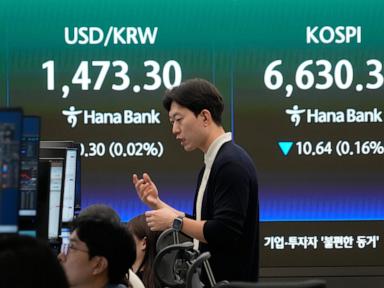
The United Arab Emirates is walking away from OPEC, and the global energy market is currently gasping for air. While headlines focus on the immediate 3% surge in crude prices and the jittery performance of global equities, the real story isn't about today’s ticker tape. It is about the violent fracturing of a half-century-old cartel that can no longer contain the ambitions of its most modern member. Abu Dhabi has decided that its future as a global financial and logistics hub is no longer compatible with the production quotas dictated by Riyadh.
This exit represents a fundamental shift in how oil-producing nations view their primary asset. For decades, the Organization of the Petroleum Exporting Countries functioned as a price-fixing monolith, trading volume for stability. But the UAE has spent billions of dollars expanding its production capacity to 5 million barrels per day. Under OPEC rules, that capacity sits idle, a massive sunk cost that yields zero return. By leaving, the UAE is effectively declaring that the era of managed scarcity is dead. They are moving to a "pump-it-while-you-can" strategy, prioritizing market share and immediate reinvestment over the long-term price manipulation favored by Saudi Arabia.
The Friction Behind the Divorce
To understand this split, look at the divergence in national strategies. Saudi Arabia is tethered to "Vision 2030," a massive social and economic overhaul that requires oil prices to stay near $80 per barrel to remain solvent. The Saudis need high prices today to fund a future without oil tomorrow. The UAE, conversely, has already built the infrastructure of the future. Dubai and Abu Dhabi are functional global cities with diversified revenue streams in tourism, tech, and trade. They don't need a high price floor as desperately as they need to monetize their reserves before the global energy transition renders them "stranded assets."
The internal tension has been simmering for years. Every ministerial meeting in Vienna recently has felt less like a diplomatic summit and more like a hostage negotiation. The UAE felt it was being punished for its efficiency, forced to take deeper cuts relative to its true capacity than members who haven't invested a dime in their infrastructure in a decade.
A Death Blow to Cartel Discipline
OPEC’s power relies entirely on the perception of unity. When the UAE exits, that perception evaporates. If one of the most stable, wealthy, and technologically advanced members decides the math no longer works, why should Kuwait or Iraq stay? The risk of a "race to the bottom" is now the primary concern for energy analysts. Without the UAE’s compliance, the remaining members face a brutal choice: cut their own production further to offset the UAE’s inevitable surge in output, or open the taps themselves and trigger a price war that could send crude into a tailspin.
This isn't just about supply and demand. It is about the loss of the world’s most significant economic shock absorber. When geopolitical crises hit in the past, the world looked to OPEC to stabilize the market. Now, the market is entering a period of pure Darwinian competition. The UAE is betting that they are the fastest, cheapest, and most reliable producer in the room. They are willing to endure short-term price volatility to ensure they aren't the ones left holding a sea of unburnable fuel in twenty years.
The Domino Effect on Global Markets
Stock markets are reacting with "mixed" signals because the implications are contradictory. In the short term, the uncertainty of the exit drives prices up. Traders hate a vacuum, and the UAE’s departure creates a massive one. However, the medium-term outlook is deflationary for energy. Once the UAE ramps up production to its full 5-million-barrel-per-day potential, the global supply glut will be difficult to ignore.
Energy intensive industries—airlines, shipping, and manufacturing—are watching this with predatory interest. If the UAE triggers a price war, the cost of transport drops significantly, providing a massive, unintended stimulus to the global economy. But for the "Petrodollar" system, this is a catastrophe. Much of the world's financial stability is built on the recycling of oil wealth into Western debt and equity markets. A fractured OPEC means less coordinated investment and more erratic capital flows.
The End of the Saudi-Emirati Bromance
The geopolitical fallout is as significant as the economic one. The "special relationship" between Mohammed bin Salman of Saudi Arabia and Mohammed bin Zayed of the UAE was the primary engine of Middle Eastern policy for the last decade. They fought wars together, blockaded rivals together, and managed the oil market together. That era is over.
This split signals that national interest has finally overtaken regional solidarity. The UAE is charting a path that is more "Singapore" than "Sovereign Sheikhdom." They are positioning themselves as a neutral, high-efficiency energy provider that is open for business regardless of what the Riyadh-led cartel says. It is an aggressive, calculated move that recognizes a hard truth: in a world moving toward renewables, being the last man standing in oil only matters if you can sell your oil faster than everyone else.
Why the 3 Percent Jump is a Head Fake
Do not be fooled by the immediate spike in Brent and WTI. That is the sound of algorithmic trading bots reacting to the word "exit." The real movement will happen over the next six to eighteen months as the UAE’s national oil company, ADNOC, begins to sign long-term supply contracts outside of the OPEC framework.
When a major producer leaves the fold, they usually do so to increase volume. Increased volume, by definition, eventually lowers prices. The UAE has spent the last five years building the Murban crude futures contract, trying to establish their own benchmark that competes with Brent. By leaving OPEC, they can finally use that benchmark to its full potential, offering transparent, market-driven pricing that isn't subject to the whims of a committee in Vienna.
Investors who are buying the dip in oil majors today should be cautious. The "OPEC Premium"—the extra few dollars per barrel added because the cartel managed supply—is effectively gone. We are moving into a period of high-volume, low-margin competition. The companies that will thrive are those with the lowest lifting costs. Fortunately for the UAE, they have some of the lowest costs on the planet, often under $10 per barrel. They can survive a price war that would bankrupt producers in the American shale patch or the Russian permafrost.
The New Energy Architecture
The departure of the UAE effectively turns OPEC into "Saudi and Friends." Without the diversifying influence of the Emirates, the organization becomes a lopsided vehicle for Saudi foreign policy. This makes it less of a market stabilizer and more of a geopolitical wild card. Countries like China and India, the world’s largest importers, are already shifting their procurement strategies. They want reliable, bilateral deals, not the unpredictable fluctuations of a crumbling cartel.
The UAE is moving to fill that gap. They are already investing heavily in blue ammonia and carbon capture, trying to "green" their fossil fuel exports to satisfy European and Asian regulators. They realized that staying in OPEC meant being tied to the reputation of more regressive regimes. By breaking away, they can brand their energy exports as "premium" and "responsible," even as they increase the total volume.
The Structural Failure of Managed Markets
This isn't just a UAE story; it’s a story about the failure of central planning in a decentralized world. The rise of US shale, the rapid decline in battery costs, and the emergence of Brazil and Guyana as major producers have all chipped away at OPEC’s relevance. The UAE is simply the first member with enough financial cushion to admit the emperor has no clothes.
They are betting that the world will still need oil for decades, but it won't need a cartel to tell them how much it costs. The transition will be messy. There will be localized shortages, sudden gluts, and massive swings in the valuation of energy companies. But the path is clear. The UAE has chosen the market over the ministry.
The immediate volatility in world shares reflects a realization that the old rules of the energy game have been shredded. When the UAE exits OPEC, they aren't just leaving a room; they are burning the map that everyone else was using to navigate the global economy. The era of the petrostate consensus is finished, and the era of the energy free-agent has begun.