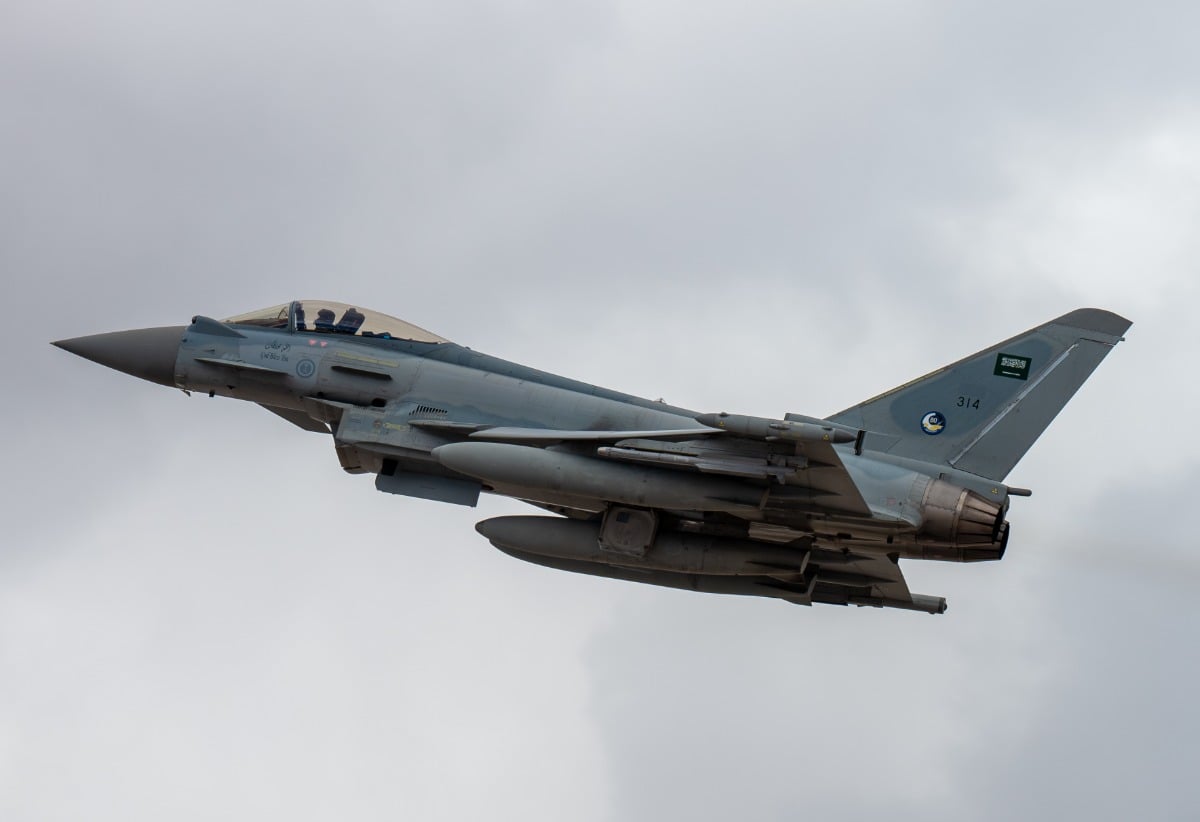
The defense industry trade press is currently tripping over itself to celebrate a supposedly historic milestone: the first heavy overhaul of a Eurofighter Typhoon completed outside of Europe, specifically at the King Abdulaziz Air Base in Dhahran, Saudi Arabia. The narrative being sold is predictable. It is a story of localization, a massive leap toward strategic self-reliance, and a shining example of the Kingdom’s Vision 2030 defense goals in action.
It is also a profound misunderstanding of how modern military aerospace logistics actually works.
Completing a primary depot-level maintenance check on a complex, twin-engine fighter asset within sovereign borders is a useful milestone. But treating it as a declaration of industrial independence is a farce. The "lazy consensus" among defense analysts is that moving physical labor from Warton or Manching to the Eastern Province means the umbilical cord has been cut. In reality, the cord has just been replaced with a more expensive, digital, and proprietary fiber-optic cable.
The Depot Myth: Spanners Do Not Equal Sovereignty
The core flaw in the current celebration lies in confusing assembly and maintenance with intellectual property and supply chain control.
When a Eurofighter Typhoon undergoes a heavy overhaul, technicians strip the airframe, inspect for structural fatigue, repair composite panels, and re-integrate complex avionics. Performing this locally requires high-tech tooling, clean rooms, and certified labor. What it does not do is give the host nation the ability to modify the source code, manufacture critical hot-section engine components, or survive a sustained spare-parts embargo.
I have spent years watching defense ministries pour billions into domestic depot-level repair facilities, convinced they are buying strategic autonomy. They are actually buying the privilege of doing the original equipment manufacturer's (OEM) heavy lifting for them, while remaining entirely dependent on foreign corporate boards for the actual brains of the operation.
Let's break down the mechanics of a modern fighter overhaul to understand why the celebratory headlines are wrong.
The Illusion of Local Content
A heavy overhaul relies on three pillars:
- Labor: The physical hands turning the wrenches.
- Consumables and Spares: Everything from specialized seals to radar modules.
- Data and Diagnostics: The proprietary software architectures required to test, calibrate, and clear an aircraft for flight.
The Saudi localization initiative successfully addresses the first pillar. Local technicians are being trained, which is a net positive for domestic engineering capacity. But the second and third pillars remain firmly rooted in Europe.
If BAE Systems, Leonardo, or Airbus halts the flow of proprietary components or revokes access to automated test equipment software, the multi-million-dollar hangar in Dhahran becomes nothing more than a very expensive parking lot.
[Domestic Labor Only] ➔ [No OEM Software Access] ➔ [Grounded Fleet]
[Domestic Labor Only] ➔ [No Foreign Spare Parts] ➔ [Grounded Fleet]
To call a local overhaul "independent" is like saying you built a smartphone because you replaced the screen using a third-party repair kit while Apple still controls the operating system and the App Store.
The Structural Reality of the Eurofighter Supply Chain
The Eurofighter Typhoon is not a single-source aircraft; it is a complex, multinational jigsaw puzzle managed by Eurofighter GmbH and Eurojet Turbo GmbH, representing the industrial interests of the UK, Germany, Italy, and Spain.
Consider the engine powering the platform: the EJ200. Saudi Arabia's Middle East Propulsion Company (MEPC) has achieved significant capabilities in maintaining and overhauling these powerplants locally. But look closer at the underlying economics. The manufacturing of high-pressure turbine blades, single-crystal castings, and full authority digital engine control (FADEC) units remains tightly guarded by MTU Aero Engines, Rolls-Royce, and Avio Aero.
The Cost of Simulated Self-Reliance
When a country insists on establishing a localized heavy overhaul capability for a relatively small fleet, it defies the laws of industrial scale.
- The Efficiency Penalties: European depots handle hundreds of airframes across multiple air forces, spreading the fixed costs of specialized diagnostic rigs, calibration tooling, and engineering oversight across a massive base.
- The Capital Expenditure Trap: Replicating this infrastructure locally for a fleet of 72 or even 100 aircraft introduces an astronomical per-unit cost penalty.
- The Talent Drain: Maintaining a highly specialized workforce that only sees a handful of heavy airframe overhauls a year leads to skill atrophy or requires a permanent, costly contingent of embedded OEM expatriate advisors anyway.
The uncomfortable truth that defense executives whisper behind closed doors is that localizing deep maintenance is rarely about operational efficiency. It is an expensive political tax paid to secure procurement contracts, framed as industrial advancement.
Dismantling the "People Also Ask" Assumptions
To truly understand why the mainstream view on this milestone is flawed, we have to look at the fundamental questions people ask about defense localization and expose their broken premises.
Does local maintenance protect a fleet from arms embargoes?
No. This is the most dangerous misconception in defense procurement. A state can possess the most advanced robotic repair facility on earth, but if a foreign parliament votes to freeze shipments of specialized lubricants, actuator seals, or mission data updates, the fleet will degrade within weeks of operational deployment. Heavy overhaul capacity handles wear and tear; it does not replace the constant influx of consumable components that a nation cannot legally or technically duplicate.
Is defense localization a viable path to creating a self-sustaining domestic aerospace industry?
Only if you transition from maintenance to indigenous design. Reverse-engineering a 4.5-generation delta-wing fighter is an economic dead end. True aerospace sustainability comes from owning the design authority. Brazil’s Embraer did not become a global powerhouse by overhauling foreign jets; they became one by designing their own aircraft and forcing their way into the global supply chain. Overhauling Typhoons trains mechanics, not aerospace architects.
The Strategic Alternative: What Real Autonomy Looks Like
If building massive local depots is an inefficient way to buy true sovereignty, what should defense buyers do instead?
They must stop chasing the physical airframe and start targeting the digital layer.
Instead of negotiating for the right to rivet aluminum panels locally, defense procurement officers should demand open-architecture software access and local integration rights for sovereign weapons and sensors.
Imagine a scenario where a state can seamlessly wire its own domestically produced uncrewed aerial vehicles, electronic warfare pods, or guided munitions into a foreign-built airframe without asking the OEM for permission or waiting three years for a software block update. That is operational sovereignty. It doesn’t matter where the heavy maintenance occurs if you own the tactical flexibility of the platform.
The downside to this approach is obvious: OEMs hate it. They guard their source code far more fiercely than they guard their mechanical repair manuals. BAE Systems and its partners will gladly sell you the tooling to fix a broken wing spar because it locks you further into their ecosystem of proprietary parts. They will fight tooth and nail to prevent you from altering the radar software algorithms.
By focusing on the physical overhaul milestone, the industry is celebrating the surrender to a lifetime of OEM support contracts while pretending it is a victory for national independence.
The Dhahran hangar is a monument to successful technology transfer within a strictly defined parameter. It proves Saudi technicians are capable of executing world-class maintenance. But let's drop the illusion that Europe has handed over the keys to the kingdom. They just allowed the kingdom to build a more sophisticated garage.