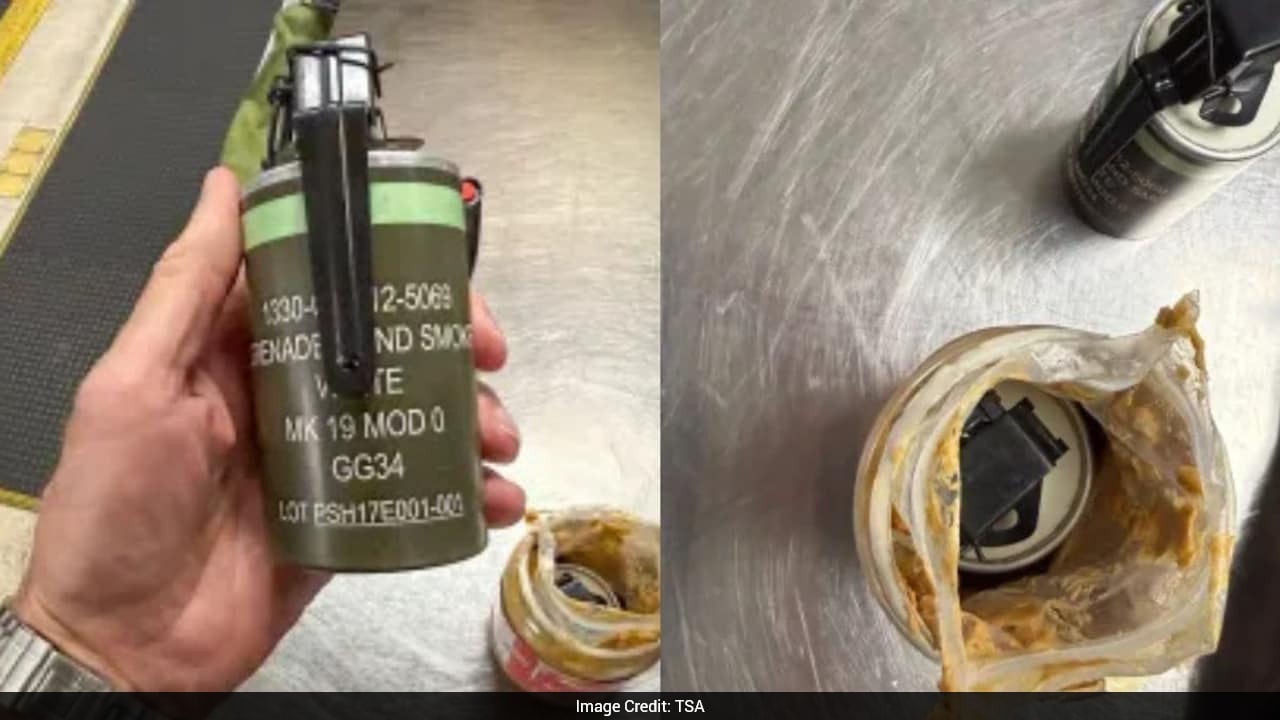
The internet loves a good TSA circus act. The latest viral sensation involves a passenger at New York’s JFK International Airport who allegedly tried to smuggle a smoke grenade wrapped in plastic inside a jar of Jif creamy peanut butter. The collective media response? A mix of mockery, sensationalism, and high-fives for the TSA.
They are missing the entire point.
While the public laughs at the sheer absurdity of the "peanut butter bomber," the mainstream travel media leans into its favorite lazy narrative: that the Transportation Security Administration is a flawless shield protecting us from imminent doom, one condiment jar at a time.
It is security theater at its finest, and we are all paying for the tickets.
The Illusion of a Smuggling Mastermind
Let’s dismantle the premise of the mainstream reporting immediately. The narrative treats this incident as a foiled high-stakes plot. In reality, it highlights a fundamental misunderstanding of aviation security capabilities and passenger psychology.
A smoke grenade is not an improvised explosive device (IED). It is a pyrotechnic device designed to create signaling smoke. It contains no shrapnel and lacks the high-velocity detonation wave of military explosives. Is it dangerous on a plane? Absolutely. Any incendiary device is a massive hazard in a pressurized cabin. But hiding it in peanut butter is not a sophisticated smuggling technique; it is a desperate, uneducated gamble by someone who likely didn't want to pay hazardous material shipping fees for a tactical game or a military surplus item.
Mainstream outlets obsess over the peanut butter. They treat the jar as if it were a high-tech shielding mechanism.
It isn't. To an X-ray machine, peanut butter is just organic matter.
Why Peanut Butter Triggers the Alarm Anyway
To understand why this "smuggling plot" was mathematically doomed from the start, you have to look at how modern airport screening actually functions. The media treats the discovery as a stroke of genius or eagle-eyed observation. The data shows it was just basic physics.
Airport security checkpoints utilize Advanced Imaging Technology (AIT) and Computed Tomography (CT) scanners. These systems do not just create a pretty picture for the operator; they measure material density and effective atomic number.
- The Density Problem: Solid explosives and incendiary mixtures have specific density profiles.
- The Liquid/Gel Rule: Peanut butter falls under the TSA’s 3-1-1 liquids, gels, and aerosols rule for a reason. It is a dense, viscous paste high in fats and oils.
- The Contrast Anomaly: When you place a metal and plastic canister inside a uniform mass of organic paste, you create a massive, undeniable anomaly on a CT scanner. It screams for a physical inspection.
Imagine a scenario where a screener passes a completely uniform jar of liquid through a CT scanner. The machine flags it automatically if the mass density matches known threat profiles. By stuffing a dense, metallic object inside that jar, the passenger didn't hide the threat—they highlighted it in bright neon colors on the operator's screen.
The TSA didn't foil a mastermind. They caught a terrible physicist.
The Multi-Billion Dollar Sunk Cost of Security Theater
Here is the contrarian truth that aviation insiders acknowledge behind closed doors: the TSA is an agency built on reactive policy, not proactive intelligence.
Every frustrating, time-consuming rule at the checkpoint is a monument to a past failure or a thwarted historical plot. We take off our shoes because of Richard Reid in 2001. We ration our shampoo because of the 2006 transatlantic liquid plot. We scan peanut butter because the system is designed to treat every citizen as a potential threat while hunting for anomalies in consumer goods.
I have spent years analyzing transit systems and corporate risk management structures. When you build a security apparatus that focuses entirely on the objects rather than the intent, you create a system that is easily bypassed by anyone with actual sophistication.
The Homeland Security Department's own Office of Inspector General has historically run covert tests on TSA checkpoints. The failure rates in those internal tests—where undercover agents successfully smuggled weapons and simulated explosives past screeners—have historically reached staggering percentages. Yet, the public forgets those systemic vulnerabilities the moment the TSA posts a picture of a smoke grenade in a peanut butter jar on Instagram.
We are celebrating a system that catches the stupidest offenders while remaining highly vulnerable to the cleverest.
Stop Asking if the Checkpoint Works
The typical "People Also Ask" queue for airport security revolves around mundane compliance: "Can I bring solid food past the TSA?" or "Why does peanut butter count as a liquid?"
These are the wrong questions. They accept the premise that the checkpoint is the primary line of defense.
The true defense of modern aviation does not happen in the terminal line. It happens months before the passenger buys a ticket. It happens via:
- The No-Fly List and Intelligence Sharing: The National Counterterrorism Center and international intelligence agencies vet passenger manifests long before boarding passes are printed.
- Hardened Cockpit Doors: Post-9/11 structural mandates made the cockpit virtually impenetrable from the cabin, fundamentally altering the calculus of aircraft hijacking.
- Behavioral Detection and Federal Air Marshals: Quiet, covert observation that looks for physiological stress indicators rather than searching for oversized toothpaste tubes.
The physical checkpoint is largely a psychological deterrent. It exists to make the flying public feel safe and to discourage casual bad actors. When we over-index on the success of catching a smoke grenade in a condiment jar, we justify the ever-expanding footprint of a bureaucratic agency that costs taxpayers billions annually while failing its own rigorous, covert audits.
The Cost of Compliance
There is a downside to challenging this status quo. If we dismantle the theater, we have to accept a different kind of risk management. True security requires intelligence-led profiling and a reliance on covert measures, which often raises civil liberties concerns. The current system, for all its flaws, is egalitarian in its misery: everyone gets their peanut butter confiscated equally.
But let’s stop pretending that a viral catch proves the system is working flawlessly.
The JFK peanut butter incident wasn't a triumph of national security. It was a predictable encounter between a clueless passenger and a machine doing basic density calculations. The real threat to aviation isn't the guy hiding a smoke bomb in his lunch; it's our collective willingness to accept superficial compliance as a substitute for real, systemic competence.
Pack your bags. Leave the jars at home. And stop cheering for a system that is merely doing the bare minimum.