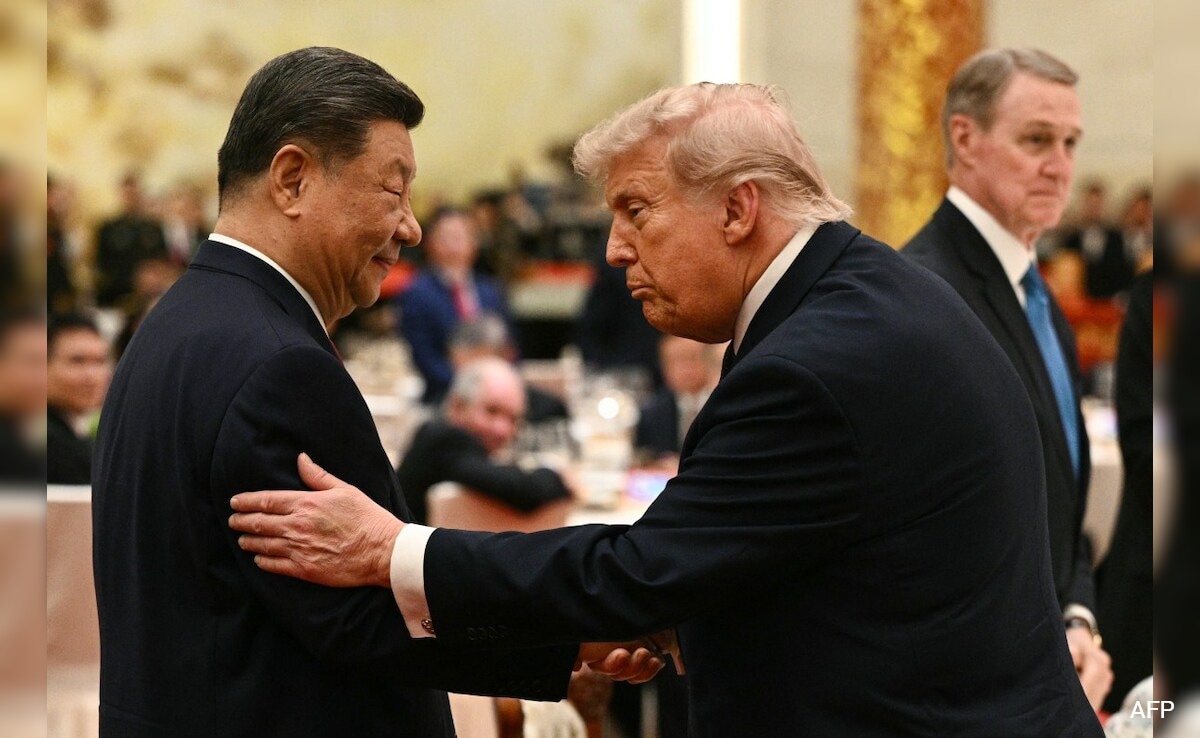
Donald Trump just wrapped up his high-stakes Beijing summit by declaring he and Xi Jinping struck "fantastic trade deals, great for both countries." Walking through the historic rosebushes of the Zhongnanhai leadership compound, Trump looked comfortable, sounded triumphant, and assured reporters that he solved problems other people couldn't touch.
But if you look closer at what actually happened over the last 48 hours, the reality is far more complicated than a victory lap.
Trump loves a grand announcement. He thrives on the theater of the mega-deal. Right now, both Washington and Beijing desperately need to project stability after last year's bruising tariff wars, especially with the global economy shaken by the ongoing war in the Middle East. Beneath the warm rhetoric and promises of 200 Boeing jets, the actual ink on these historic agreements is incredibly thin.
The Big Promises vs. The Quiet Reality
Let's look at the numbers Trump is tossing around. In an interview with Fox News right after the first day of the summit, Trump claimed China agreed to buy 200 Boeing aircraft. It sounds massive.
But behind the scenes, US media reports had flagged that the aviation giant was actually angling to sell closer to 600 planes, including a mix of 737 MAX jets and larger wide-body models like the 787 Dreamliner. Getting a commitment for 200 is fine, but it's a scaled-back win.
Worse yet? Neither Boeing nor the Chinese Foreign Ministry has officially confirmed the order. When reporters pressed Beijing on Friday afternoon, officials stayed characteristically quiet.
It's a similar story with agriculture and energy. US Trade Representative Jamieson Greer told Bloomberg TV that double-digit billions in agricultural sales are expected. Trump talked up major Chinese commitments to purchase American oil and soybeans.
Yet, we haven't seen a single formal, detailed text. This is a classic playbook we've seen before. Trump announces a massive headline number, while Beijing nods along politely, keeping their actual commitments vague enough to adjust later.
The Unlikely Backroom Deals on Global Security
What makes this summit different from previous trade standoffs is how tightly commerce is being wrapped around global flashpoints. The discussions weren't just about soybeans and semiconductors. They heavily featured Taiwan and the war with Iran.
According to Trump, Xi gave strong assurances that Beijing would not provide military equipment to Tehran. Trump also claimed that China is ready to step in and help reopen the critical Strait of Hormuz, where a massive chunk of the world's oil supply is currently choked off due to the conflict.
"He said he's not going to give military equipment… he said that strongly," Trump told reporters, adding that Xi offered to do whatever it takes to ease the maritime blockade.
While China’s Foreign Ministry did release a statement calling for an immediate ceasefire and the reopening of shipping lanes, their language was careful. They want global supply chains stabilized because the war hurts their own economy, not because they are jumping to do the White House a favor.
Meanwhile, underneath the polite tea sessions, the structural tension hasn't budged. Xi reportedly used the meetings to issue explicit warnings to Trump about the red lines surrounding Taiwan's future, reminding Washington that missteps there could lead to direct conflict.
What Actually Got Set Up in Beijing
If the massive purchasing agreements are mostly verbal for now, what did the US delegation actually walk away with?
Trump brought a heavy-hitting entourage of American tech and business royalty to Beijing, including Tesla's Elon Musk, Nvidia's Jensen Huang, and Apple's Tim Cook. They weren't there just for the Kung Pao chicken and dumplings at the working lunch.
The real policy groundwork happened away from the cameras. US Treasury Secretary Scott Bessent confirmed to CNBC that the two superpowers are trying to establish a new framework to move forward.
- A New Board of Investment: The US and China plan to build a joint board to oversee investments in non-sensitive commercial areas, aiming to revive corporate confidence after the devastating triple-digit tariffs of the recent past.
- An AI Safety Protocol: Despite being bitter rivals in the artificial intelligence race, both sides agreed to set up a formal communication channel to manage AI development safely.
- The One-Year Tariff Pause: The biggest immediate relief for global markets is the confirmation that the one-year truce struck last October in South Korea is holding. For now, the threat of immediate, devastating tariff hikes is off the table.
The Smart Money Strategy for Businesses Right Now
Don't restructure your entire supply chain based on Trump's "fantastic" headlines. The political theater is meant to calm Wall Street and give both leaders a domestic political win. Xi gets to look like an equal global statesman holding court in his private gardens, and Trump gets to look like the ultimate dealmaker.
If you are importing, exporting, or managing cross-border logistics, treat this summit as a temporary breathing room, not a permanent fix.
Use the current one-year tariff pause to diversify your sourcing away from single-point dependencies. The underlying friction between the US and China over technology, Taiwan, and global alliances isn't gone. It's just being masked by clever PR and a promise to send Chinese seeds to the White House Rose Garden. Keep your operations flexible, watch the actual regulatory filings from the US Trade Representative over the coming weeks, and don't mistake a polite bilateral lunch for a signed, legally binding treaty.