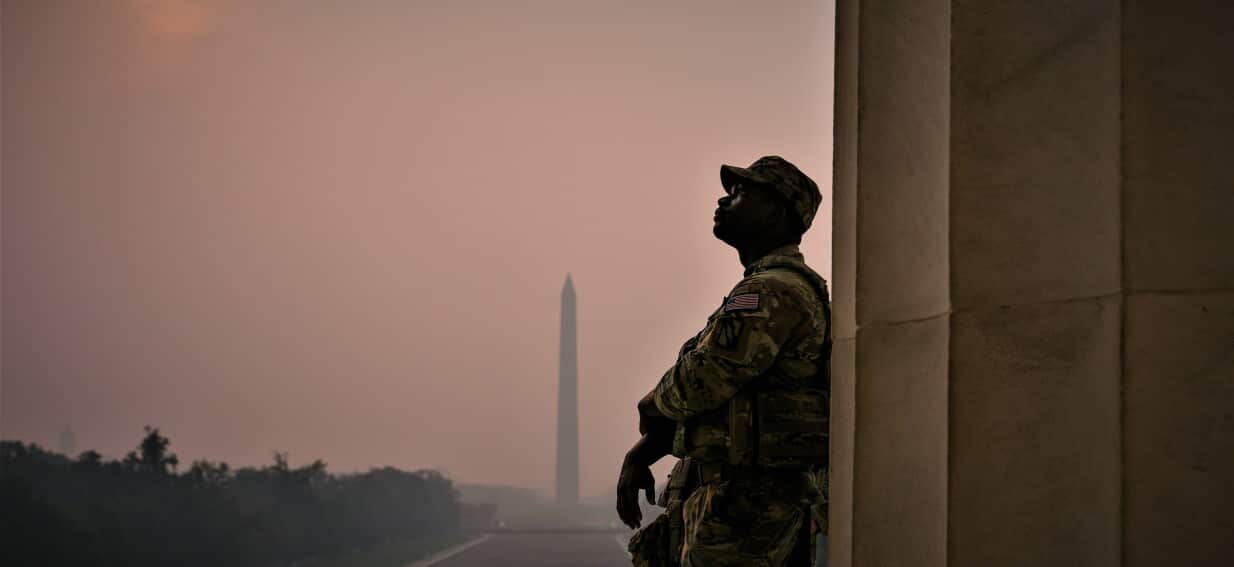
Yellow skies are back, lungs are burning, and the political blame game is officially out of control. As hundreds of out-of-control Canadian wildfires choke major American cities from Detroit to New York, the White House just threw a massive match into an already blazing diplomatic situation. President Donald Trump wants Canada to pay up for the smoke drifting south. He is threatening to slap heavy new import tariffs on Canadian goods to cover the incalculable cost of what he terms willful negligence.
It sounds like a classic headline-grabbing move. But weaponizing trade policy against cross-border smoke is an absolute mess that completely ignores how ecosystems, trade laws, and global climate realities actually work.
The air quality index in Detroit and Chicago recently hit hazardous levels. Millions of Americans are being told to stay inside, mask up, and shut their windows. People are rightfully angry about the choking haze ruining their summer. Turning a shared environmental disaster into a messy trade war will not clear the skies. It is a political stunt that distracts from the real, complicated problems we need to fix.
What Trump Actually Said and the New Tariff Threat
The drama exploded on Truth Social when Trump lashed out at Canada’s forestry practices. He claimed the United States is being unnecessarily invaded by filthy, polluted, and unhealthy air. He explicitly blamed the Canadian government for failing to properly maintain its forests and clear out dry brush.
According to the administration, this failure amounts to negligence. The proposed solution is simple. The White House wants to add the financial damages caused by the smoke directly onto the import tariffs Canada currently pays on its goods. Trump also announced plans to call Canadian Prime Minister Mark Carney to demand answers.
This announcement follows an intense week of escalating pressure from local politicians. A group of Michigan representatives recently penned an angry letter stating that Canada's apologies would not clear American skies. They accused the northern neighbor of lacking urgency. Local candidates have gone even further, issuing final warnings and claiming that American lungs are paying the price for Canadian inaction.
The rhetoric is sharp. It taps into a very real frustration felt by everyday people who cannot breathe comfortably outside. Tying air pollution to international trade tariffs is a massive escalation that legal and economic experts say is virtually unworkable.
The Economic Reality of Smoke Tariffs
You can't just tax the wind. Trump treats the smoke like an illegal import, but the legal framework for international trade does not account for atmospheric drift. Tariffs are taxes placed on physical goods crossing a border through commerce. Using them to punish a country for a natural disaster sets a wild precedent.
The timing is incredibly awkward for the administration. The U.S. government just had to pay back tens of billions of dollars in tariffs it previously collected after a Supreme Court ruling deemed those specific trade penalties illegal. Budget data shows the U.S. has refunded a staggering $81 billion so far this fiscal year. Trying to force a new, legally sketchy tariff package onto Canada over wildfire smoke will almost certainly trigger immediate challenges in international trade courts.
A trade war will not make the fires burn any slower. Canada is the largest trading partner for many northern U.S. states. Slapping higher taxes on Canadian lumber, crude oil, or automobiles will just drive up costs for American consumers. You end up paying more for your house, your gas, and your car because it is hazy outside. That does not sound like a winning strategy for the American taxpayer.
The economic damages of the smoke are very real. Forecasters at AccuWeather put a preliminary estimate of damage and economic loss from this current smoke wave at $11 billion to $13 billion. A past study from Carnegie Mellon University’s Tepper School of Business estimated that smoke from wildfires and prescribed burns caused $200 billion in health damages in a single year, alongside thousands of premature deaths. The financial hit is massive. Shifting that burden to trade tariffs is fundamentally the wrong tool for the job.
Why Forest Management Is Not That Simple
The core argument coming out of the White House is that Canada just needs to rake its forests. This is an old talking point that completely misunderstands the sheer scale of the Canadian wilderness.
Canada has one of the largest forest expanses on earth. We are talking about hundreds of millions of hectares of densely wooded, often inaccessible terrain. The idea that a government can simply remove debris and brush from a wilderness area that spans across an entire continent is a complete fantasy. It is physically and financially impossible.
Wildfire experts have pointed out for years that the problem is not a lack of raking. The issue is a changing climate that makes forests prime tinderboxes. Higher temperatures create intensely dry, hot, and windy conditions. When a lightning strike hits a forest that has been baked by record heat, an uncontrollable blaze is inevitable.
The U.S. has tried aggressive fire suppression tactics too. The White House recently created a new federal fire service and pushed a full suppression policy to stamp out fires on American soil instantly. That policy is facing massive scrutiny. Three government firefighters died in a Colorado wildfire last month. A Canadian helicopter pilot also lost his life while fighting fires on U.S. soil. Suppressing every single fire actually allows dry brush to build up over decades, making the eventual fires far larger and more destructive. Expecting Canada to flawlessly clean up millions of acres of wild forest to prevent smoke is completely detached from ecological reality.
How Bad Is the Air Right Now
The air quality across the Midwest and Northeast has turned genuinely dangerous. It is not just a light haze or an ugly sunset. The fine particulate matter in the smoke, known as PM2.5, is small enough to lodge deep into human lungs and enter the bloodstream.
Data from the government website AirNow showed the air quality index in cities like Chicago and Detroit skyrocketing well past 300 into the hazardous zone. At those levels, health officials warn that everyone, not just vulnerable groups like asthmatics or the elderly, should avoid outdoor activities entirely.
The smoke has turned major metropolitan areas into ghost towns. People are canceling outdoor events, construction projects are pausing, and local hospitals are seeing upticks in respiratory complaints. The immediate focus needs to be on public health, distributing masks, and upgrading air filtration systems in schools and public buildings. Arguing over tariffs on Truth Social does absolutely nothing to help a child in Detroit who is suffering from a severe asthma attack because of the air quality.
The World Cup Final Problem
The smoke crisis is also crashing headfirst into the sports world. This weekend, the eyes of the entire globe are supposed to be on the New York and New Jersey metro area for the World Cup soccer final.
The massive open-air stadium is scheduled to host the biggest match in sports, but the air quality is threatening to cast a literal shadow over the event. Just days ago, the Manhattan skyline was barely visible through a thick, orange-tinted smog. While meteorologists expect slight improvements before kickoff, wind patterns over the Great Lakes could easily pull down another thick blanket of smoke right before the game begins.
The White House World Cup task force has stated they are monitoring the situation closely. Tournament organizers face a nightmare scenario. Do they play a grueling, ninety-minute elite sports match in air that might be unhealthy for sensitive groups, or do they risk delaying a global event? It highlights just how deeply these environmental crises impact our cultural and economic infrastructure. A trade dispute with Ottawa will not change the wind patterns over New Jersey this weekend.
Moving Forward Without the Political Stunts
Instead of threatening unworkable tariffs that will only hurt consumers and tank diplomatic relations, leaders need to take real, actionable steps to protect communities and manage the reality of cross-border smoke.
First, the U.S. and Canada must expand their joint wildfire response frameworks. Firefighters from both nations routinely cross the border to help each other, but the funding, equipment sharing, and logistics systems are stretched to the absolute limit. We need a massive, coordinated North American wildfire task force that treats these blazes as a shared continental emergency, not an invasion.
Second, local governments must invest heavily in community resilience. That means upgrading HVAC systems in public schools, creating clean-air shelters in major cities, and improving early-warning systems for air quality drops. The smoke is going to keep coming back as summers get hotter and drier. Protecting your lungs starts with localized action, not international trade threats.
If you want to protect your health right now, stop waiting for a political solution. Check the AirNow app every morning before you head outside. Keep your windows closed and run an air purifier with a HEPA filter inside your home. If the air index climbs above 150, limit your heavy outdoor workouts and wear an N95 mask if you have to commute. The political shouting match between Washington and Ottawa will probably dominate the news cycle for weeks, but practical preparation is the only thing that will actually help you breathe easier.