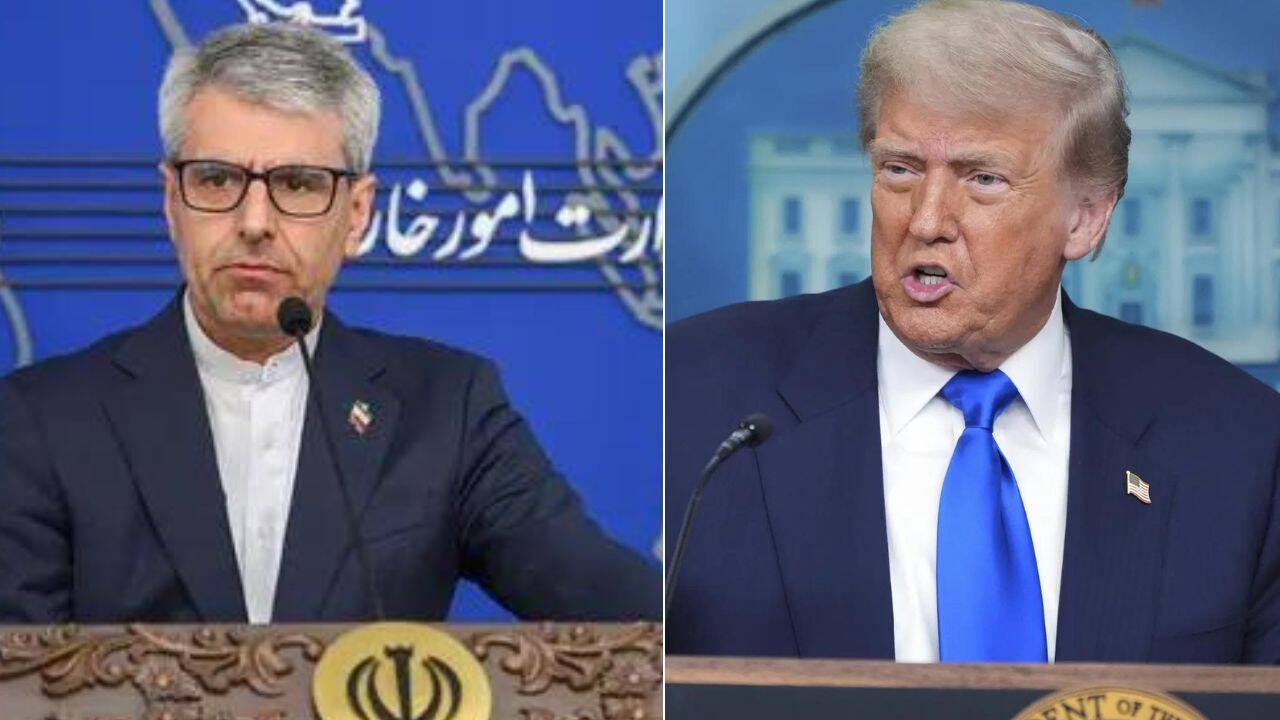
Donald Trump says one thing. Tehran says the exact opposite.
On Monday, Trump took to Truth Social to drop a massive claim. He told the world that Iran had desperately requested a meeting and that both sides would sit down in Doha, Qatar on Tuesday, June 30, 2026. Within hours, the White House confirmed that heavy-hitters Jared Kushner and Special Envoy Steve Witkoff were already packing their bags for the Qatari capital.
Then came the cold water from Tehran.
Iran's Foreign Ministry spokesperson, Esmaeil Baghaei, flatly rejected the idea of any face-to-face sit-down. He made it clear that there will be no negotiation meeting with the American side at any level in the coming days. According to Iran, their technical delegation is heading to Doha for one reason only: to track down their frozen billions. If US officials happen to be in the same city, Tehran claims it is a pure coincidence.
This isn't just a minor communication mix-up. It's a high-stakes game of diplomatic chicken playing out right after a weekend of terrifying military strikes in the Strait of Hormuz. Both sides are trying to control the narrative while trying to keep a fragile peace deal from completely falling apart.
The Invisible Peace Deal Everyone is Breaking
To understand why this public disagreement matters, you have to look at what happened on June 17, 2026. After four months of brutal military escalation that sent global oil prices soaring past $100 a barrel, Trump and Iranian President Masoud Pezeshkian electronically signed a 14-point temporary memorandum of understanding.
It was a classic band-aid solution. The deal called for an immediate ceasefire, the reopening of the strategic Strait of Hormuz, and a 60-day window to negotiate a permanent settlement regarding Iran's nuclear program.
But agreements on paper don't always translate to peace on the water.
Just days after the ink dried, things exploded again. Last Thursday, an Iranian projectile struck a commercial cargo vessel navigating the Strait of Hormuz. The US blamed Tehran for breaking the ceasefire and launched heavy retaliatory airstrikes on Iranian military assets. Iran didn't back down. By Sunday, the Islamic Revolutionary Guard Corps fired a barrage of missiles and drones at US military installations in Kuwait and Bahrain.
Trump reacted with his typical fire and fury on social media. He warned that if things got worse, the US would militarily complete the job and that the Islamic Republic of Iran would no longer exist.
Yet, less than 24 hours after threatening total destruction, Trump announced they were heading to the negotiating table. It's dizzying. It shows how desperate both administrations are to keep the illusion of control.
What Trump Wants vs What Iran Needs
The core issue here is that Washington and Tehran are operating on completely different timelines and agendas.
Trump needs a win. With important US midterm elections approaching, high oil and gas prices are a political nightmare. The brief closure of the Strait of Hormuz, which controls a fifth of the world’s liquefied natural gas and oil supply, sent inflation fears screaming back into the headlines. Trump needs the shipping lanes open, he needs oil cheap, and he wants to brag about a historic diplomatic breakthrough that he engineered. He wants a big, flashy high-level meeting to prove his maximum pressure strategy forces adversaries to beg for peace.
Tehran sees the world through a very different lens. They don't want to give Trump a PR victory for free.
President Pezeshkian is dealing with intense internal economic misery. For Iran, this temporary deal was never about making peace with the West. It was a tactical move to get immediate financial relief. Under Article 10 and Article 11 of the June 17 agreement, the US agreed to grant sanctions waivers for Iranian oil exports and allow the release of frozen funds.
Pezeshkian announced on Monday that $6 billion of the $12 billion in Iranian assets currently stuck in Qatari banks would finally be unfrozen and returned to Iran. He called it a great victory for the Iranian people.
But here is the catch. Iran's Deputy Foreign Minister, Kazem Gharibabadi, and other officials are insisting that they won't even talk about a final, comprehensive treaty until that cash is physically in their hands and the oil is flowing freely without American interference.
The Doha Disconnect Explained
So, are they meeting or not? The truth lies in the messy mechanics of modern diplomacy.
When Trump says a meeting is happening, he's looking at the macro level. The US is sending Kushner and Witkoff to Qatar. Pakistan and Qatar, acting as the primary neutral mediators, have been shuttling messages back and forth between the two hostile nations for weeks. From the American perspective, if both delegations are in the same city, talking to the same Qatari mediators about the same piece of paper, they are negotiating.
Iran is playing a much stricter semantic game. Baghaei explicitly stated that Article 13 of the memorandum states that broader talks on a final, comprehensive deal can only begin after the preliminary stages are fully implemented.
By denying the meetings, Iran achieves two things. First, they save face domestically by showing they aren't bowing to Trump's public demands or threats of total annihilation. Second, they signal to the mediators that the US cannot skip the payment phase of the contract. They want their money first.
It's a classic negotiating tactic. You downplay the significance of the talks to increase your leverage before you walk into the room.
The Massive Stakes in the Strait of Hormuz
While politicians bicker over who called whom, the shipping industry is holding its breath. The Persian Gulf remains incredibly volatile. Iran still maintains that all commercial traffic passing through the strategic choke point must coordinate directly with the Revolutionary Guard. They want ships hugging the Iranian coastline near Hormuz and Larak islands.
The US military says it's operating under the assumption that both sides are stepping back after the weekend's chaotic missile exchanges. But one single rogue drone or a panicked navy commander could shatter this fragile arrangement instantly.
If the Doha talks stall out completely because of this public war of words, expect oil markets to react violently. Traders hate uncertainty. The fact that the two main actors can't even agree on whether they have a meeting scheduled shows just how thin the ice really is.
Tracking the Next Critical Steps
Don't look at the loud social media posts. Watch the money and the movement of cargo. Here is what needs to happen next to see if this peace process survives the week.
First, verify the asset transfer. The ultimate sign of progress will be confirmation from Qatari banking authorities that the first tranche of the $6 billion has been successfully cleared for Iranian use, even if it's restricted to purchasing food and humanitarian goods as US officials claim.
Second, monitor the shipping data in the Strait of Hormuz. If commercial tankers continue to pass through without being harassed by Iranian fast-boats or stopped by Western naval coalitions, the ceasefire is holding despite the political posturing.
Third, look for the quiet arrivals. Kushner and Witkoff arriving in Doha means the infrastructure for communication is live. Whether they sit across a table from an Iranian official or use Qatari diplomats as human notes-messengers doesn't change the reality. The dialogue is happening because neither side can afford the alternative.