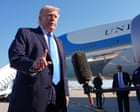
Florida Governor Ron DeSantis signed HB 919 on Monday, officially stripping the Palm Beach International Airport of its geographic identity to rename it the President Donald J. Trump International Airport. While the bill is being framed as a tribute to the state’s most famous resident, the move is actually a sweeping legislative power grab that removes local control over infrastructure and hands the branding of Florida’s air travel to the state government. By the time the first terminal signs are replaced this July, taxpayers will be footing a bill that could exceed $5.5 million for a renaming the local community never requested.
The legislative maneuver was not a simple commemorative gesture. It was a targeted strike on local autonomy. For decades, the naming of Florida’s major transportation hubs was a matter for county commissions and regional authorities. HB 919 changes that permanently. The state has now seized control over the naming rights of seven major commercial service airports, including those in Miami, Orlando, and Tampa. Palm Beach was merely the first domino to fall.
The Trademark Trap
While Republican sponsors like Senator Debbie Mayfield insist that Donald Trump will not receive royalties for the use of his name, the legal reality is more complex. Just days before the Florida Senate voted on the measure, the Trump Organization’s DTTM Operations LLC filed federal trademark applications for “President Donald J. Trump International Airport” and the shorthand “DJT.”
These filings were made on an "intent-to-use" basis. This means that while the airport might not pay for the letters on the building, the Trump family company is positioning itself to own the commercial rights to the name on everything from luggage and apparel to flight suits and shuttle buses. If a local vendor wants to sell a souvenir hat with the airport’s name on it, they may find themselves paying a licensing fee to the former president’s estate rather than the county.
The Trump Organization claims these filings are defensive—a way to prevent "bad actors" from exploiting the brand. However, critics point out that this creates a first-of-its-kind scenario where a public, tax-funded gateway becomes a marketing vehicle for a private global brand.
A Geographic and Political Shift
Palm Beach County has long been a Democratic stronghold in a state that has trended increasingly red. Local leaders have been vocal about their exclusion from the process. Representative Lois Frankel, who represents the district, characterized the move as "misguided and unfair," noting that the residents of Palm Beach did not back Trump in 2016, 2020, or 2024.
The physical proximity of the airport to Mar-a-Lago—roughly two miles—makes the renaming feel like an extension of the resort’s footprint. For the 8.6 million passengers who pass through the gates annually, the branding is a mandatory encounter. It is no longer just a piece of infrastructure; it is a political billboard.
The Logistics of the $5.5 Million Overhaul
Changing the name of an international airport is not as simple as swapping a few signs at the gate. The financial burden, initially estimated at $5.5 million, covers a massive logistical chain:
- Navigational Databases: The FAA must update every aeronautical chart and database used by pilots globally.
- Physical Infrastructure: Highway signs starting miles away on I-95 and the Florida Turnpike must be replaced.
- Digital Systems: Every booking site, airline terminal, and baggage tag system must be synchronized to the new designation.
- Uniforms and Security: Badges for thousands of employees and decals on security vehicles require a complete refresh.
The Florida Senate has currently allocated only $2.75 million toward these costs, leaving a significant funding gap that Palm Beach County may eventually be forced to bridge.
Federal Approval and The FAA Loophole
The FAA has been quick to distance itself from the political fallout. In a formal statement, the agency noted that "changing an airport name is a local issue" and that it does not technically "approve" names. However, the change cannot take effect until the FAA completes the administrative task of updating its global charts.
This process is expected to wrap up by July 1, 2026. Until then, pilots will continue to call out for "Palm Beach" over the radio, even as the gold letters are being bolted onto the terminal facade.
The renaming of PBI is a case study in how state-level power can be used to override local sentiment for the sake of national political branding. It sets a precedent that could see Orlando or Miami rebranded by whichever party holds the keys to Tallahassee next. Florida has fundamentally altered the relationship between its citizens and the infrastructure they pay for, turning a public utility into a permanent monument.
The airport is no longer just a place to catch a flight. It is a $5.5 million statement of ownership.