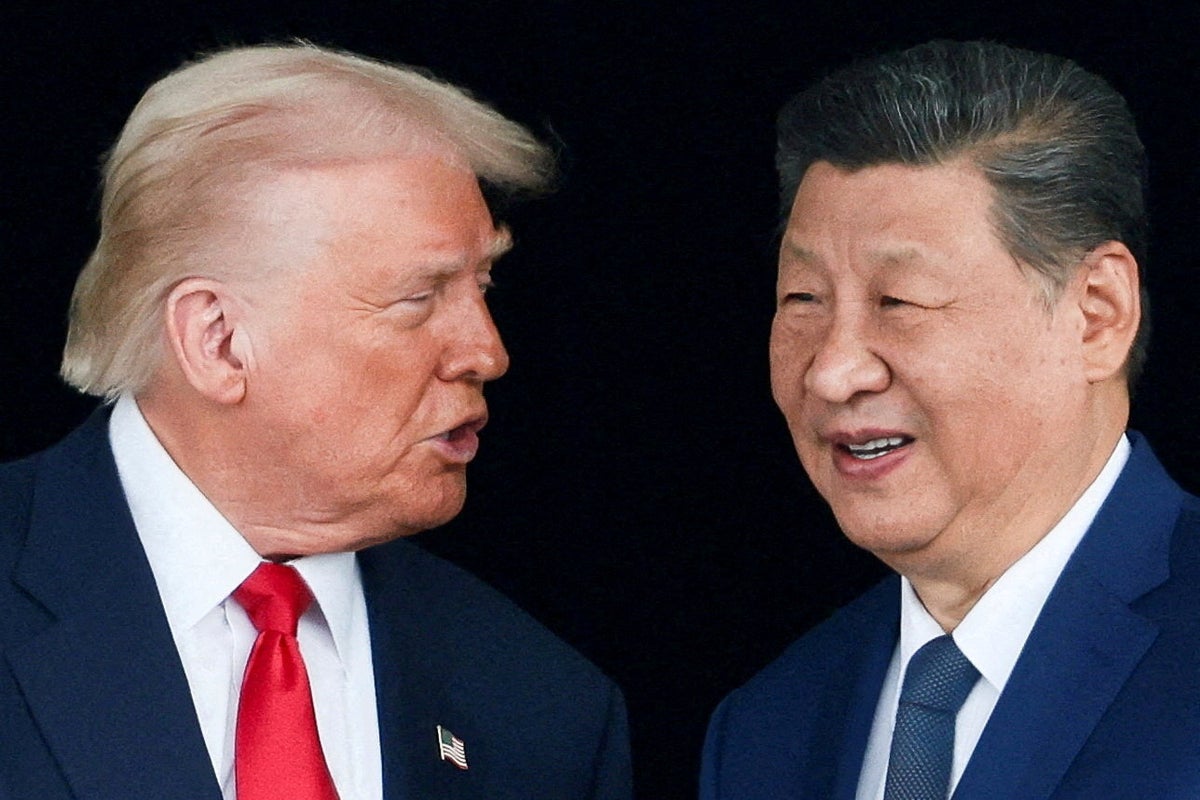
Donald Trump is heading to Beijing, and the world is holding its breath. This isn't just another state visit with red carpets and photo ops. It's a collision of two completely different worldviews at a time when the global order feels like it's held together by duct tape. You’ve seen the headlines about trade wars and nuclear threats, but the actual tension in the room between Trump and Xi Jinping goes way deeper than a few tariffs.
The stakes are massive. We're talking about the future of the global economy and the very real possibility of conflict in the Pacific. If these two can't find a way to coexist, everyone pays the price.
Why the North Korea Problem Changes Everything
China is the only country with enough economic pressure to make Kim Jong Un blink. Trump knows this. He’s spent months alternating between praising Xi and accusing China of doing nothing. It’s a classic squeeze play.
Beijing’s biggest fear isn't a nuclear North Korea. It's a collapsed North Korea. If the regime falls, China gets a massive refugee crisis on its border and, even worse, American troops sitting right on their doorstep in a unified, pro-Western Korea. That’s a non-starter for Xi. Trump has to convince him that the risk of a nuclear-armed Kim is actually worse than the risk of a messy regime change.
It’s a tough sell. China has historically preferred stability over denuclearization. Trump’s "maximum pressure" campaign only works if Xi decides to tighten the screws on oil and banking. Without that, the sanctions are basically Swiss cheese.
The Trade Deficit is a Political Time Bomb
Trump ran on a platform of "America First," and nothing screams that louder than the trade deficit with China. It's huge. We're talking hundreds of billions of dollars. Trump views this as a literal theft of American wealth.
China sees it differently. They see it as the natural result of global supply chains and American consumption habits. Xi isn't going to just rewrite China’s state-led economic model because Trump asked nicely. He’s spent years building "Made in China 2025," a plan to dominate high-tech industries like robotics and electric vehicles.
Forced Technology Transfers and IP Theft
This is where the real fight lives. It’s not just about selling more soybeans or Boeing planes. It’s about the fact that American companies often have to hand over their intellectual property just to do business in China.
- Joint Ventures: US firms are forced into partnerships where they lose control of their tech.
- Cyber Espionage: State-sponsored hacking remains a constant thorn.
- Market Access: China’s markets are notoriously hard to break into compared to the relatively open US market.
Trump wants structural changes. Xi wants to maintain control. Expect a lot of talk about "fairness" and "reciprocity," but don't expect the underlying system to change overnight. China plays the long game. Trump wants results he can tweet about by tomorrow morning.
The Personality Clash of the Titans
Xi Jinping just came off a major Communist Party Congress where he basically cemented his status as the most powerful Chinese leader since Mao Zedong. He’s confident. He’s stable. He’s got a plan that stretches out for decades.
Trump is the wildcard. He’s unpredictable, governed by instinct, and obsessed with the "art of the deal."
When they met at Mar-a-Lago, there was a weird kind of chemistry. Trump talked about the "beautiful" chocolate cake they ate while he told Xi about the missile strikes in Syria. It was a power move, but Xi didn't flinch. In Beijing, the "State Visit-Plus" treatment is designed to flatter Trump’s ego. The Forbidden City dinner and the military parades are all part of a curated effort to keep the American president happy while China gives up as little as possible.
South China Sea and the Fight for the Pacific
While trade and North Korea dominate the news cycles, the South China Sea is the slow-burning fuse. China has been building artificial islands and militarizing them for years. They're claiming territory that international courts say doesn't belong to them.
The US Navy keeps sailing through these waters to assert "freedom of navigation." It’s a high-stakes game of chicken. One wrong move by a fighter pilot or a ship captain could spark a crisis that neither leader actually wants. Trump has been relatively quiet on this lately, likely to save his political capital for trade and North Korea, but the Pentagon is watching closely.
What a Win Actually Looks Like
Forget the grand declarations. A real win in Beijing won't be a signed treaty that solves every problem. That's a fantasy.
A successful summit looks like a "freeze for freeze" on the North Korea situation—or at least a clear roadmap for more sanctions. It looks like China opening up its financial services sector a bit more to US firms. It looks like a temporary ceasefire in the rhetoric that allows both men to go home and claim victory to their domestic audiences.
But the underlying friction isn't going away. We're witnessing the beginning of a multi-decade struggle for dominance. China is a rising power. The US is the incumbent. History tells us these transitions are rarely peaceful or easy.
Keep an eye on the side deals. Watch the CEOs who traveled with Trump. If Goldman Sachs and Boeing walk away with multi-billion dollar contracts, Trump will call it the greatest trip in history. Just don't confuse a few big sales with a change in China’s fundamental strategy. They’re still moving toward their goal of becoming the world’s primary superpower.
If you're looking for the next move, watch the Treasury Department's reports on currency manipulation and the upcoming Section 301 investigations into Chinese trade practices. The real action happens in the weeks after the planes leave the tarmac. Keep your eyes on the data, not the handshakes.