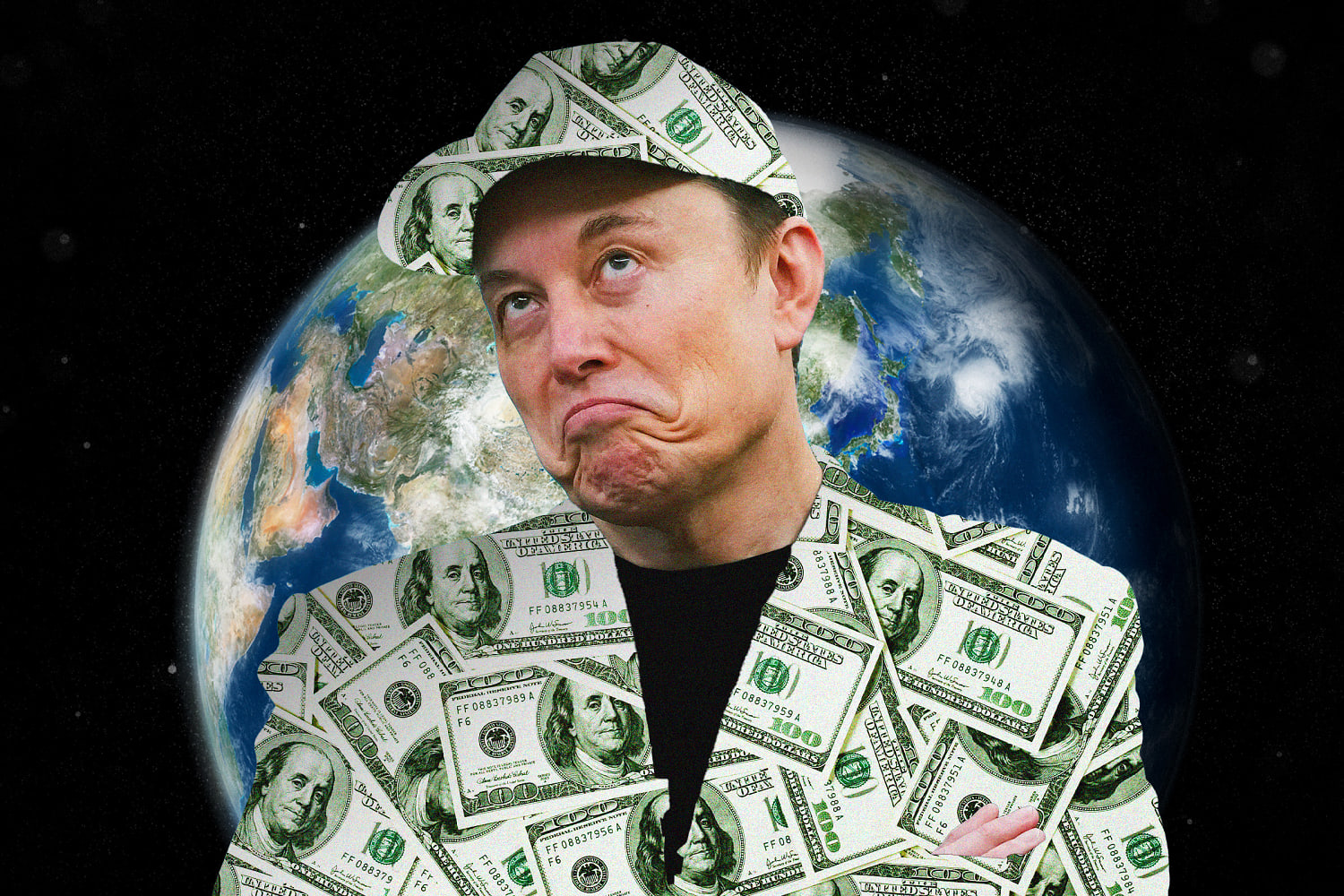
The media is hyperventilating over a math equation that doesn't matter.
Every major outlet is running some variation of the same terrified headline: Elon Musk is on track to become the world’s first trillionaire, and Washington is drawing up battle plans to stop him. Politicians are treating this theoretical milestone like a vault full of gold coins sitting in Austin, Texas, waiting to be redistributed.
It is a comforting narrative for populist campaigns. It is also entirely wrong.
The entire panic rests on a fundamental misunderstanding of what wealth actually is in the modern era. We are watching a political class bring 19th-century tax economic theories to a 21st-century capital market fight. They are aiming at a ghost.
The Myth of the Liquid Trillionaire
Let's clear up the definition of wealth immediately. When the press says someone is worth $300 billion or approaching $1 trillion, the average person imagines a bank account balance. They picture cash.
The reality? Musk’s net worth is almost entirely tied up in the equity of non-liquid or highly volatile enterprises: Tesla, SpaceX, xAI, and Neuralink.
To actually realize a trillion dollars, Musk would have to sell his shares. The moment a founder starts dumping massive blocks of stock, the market panics. The price collapses. The trillion dollars vanishes into thin air before the ink on the sell order even dries.
I have watched founders try to liquidate just 5% of their holdings to fund side projects, only to trigger a short-selling frenzy that wiped out 20% of their company's market cap in a weekend. Wealth at this scale is an abstraction. It is a reflection of market confidence, not purchasing power.
Taxing paper wealth—unrealized capital gains—is the current darling policy of the political left. It sounds simple on a bumper sticker. In practice, it forces the liquidation of America's most vital companies.
Imagine a scenario where a founder is forced to sell 2% of their company every year just to pay a tax bill on money they haven't actually made yet. Who buys those shares? Wall Street institutional mega-funds or foreign sovereign wealth funds. A wealth tax doesn't give power back to the people; it systematically transfers corporate governance from visionary founders to risk-averse asset management conglomerates.
The Misguided Crusade of the Wealth Tax
The political response to the "trillionaire threat" is a series of poorly conceived legislative proposals aimed at punishing asset appreciation. The premise of these bills is flawed: they assume that a dollar held in equity by an entrepreneur is a dollar stolen from the public treasury.
Consider the math behind these proposals. If the government passes an unrealized capital gains tax, they are assuming assets only go up. What happens when the market crashes?
If Tesla stock drops 40% in a quarter—which it has done multiple times—does the government issue Elon Musk a tax refund check for $80 billion? Of course not. The system breaks down under the weight of its own asymmetric logic.
Furthermore, targeting a single individual's balance sheet ignores where that value actually goes. Musk isn't hoarding cash in a Swiss bank account or buying superyachts to sit idle in Monaco. He is deploying capital into extraordinarily high-risk, capital-intensive infrastructure projects that no traditional venture capitalist or government agency would touch.
- SpaceX reinvented orbital mechanics while NASA relied on legacy defense contractors who charged billions for single-use rockets.
- Starlink provided global satellite internet to blind spots across the planet, bypassing traditional telecom monopolies.
- Tesla forced the entire legacy automotive sector to pivot away from internal combustion engines through sheer market pressure.
Whether you love or hate the man's politics or his Twitter feed is irrelevant to the economic reality. This is active, productive capital. Pulling hundreds of billions of dollars out of these operational ecosystems to let federal agencies allocate it instead is an absurdly inefficient trade. Government agencies are designed to mitigate risk and follow bureaucratic protocols; they are fundamentally incapable of executing high-risk, iterative engineering breakthroughs.
The Real Danger Nobody is Talking About
The real risk of a trillion-dollar valuation isn't that one man can buy too many houses. The risk is the unprecedented concentration of critical infrastructure in private hands.
Washington is fighting a tax war when they should be looking at a sovereignty problem.
When a single individual controls the primary satellite communication network used by global militaries, the dominant electric vehicle charging grid in North America, and the leading private aerospace pipeline, they wield geopolitical leverage that rivals entire nation-states.
We saw this play out directly when geopolitical actors had to negotiate access to Starlink over active conflict zones. That isn't a tax bracket issue. It's a monopoly on future infrastructure.
By focusing entirely on the dollar sign, politicians are missing the actual leverage point. They are demanding a cut of the money instead of figuring out how to build competitive, resilient public and private alternatives.
If you want to reduce Musk's influence, you don't pass a wealth tax that ties up the court system for a decade. You fix the broken regulatory procurement system that allowed a single contractor to capture the entire aerospace industry in the first place. You break down the barriers that prevent legacy automakers from innovating faster. You foster actual competition.
Dismantling the Consensus
Let's address the questions that dominate the public discourse on this topic, stripped of political spin.
Can anyone really "earn" a trillion dollars?
The question itself is flawed because it assumes wealth is a wage paid for labor hours. Nobody earns a trillion dollars through a salary. They achieve that valuation because the market assigns a massive premium to the future cash flows of companies they control. It is a valuation of potential, not a reward for past hours worked. If the market decides tomorrow that autonomous driving is a fantasy, hundreds of billions of that wealth evaporate instantly.
Wouldn't taxing billionaires solve the national deficit?
No. This is a matter of simple arithmetic that politicians refuse to acknowledge. The United States national debt is over $34 trillion, with annual deficits running in the trillions. If you confiscated the entire net worth of every single billionaire in America tomorrow—not just taxed them, but seized every asset, stock, and piece of real estate they own—it would fund the federal government for less than a year. The spending problem cannot be solved by liquidating the entrepreneur class.
Why not just tax their borrowing?
A common counter-argument is that billionaires avoid taxes by taking low-interest loans against their stock portfolios to fund their lifestyles. This is true, and it is a legitimate loophole. But the solution isn't a sweeping, market-destabilizing wealth tax. The solution is closing specific loopholes within the existing tax code—such as capping the deduction of interest on loans secured by corporate equities or altering the step-up in basis rules at death. These are precise, surgical fixes. They don't make headlines, which is why politicians avoid them in favor of grandstanding about trillionaires.
The Unpopular Solution
The uncomfortable truth is that the rise of the trillion-dollar founder is a feature of our current financial system, not a bug. Decades of low interest rates and massive liquidity injection by central banks inflated asset prices across the board. The people who owned the assets became phenomenally wealthy on paper, while those who relied on wages fell behind.
If Washington actually wanted to fix the wealth gap, they would look in the mirror and address monetary policy, currency devaluation, and the regulatory capture that protects incumbent corporations from disruption.
Instead, they prefer the theater of targeting a single, polarizing figure. It keeps voters angry, keeps donations flowing, and ensures that nothing of substance actually changes.
Stop looking at the theoretical trillion-dollar scoreboard. Start looking at the structural rot that makes the scoreboard the only thing people care about. Fix the infrastructure, reform the tax code where it is actually broken, and stop pretending that a press release about taxing paper wealth is going to save the economy. It won't.