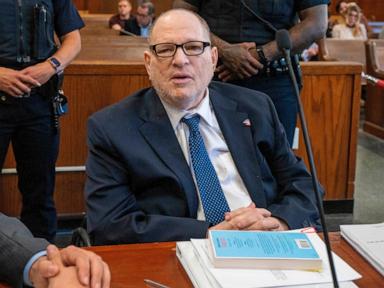
The modern courtroom has become a theater of the absurd where we expect victims to be both broken enough to be believed and composed enough to be cross-examined. The latest dispatches from the Harvey Weinstein retrial aren't just reporting on a legal proceeding; they are documenting a systemic failure of how we define human reliability under duress. When a witness tells a judge she is "struggling with stress" before returning to the stand, the armchair analysts and legal pundits pounce. They mistake a biological redline for a lack of credibility.
They are wrong.
The media loves a "wavering witness" narrative because it creates tension. Defense attorneys love it because it’s a manual for gaslighting. But if you have spent any time in the trenches of high-stakes litigation or psychological advocacy, you know that the "perfect witness" is a myth manufactured by television writers. In the real world, the more "consistent" and "unshakable" a witness appears when recounting a decade-old trauma, the more likely they’ve been coached into a hollow shell of the truth.
The Credibility Paradox
We have entered an era where we demand victims perform their trauma with the precision of a Swiss watch. If they cry too much, they are "histrionic." If they are too cold, they are "calculating." If they admit that their brain is melting under the heat of a cross-examination—a literal physiological response to re-traumatization—we question their fitness to testify.
This is the Credibility Paradox. The legal system treats human memory like a hard drive. It expects a file to be retrieved, read, and closed without any corruption of the data. However, neuroscience tells us that memory is a constructive process. Every time you access a traumatic memory, you aren't just "viewing" it; you are re-living it. The stress response triggered by facing a billionaire predator in a room full of people designed to tear you down is not a "struggle"—it is a biological shutdown.
Memory is Not a Spreadsheet
Defense teams thrive on "inconsistencies." Did the door open to the left or the right? Was it 7:00 PM or 8:30 PM? Was the hotel robe white or cream?
Let’s be clear: focus on peripheral details is a distraction from the core event. Under extreme stress, the brain enters a state of hyper-focus. This is the "tunnel vision" effect. The amygdala takes over, and the prefrontal cortex—the part of your brain that handles boring details like time, dates, and the color of the curtains—goes offline.
When an accuser in a case as massive as Weinstein’s admits to stress, she is being more honest than any "polished" witness could ever be. She is admitting that the mechanism of memory is under siege. To use that admission as a weapon against her testimony is to penalize her for being a human being instead of a robot.
I have seen cases fall apart because a witness tried to be "too sure." They fill in the gaps to please the jury, and that’s where the trap snaps shut. The smartest person in the room is the one who says, "I don't know, I was terrified." That’s the most authentic data point available.
The Myth of the Level Playing Field
The legal "landscape" (if I were a lazy writer, I’d use that word) is actually a vertical cliff. On one side, you have a defendant with an unlimited budget, a PR machine, and a legal team whose sole job is to induce the very stress they later cite as proof of unreliability. On the other, you have a person asked to reach back into the darkest moments of their life and defend them against professional scavengers.
We pretend the "presumption of innocence" requires us to treat the accuser as a suspect. That isn't due process; that’s a war of attrition. The goal of the defense in these high-profile sexual assault cases isn't to find the truth. It’s to trigger a panic attack and then point at the hyperventilation as evidence of a lie.
Stop Asking if She is "Struggling"
People Also Ask: Can a witness stop testifying if they are too stressed?
The answer is technically yes, but the cost is total. If a witness cannot finish, the testimony is often struck. The system forces the victim to choose between their mental health and the possibility of justice.
We are asking the wrong question. Instead of asking if a witness is "fit" to continue, we should be asking why our evidentiary standards are still based on 18th-century concepts of "composure."
If we wanted actual truth, we would acknowledge that:
- Stress enhances core memory but degrades peripheral details.
- Admitting to being overwhelmed is a sign of honesty, not weakness.
- The courtroom environment is designed to produce the very "unreliability" it claims to guard against.
The High Cost of the "Strong Victim" Trope
The media’s obsession with how Weinstein’s accusers "hold up" under pressure reinforces a dangerous social lie: that only the "strong" deserve to be heard. If you aren't a warrior, if you don't have the stomach for a three-day interrogation, if you can't stare down a monster without flinching—then your assault didn't happen.
This trope keeps thousands of people silent. They see a woman struggling on the stand and they don't think, "She's brave." They think, "I could never survive that."
The defense knows this. The strategy isn't to win the argument; it's to make the process so agonizing that no one else ever dares to step forward. It is a deterrent disguised as a defense.
The Brutal Reality of the Retrial
Weinstein’s retrial isn't a "second chance for justice." It’s a grueling test of endurance. It’s a message to every survivor that even if you win, even if you survive the first round, the system can and will force you to do it all over again until you break.
The stress isn't a side effect of the testimony. The stress is the tactic.
When a witness says she is struggling, she is calling out the tactic. She is naming the weapon being used against her in real-time. If the jury is smart, they won't see a woman losing her grip. They will see a woman describing the exact atmosphere of fear that predators rely on to operate in the first place.
If you want a witness who never falters, never forgets a date, and never feels the weight of the room, hire an actor. If you want the truth, you have to accept the mess that comes with it. You have to accept the shaking hands and the requested breaks.
Stop looking for the perfect performance and start looking at the person who showed up despite knowing they would be dismantled. That’s where the evidence actually lives.
The defense wants you to think the stress is a crack in the foundation. In reality, it’s the only thing in the room that isn't manufactured.
Believe the woman who admits she's breaking. She’s the only one telling you the truth about what it costs to be there.