
The earth doesn't just shake; it groans. It is a low, bass-heavy rumble that vibrates through the soles of your shoes before it ever registers in your ears. If you have never been caught in an earthquake, you might assume the terror comes from the swinging chandeliers or the shattering glass. It doesn't. The true horror is the immediate, visceral realization that the one thing you have trusted your entire life—the solid ground beneath your feet—has suddenly turned to liquid.
Imagine a mother in Caracas. Let us call her Maria. She is standing at a stove, stirring a pot of black beans, when the floor begins to pitch like a ship in a storm. In a fraction of a second, her reality fractures. The concrete walls around her crack like eggshells. Dust fills the air, turning midday into a choking, gray twilight. When the shaking stops, the silence that follows is heavier than the noise. Then come the screams.
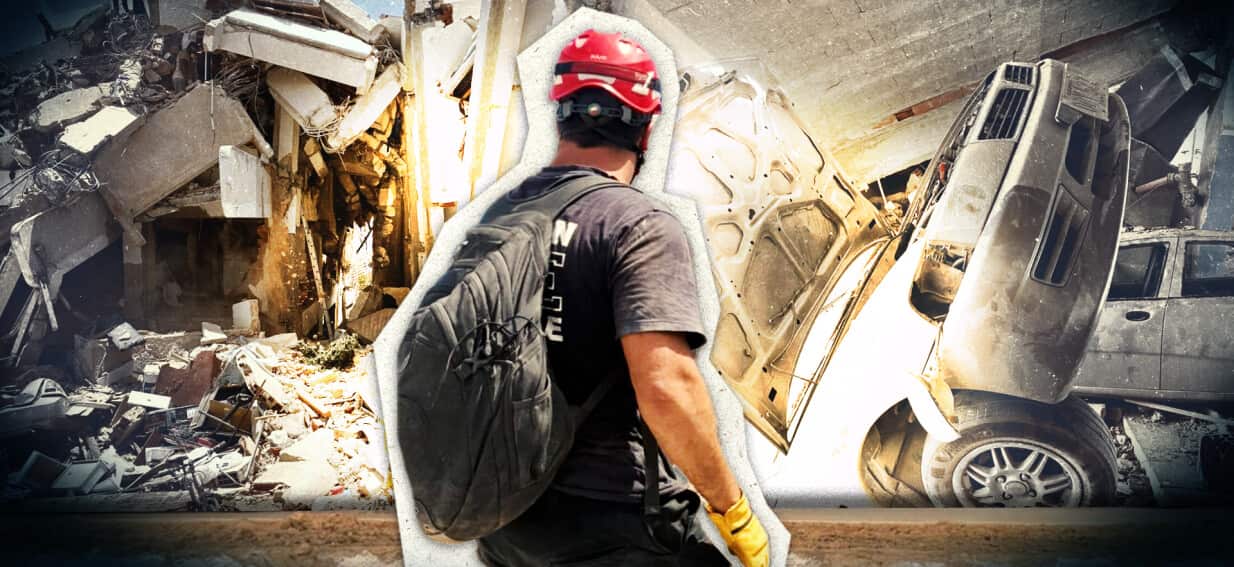
In the wake of a massive earthquake, time liquefies. The first seventy-two hours are a frantic, desperate race against mortality. Beneath the rubble of collapsed apartments and buckled streets, people are breathing through pockets of dust. Every tick of the clock is a countdown.
But the tragedy of a natural disaster stretches far beyond the initial tremor. The quake destroys the invisible scaffolding of daily life. Water mains burst, turning streets into rivers while leaving taps dry. Power grids fail, plunging hospitals into darkness where ventilators sputter and die. The supply chains that bring bread, medicine, and clean water to millions simply vanish overnight.
This is where the cold geometry of international diplomacy meets the raw chaos of human suffering.
When news of the devastation reached Abu Dhabi, the response was not measured in weeks or months of bureaucratic debate. It was measured in direct action. Under the explicit directives of the President, the United Arab Emirates immediately carved out ten million dollars.
Ten million dollars is a number that is easy to write on a ledger. It is a clean, abstract figure that sits comfortably in press releases. But on the ground, in the dust-choked streets where Maria is trying to find clean water for her children, that number transforms into something entirely different.
It becomes survival.
Money in an international crisis is not paper; it is cargo. It is a fleet of transport planes cutting through the night sky, their bellies packed with heavy-duty tents to shield families from the elements. It is thousands of boxes of high-calorie, shelf-stable meals that require no electricity to prepare. It is water purification tablets that turn contaminated puddles into a lifeline. It is field hospitals equipped with sterile surgical theaters, deployed to the very edges of the disaster zone to treat injuries before infections set in.
The UAE has quietly built a reputation as one of the world's most responsive logistical engines for global relief. This is not happenstance. It comes from a deeply ingrained cultural understanding of what it means to live in a harsh environment where resources are precious and survival requires mutual aid. Long before oil transformed the coastline into a skyline of glass and steel, life in the desert dictated a simple, unyielding rule: when a traveler arrives at your tent in need, you open the door. You do not ask for their credentials first.
Geopolitics often feels like a game played by distant figures in wood-paneled rooms, completely divorced from the realities of ordinary people. Critics might look at a map and ask why a nation on the Arabian Peninsula should care about a fault line shifting in South America. The distance between Abu Dhabi and Caracas is greater than seven thousand miles. They share different languages, different histories, and different daily struggles.
But a collapsed roof looks the same in any language. The cry of a child trapped beneath timber sounds identical whether it is heard in the Middle East or Latin America.
When a state allocates urgent relief aid on this scale, it bypasses the friction of political alignment. It is a recognition of shared vulnerability. The stakes are entirely human. By injecting ten million dollars directly into the logistical bloodstream of the rescue effort, the aid serves as a massive shock absorber for a community that has just suffered a catastrophic blow.
Consider what happens next in the lifecycle of a disaster. The initial rescue crews eventually grow tired. The local emergency funds run dry. The global news cycle, fickle and easily distracted, begins to look elsewhere. A week after the disaster, the television cameras pack up and head to the next headline.
Yet, the hunger remains. The broken bones are still healing. The trauma is just beginning to settle into the bones of the survivors.
That is when the true value of structured, substantial aid reveals itself. It provides the staying power required to transition from panic to stabilization. It funds the engineering crews clearing roads so that local markets can reopen. It ensures that temporary schools can be erected in tents, giving children a sliver of normalcy amidst the wreckage of their neighborhoods.
We live in an era deeply cynical about global institutions and international motives. We are trained to look for the hidden angle, the transactional benefit, the political leverage behind every public act of generosity. Perhaps that cynicism is earned. But when you are standing in the ruins of your life, watching a worker in a high-visibility vest unload a crate of medical supplies marked with a foreign flag, the cynicism evaporates.
You don't care about the politics of the country that sent the plane. You only care that someone, thousands of miles away, looked at your suffering and decided it was worth their resources to help you breathe a little easier.
The dust in Caracas will eventually settle. The concrete will be poured anew, and the streets will eventually hum with the familiar, chaotic music of daily traffic. Maria's pot of black beans will return to the stove.
But the memory of the seconds that changed everything will linger, alongside the quiet realization that when the world shook, an unexpected hand reached across the ocean to steady it.
:max_bytes(150000):strip_icc()/parts-of-a-swamp-cooler-2718628-a477e6f0787b4f8bb62ddf2def31d495.png)