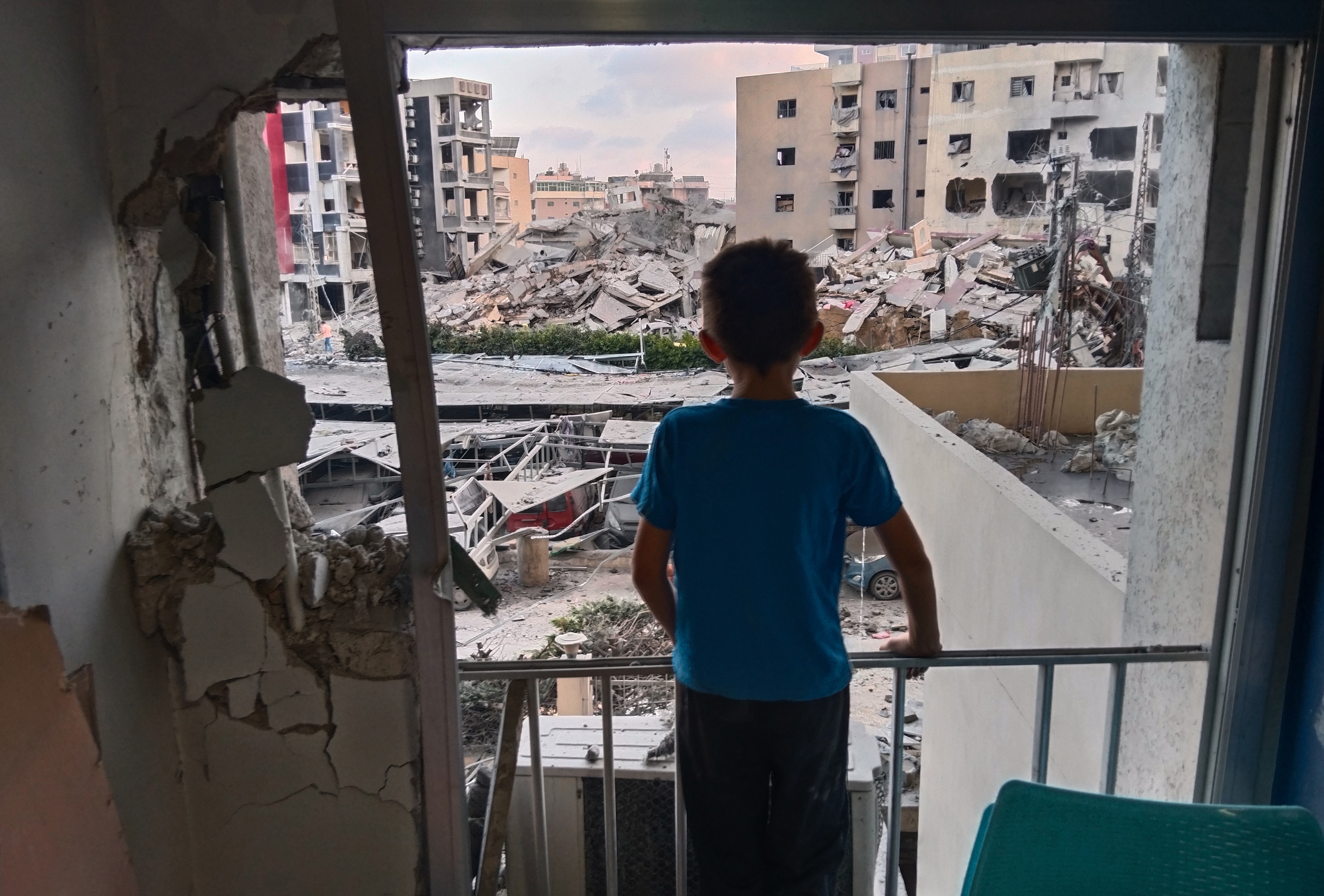
Iran has suspended its indirect diplomatic talks with the United States. This sudden freeze comes as a direct consequence of escalating Israeli military operations in Lebanon and the Gaza Strip, which Tehran views as a red line that fundamentally alters the regional balance of power. The decision effectively shutters Oman’s Muscat backchannel, a vital diplomatic safety valve that Washington and Tehran have used for months to prevent a localized shadow war from detonating into a full-scale Middle Eastern conflict. By walking away from the table, Iran is signaling that the utility of quiet diplomacy has expired under the weight of current military realities.
Behind the public declarations lies a stark strategic calculation. For nearly two years, the Biden administration and Iranian officials maintained a quiet, indirect dialogue aimed at managing regional friction, keeping oil corridors functional, and preventing miscalculations. Oman acted as the primary interlocutor. These discussions were never about a grand peace treaty; they were cold, transactional efforts to keep the temperature below a boiling point.
That framework has collapsed. The targeted destruction of Hezbollah's senior leadership in Beirut, combined with the ongoing, grinding campaign in Gaza, forced Tehran’s hand. From the perspective of Iran's Supreme Leader and the Islamic Revolutionary Guard Corps (IRGC), continuing to talk to Washington while American-supplied munitions decimate their primary regional proxy is no longer politically or strategically viable.
The Collapse of the Muscat Safety Valve
The suspension of these talks is not a temporary tantrum. It is a fundamental reassessment of leverage. For months, Western analysts assumed that Iran’s newly elected, relatively moderate President, Masoud Pezeshkian, would prioritize sanctions relief above all else. His campaign was built on the premise of economic normalization through Western engagement.
That theory underestimated the institutional power of the IRGC and the strict limits of the presidency in Tehran. When Israel shifted its primary focus northward into Lebanon, the strategic equation changed overnight. Hezbollah is not just another proxy; it is Iran’s forward defense doctrine personified. It exists to deter a direct attack on Iranian soil.
When that deterrent was systematically dismantled, the internal political dynamics in Tehran shifted decisively against diplomacy. The conservative factions within the Iranian establishment successfully argued that continuing the Oman talks conveyed weakness. They argued it gave Washington a false sense of security while its main ally, Israel, systematically dismantled Iran’s regional architecture.
The mechanics of the Muscat channel were delicate. Message delivery followed a strict protocol. Iranian diplomats would sit in one room, American officials in another, and Omani intermediaries would carry translated text across the hallway. The agenda focused on two primary tracks: capping Iran's uranium enrichment levels and setting explicit boundaries for proxy attacks on US personnel in Iraq and Syria.
With the channel closed, the risk of a miscalculation skyrocketed. We are no longer in a period of managed escalation. We are in an era of direct, unmediated friction where both sides are reading intentions through radar screens and bomb blasts rather than diplomatic cables.
The Mirage of Sanctions Relief
The primary incentive for Iran to stay at the table was always economic. Decades of Western sanctions have crippled the Iranian currency, driven inflation to historic highs, and sparked widespread domestic unrest. Pezeshkian’s administration desperately needed a breakthrough that would allow Iran to legally export more crude oil and access billions of dollars in frozen assets held in foreign banks.
Washington held those financial levers tight. The US strategy was to offer incremental, unpublicized enforcement waivers on oil sanctions in exchange for Iranian restraint across the region. For a time, this worked. Iran moderated its nuclear enrichment speed, and drone attacks on US outposts in the Syrian desert slowed to a crawl.
But the currency of diplomacy depreciates rapidly when bombs start falling on strategic partners. The Iranian leadership concluded that the economic relief on offer was too meager to justify the loss of its geopolitical posture. What good is a minor bump in oil revenue if your forty-year investment in a Mediterranean deterrence axis is reduced to rubble?
This realization exposes the core flaw in recent Western policy toward Iran. Washington treated regional proxy activity and the nuclear program as separate files that could be negotiated sequentially. Tehran always viewed them as a single, unified security apparatus. You cannot demand restraint on one front while ignoring total warfare on the other.
A Dangerous Vacuum in Communication
The immediate danger of this diplomatic freeze is the total absence of a hot line. During the Cold War, the United States and the Soviet Union maintained robust communication channels specifically to prevent regional proxy fights from triggering a nuclear exchange. Today in the Middle East, no such safety net exists.
Consider the events of recent months. When Iran launched ballistic missile salvos directly toward Israeli territory, backchannels were used to telegraph the timing and scale of the strikes, allowing for air defense preparation and preventing an escalatory spiral that could have pulled American forces directly into the fight.
Without the Muscat channel, that signaling mechanism is gone. If Iran or its remaining affiliates decide to launch a significant retaliatory strike now, the United States will have no advanced warning, no context, and no ability to negotiate a calibrated response. The region is flying blind.
The diplomatic void is already being filled by more aggressive posturing. European diplomats who previously acted as secondary conduits to Tehran report that their phone calls are going unanswered, or are being met with rigid, unyielding ideological rhetoric. The professional diplomats in the Iranian Foreign Ministry have been sidelined; the security state is now fully in charge of the script.
The Nuclear Escalation Risk
With diplomacy dead, Iran’s nuclear program automatically becomes its primary tool for projecting power and forcing Western attention. This is the most alarming secondary effect of the talk suspension.
Iran has already amassed enough highly enriched uranium to produce several nuclear warheads if it chooses to take the final step toward weaponization. Until now, the Oman talks acted as an invisible brake on that process. Tehran knew that crossing the 90 percent enrichment threshold would trigger an immediate, devastating military response from the United States and Israel.
Now, that brake is slipping. Elements within the Iranian parliament and the military are openly discussing changing Iran’s official defense doctrine, which currently forbids the creation of nuclear weapons under a religious decree. They argue that without Hezbollah’s missile arsenal acting as a shield, only a nuclear deterrent can guarantee the survival of the regime.
This is not idle rhetoric. The International Atomic Energy Agency (IAEA) has repeatedly warned that its inspectors are facing unprecedented restrictions inside Iranian enrichment facilities. The cameras are off, the logs are incomplete, and the political will to cooperate has vanished.
If Tehran decides that its conventional proxy strategy has failed to deter its adversaries, the temptation to breakout toward a nuclear capability may become irresistible. This would force Washington into a corner, leaving military intervention as the only viable option to prevent a nuclear-armed Iran.
Regional Repercussions Beyond the Levant
The decision to freeze talks reverberates far beyond the borders of Lebanon and Gaza. It fundamentally alters the calculations of regional powers like Saudi Arabia, the United Arab Emirates, and Qatar.
These Gulf states have spent the last three years executing a delicate balancing act. They signed normalization agreements, expanded trade with Israel, and simultaneously mended diplomatic ties with Iran through Chinese-mediated talks. Their goal was simple: protect their massive infrastructure projects and economic diversification plans from getting caught in the crossfire of a regional war.
The collapse of US-Iran diplomacy ruins that strategy. The Gulf states know that if a direct war breaks out between Washington and Tehran, their oil terminals, desalination plants, and ports will become prime targets for Iranian retaliation. They are acutely aware that Iran views them as complicit in the Western alliance structure, regardless of their public proclamations of neutrality.
Consequently, we are seeing a frantic scramble among Gulf diplomats to open their own direct lines to Tehran. They are trying to build their own bilateral safety valves to replace the broken American one. But these regional states lack the geopolitical weight to offer Iran what it really wants: major sanctions relief and security guarantees that only Washington can provide.
The Redefined Strategic Reality
The illusion that the Middle East could be stabilized through quiet, incremental diplomacy has been shattered. The conflict has outgrown the capacity of backchannels to contain it.
We are entering a phase where military actions on the ground dictate the diplomatic reality, rather than the other way around. Iran’s departure from the negotiating table is an acknowledgment that it can no longer compete within the parameters of the old status quo. It must either accept a massive reduction in its regional influence or escalate the conflict to a level that forces its adversaries to reconsider their approach.
The United States now faces a choice between two equally perilous paths. It can increase its military footprint in the region to deter a newly unchained Iran, risking a protracted war it does not want. Or it can attempt to construct an entirely new diplomatic framework that addresses Iran’s security anxieties and regional ambitions simultaneously—a task that appears politically impossible in the current climate.
The Muscat channel is cold, the rooms are empty, and the intermediaries have gone home. The forces driving the region toward a wider conflict are now operating without a brake, leaving the entire international community to watch and wait for the next missile launch to define the new rules of engagement.