The socio-economic disruption caused by Cyclone Vaianu across New Zealand’s North Island is not a failure of individual response but a manifestation of "cascading failure" within high-dependency infrastructure networks. When a tropical-origin system interacts with mid-latitude topography, the resulting kinetic energy exerts pressure on three specific systemic pillars: power distribution resilience, hydrological management capacity, and transport network redundancy. Traditional media narratives focus on the visual spectacle of flooding; a rigorous analysis must instead focus on the friction points where civil engineering limits meet unprecedented meteorological load.
The Tri-Node Failure Model
To understand why a predictable weather event results in hundreds of evacuations and widespread blackouts, the event must be broken down into three distinct operational vectors.
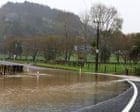
Hydrological Saturation and Soil Mechanics: The North Island's geography, particularly in the Coromandel and Auckland regions, operates on a finite absorption scale. Once the soil reaches a saturation threshold, every additional millimeter of precipitation transitions from "infiltrate" to "surface runoff." This creates a rapid-onset hydraulic load on urban drainage systems designed for 1-in-50-year events, which are now facing 1-in-100-year flow rates.
The Aerial-Utility Paradox: New Zealand’s power grid relies heavily on overhead transmission lines in rural and peri-urban zones. High-velocity winds (exceeding 120 km/h) do not just damage the lines themselves; they turn vegetation into projectiles. The "utility-vegetation interface" becomes the primary point of failure. While undergrounding cables resolves this, the capital expenditure (CapEx) requirements per kilometer are often prohibitive for a population density this low, creating a structural vulnerability that cannot be solved without massive fiscal reallocation.
Logistical Chokepoints: The North Island’s transport architecture is characterized by "low-redundancy routing." Specifically, State Highway 1 and secondary arterial roads often lack viable high-capacity alternatives. When a single slip occurs in the Karangahake Gorge or along the Brynderwyns, the supply chain for the entire upper island experiences a complete bottleneck.
Quantification of Meteorological Load
Cyclone Vaianu’s impact is defined by the intersection of central pressure and moisture-carrying capacity. As a system transitions from a warm-core tropical cyclone to a cold-core extra-tropical system, its wind field expands. This expansion means that while peak wind speeds might decrease slightly, the total area subjected to "gale-force" stress increases significantly.
The physical damage to residential structures is often secondary to the hydrostatic pressure exerted on foundations during prolonged flooding. In the Auckland Isthmus, where volcanic basalt meets clay, the drainage rates differ wildly. This creates localized "ponding" where the infrastructure is literally drowning in its own lack of topographical diversity.
The Power Outage Cost Function
Power outages during an event like Vaianu are not merely inconveniences; they are a tax on regional productivity and safety. The failure of the grid can be analyzed through a Reliability-Recovery (R-R) framework:
- Initial Shear: The moment wind speeds exceed the design tolerances of cross-arms and insulators.
- The Propagation Phase: A single tree fall takes out a feeder line, which then puts excessive load on adjacent substations, leading to protective trips.
- The Accessibility Barrier: Recovery is delayed not by a lack of technicians, but by the physical inability to move heavy repair equipment over saturated, unstable terrain.
The economic cost of these outages scales non-linearly. A 4-hour outage affects residential comfort; a 48-hour outage leads to the total loss of perishable inventory in the retail sector and the failure of telecommunications backup batteries (which typically have a 4-to-8-hour window). This creates a "dark zone" where emergency services cannot communicate with the very people they are trying to evacuate.
Engineering the Evacuation Threshold
Evacuations are often framed as a precautionary measure, but they are actually a response to a "life-safety breach" in the built environment. When we analyze the evacuations in the North Island during Vaianu, we see a pattern based on two variables: Inundation Velocity and Structural Integrity Loss.
In low-lying coastal areas, the threat is a "storm surge" coupled with "high-tide synchronization." When the low pressure of the cyclone pulls the sea level upward (the inverse barometer effect) and coincides with a spring tide, the sea wall is no longer a barrier; it becomes a ramp.
The decision-making process for civil defense relies on predictive modeling that often lags behind real-time shifts in the cyclone’s track. If the system moves 50 kilometers further east than predicted, the wind-rain distribution shifts entirely, rendering the previous evacuation zones obsolete. This "uncertainty interval" is the most dangerous component of the disaster management cycle.
Structural Fragility in Rural Sub-Systems
While Auckland and Wellington command the most attention, the true structural fragility lies in the rural North Island. The agricultural sector operates on a "just-in-time" logistics model for dairy and produce.
- Effluent Management: Saturated paddocks mean that effluent ponds can overflow, leading to long-term environmental degradation and potential regulatory penalties for farmers who have no physical way to contain the volume.
- Rural Bridge Resilience: Many secondary bridges are "single-span" structures designed for historic flow rates. As debris (forestry slash) is washed downstream, it creates a "damming effect" against bridge piers. The resulting pressure is often several magnitudes higher than the hydraulic pressure alone, leading to total structural failure.
The Economic Aftershock of Topographical Displacement
The "long tail" of Cyclone Vaianu is found in land value and insurance premiums. New Zealand is currently undergoing a "managed retreat" debate. When an area floods repeatedly, the "insurability limit" is reached.
Insurance companies are shifting from a "pooled risk" model to a "granular risk" model. In this new framework, properties in the North Island’s floodplains are being revalued not based on their aesthetic or proximity to urban centers, but on their "elevation-above-baseline-flood-risk." This creates a stranded asset class—homes that are physically standing but economically non-viable because they cannot be insured or mortgaged.
Strategic Infrastructure Hardening
To move beyond the cycle of "damage and repair," the following strategic pivots are required:
- Decentralized Energy Nodes: Implementing community-scale microgrids with battery storage would allow towns to remain functional even when the main transmission lines from the Waikato or Waitaki are severed.
- Permeable Urbanism: Auckland must transition from "gray infrastructure" (concrete pipes) to "blue-green infrastructure." This involves using parks and artificial wetlands as "sponge zones" that intentionally flood to protect residential clusters.
- Dynamic Risk Mapping: Utilizing real-time IoT sensors in river catchments to provide "hyper-local" flood warnings, reducing the need for broad, inefficient evacuation orders.
The North Island's encounter with Cyclone Vaianu confirms that the current "defend-in-place" strategy is reaching its thermodynamic and economic limit. The intensity of sub-tropical systems is increasing, while the tolerance of our legacy infrastructure is decreasing.
The immediate priority for North Island planners must be the "de-coupling" of essential services from the central grid during peak-load weather events. Investing in "fail-safe" rather than "safe-to-fail" systems is the only path toward maintaining the North Island’s status as a high-functioning economic hub. The cost of inaction is a permanent state of "disaster-recovery-overlap," where the next system arrives before the previous damage has been fully mitigated.