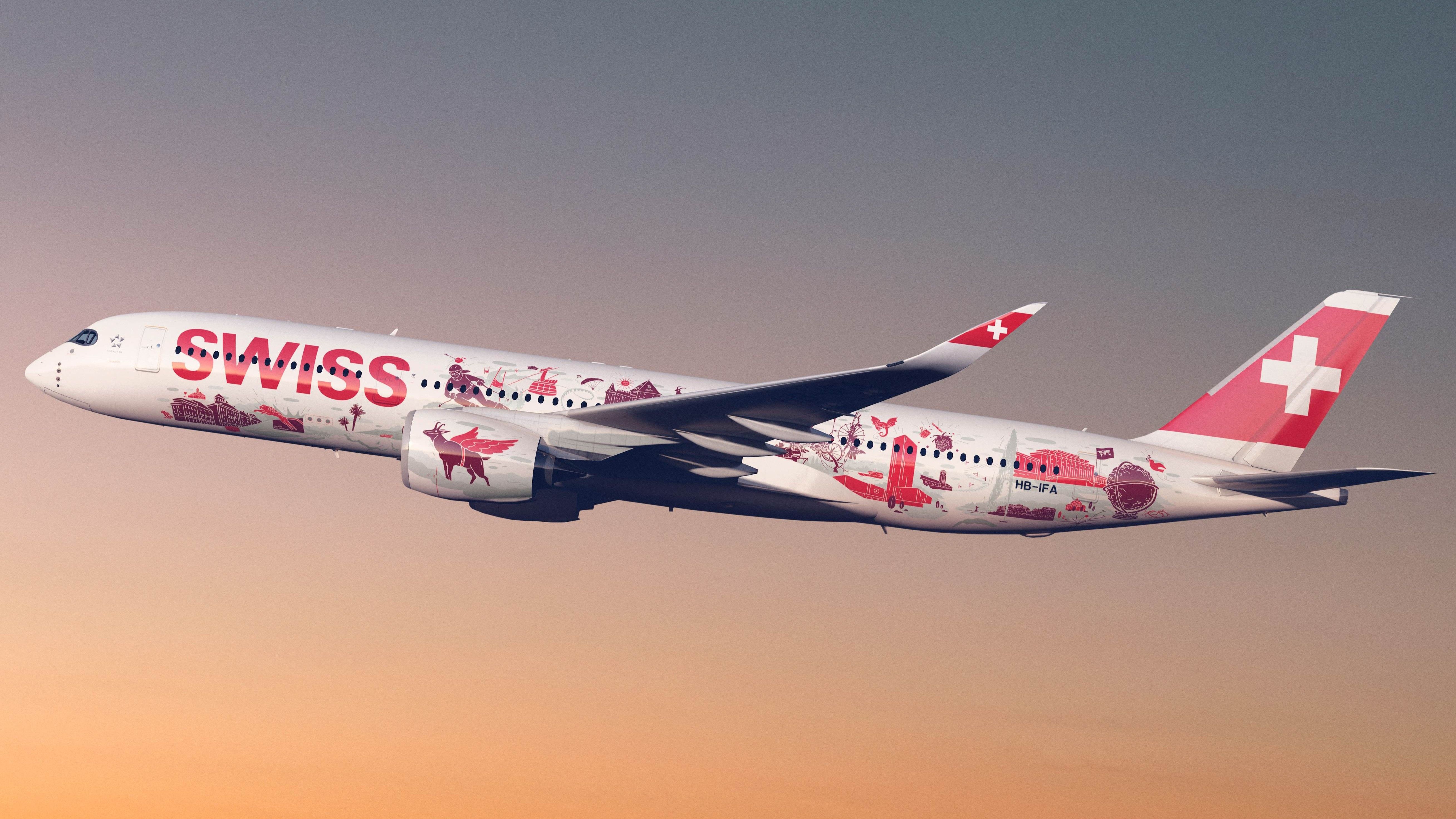
Swiss International Air Lines (SWISS) is puffing its chest. By doubling its Zurich to Delhi frequency to twice daily, the carrier is signaling "commitment" to the Indian market. The trade press is eating it up, regurgitating the same tired narrative about India’s burgeoning middle class and the "strategic necessity" of the Indo-European corridor.
They are all wrong.
Increasing frequency on the LX146/147 rotation isn't a sign of strength. It is a desperate defensive maneuver. It’s a classic case of an incumbent airline doubling down on a legacy hub-and-spoke model while the ground shifts beneath its landing gear. This isn't an expansion; it’s an expensive attempt to buy relevance in a market that is rapidly outgrowing the need for a Zurich-sized middleman.
The Myth of the Connecting Hub
The industry logic for this move is simple: capture more transit traffic. If you offer two flights a day, you minimize layover times for passengers connecting from New York, Chicago, or London to the subcontinent.
Here is the problem. The "transit passenger" is a dying breed of high-value customer.
I have spent fifteen years watching legacy carriers pour billions into "optimization" only to lose the war to direct capacity. Air India, under the aggressive revitalization of the Tata Group, is currently inducting wide-body aircraft at a rate that should keep the C-suite in Kloten awake at night. When you can fly a brand-new A350 direct from Delhi to London or New York, the "privilege" of wandering through a Swiss terminal for three hours loses its luster.
Swiss is betting that its premium service and "Swissness" will retain loyalty. In reality, the modern business traveler prioritizes time over a piece of Gruyère at 35,000 feet. By doubling down on Delhi, Swiss is fighting for the scraps of a market that is increasingly opting to bypass Europe entirely.
The Yield Trap
Volume does not equal profit. In the airline business, this is the most expensive lesson to learn.
Delhi is a notoriously low-yield market for European carriers. While the planes are often full, they are filled with price-sensitive VFR (Visiting Friends and Relatives) traffic and leisure travelers who will jump ship for a $50 difference in fare.
To fill 14 flights a week, Swiss will have to engage in a race to the bottom on pricing. They aren't just competing with Lufthansa (their own parent company) or British Airways; they are competing with the Gulf Giants.
- Emirates
- Qatar Airways
- Etihad
These carriers don't just have better geographical positioning; they have cost structures and subsidies that a European carrier simply cannot match. When Swiss adds a second daily flight, they aren't just doubling their capacity; they are doubling their exposure to fuel price volatility and landing fees in one of the most expensive airports in Asia, all while their average revenue per seat is likely to crater.
The Operational Mirage
Let’s talk about the fleet. Pushing more A330 or B777 frames into the Delhi rotation means pulling them from elsewhere. The opportunity cost is massive.
Imagine a scenario where those same airframes were deployed on secondary North American routes or emerging Southeast Asian tech hubs where the competition is thinner and the yields are fatter. Instead, Swiss is choosing to enter a cage match in a saturated market.
There is also the "hidden" cost of the Zurich hub itself. ZRH is a slot-constrained, noise-restricted nightmare. Every additional long-haul departure in the late-evening wave puts immense pressure on ground handling and de-icing operations during the winter months. One heavy snowfall in Switzerland now has twice the impact on the Indian network. It’s not "robust" planning; it’s a single point of failure multiplied by two.
Why "More" is Actually "Less" for the Passenger
The competitor's fluff piece will tell you that more flights mean more "choice."
In the real world, it means more inconsistency. When an airline scales up rapidly on a specific route, the "boutique" feel that Swiss prides itself on begins to erode. You see it in the lounges, which become overcrowded transit camps. You see it in the service, which becomes a mechanized assembly line.
More importantly, it forces the airline into a "hub-dependency" loop. They become so focused on feeding these twice-daily monsters that they stop innovating on the actual product. They become a bus service for the Lufthansa Group, shuttling bodies from point A to point B through a Swiss-flavored funnel.
The Data the Headlines Ignore
Look at the load factors, but look closer at the "Origin and Destination" (O&D) data. If you strip away the passengers who are only on that flight because it was the cheapest way to get from Newark to Delhi, the actual demand for Zurich-Delhi travel is stagnant.
Swiss is essentially subsidizing the travel of American and British passengers by dumping capacity into India. It’s a shell game. They are moving numbers around a spreadsheet to show growth to shareholders while the actual profit margins on the route are being eaten alive by overhead and competition.
The Better Strategy Nobody Wants to Hear
If Swiss actually wanted to disrupt the market, they wouldn't add more of the same.
- Stop Chasing Volume: Instead of two daily flights with standard configurations, they should have introduced a premium-heavy, "all-business" or "heavy-business" configuration on a single daily flight.
- Focus on Secondary Cities: While everyone fights over Delhi and Mumbai, cities like Bengaluru or Hyderabad are screaming for high-quality European connectivity.
- Acknowledge the Direct Threat: Stop pretending that the hub-and-spoke model is invincible. Build partnerships that acknowledge the rise of Indian carriers instead of trying to out-muscle them with frequency.
Instead, they chose the "safe" path. The path of least resistance. The path that looks good in a press release but fails the logic test of the 2026 aviation landscape.
Doubling down on Delhi isn't an offensive strike. It’s the last gasp of a 20th-century strategy trying to survive in a 21st-century sky. Swiss isn't winning the Indian market; they are just paying more to stay in a game they’ve already lost.
The seats will be full, the planes will fly, and the balance sheet will bleed.
Welcome to the new era of "growth" at any cost.