The friction between the executive branch and State Farm Mutual Automobile Insurance Company is not a spontaneous byproduct of political rhetoric but a structural collision between populist economic policy and the risk-assessment frameworks of the insurance industry. At the center of this tension is the divergence between "socially mandated affordability" and "actuarial reality." When the executive branch publicly targets a private insurer for premium hikes or coverage withdrawals, it is engaging in a signaling exercise designed to force price suppression. However, the underlying mechanics of insurance solvency dictate that prices must track with the rising cost of catastrophe, legal liability, and reinsurance.
The Actuarial Imperative vs. Political Signaling
Insurance companies operate on a combined ratio—the sum of incurred losses and operating expenses divided by earned premiums. If this ratio exceeds 100, the company is losing money on its underwriting operations. State Farm, particularly in its property and casualty divisions, has faced a deteriorating combined ratio driven by three specific variables:
- Severity of Physical Risk: The increasing frequency of high-loss events in markets like Florida and California has outpaced historical modeling.
- Legal System Abuse: The rise of third-party litigation funding and "nuclear verdicts" has inflated the cost of claims settlement far beyond the rate of standard inflation.
- Capital Requirements: Regulators require insurers to maintain specific surplus levels to ensure they can pay out in a worst-case scenario. When losses erode this surplus, the insurer must either raise rates or reduce exposure to remain solvent.
The executive branch’s critique ignores these three variables in favor of a narrative centered on corporate greed. This creates a feedback loop where political pressure prevents state regulators from approving necessary rate increases, which in turn forces insurers to restrict new business or exit markets entirely to protect their balance sheets.
The Cost Function of Market Volatility
Market stability requires predictability. When the Presidency utilizes social media or public addresses to "bash" a specific corporation, it introduces a "political risk premium" into the company’s valuation and operational strategy. For a mutual company like State Farm—owned by its policyholders rather than shareholders—this pressure does not manifest in stock price drops but in increased scrutiny from rating agencies like A.M. Best.
If a rating agency perceives that political interference will prevent a company from adjusting its pricing to match its risk, they may downgrade the company’s financial strength rating. A lower rating increases the cost of capital and can lead to a mass exodus of commercial clients who are contractually required to carry insurance from "A-rated" carriers. The "bashing" is therefore not merely words; it is an attack on the company's financial infrastructure.
The Triad of Disruption
The conflict follows a predictable tripartite structure that defines how the executive branch interacts with major financial institutions:
- The Identification Phase: A specific corporate action—such as State Farm raising rates by 20% or withdrawing from a state—is framed as a betrayal of the public trust. This ignores the fact that rate changes are usually the result of multi-year lag times in data processing.
- The Public Shaming Phase: Direct communication channels (social media, press briefings) are used to bypass traditional regulatory discourse. This puts pressure on state-level insurance commissioners, who are often elected officials or political appointees, to take a "tough" stance against the insurer.
- The Regulatory Squeeze: The insurer finds itself caught between the mathematical necessity of a rate hike and the political impossibility of obtaining one. The result is "silent withdrawals," where companies stop writing new policies or decline to renew existing ones, effectively hollowing out the market from the inside.
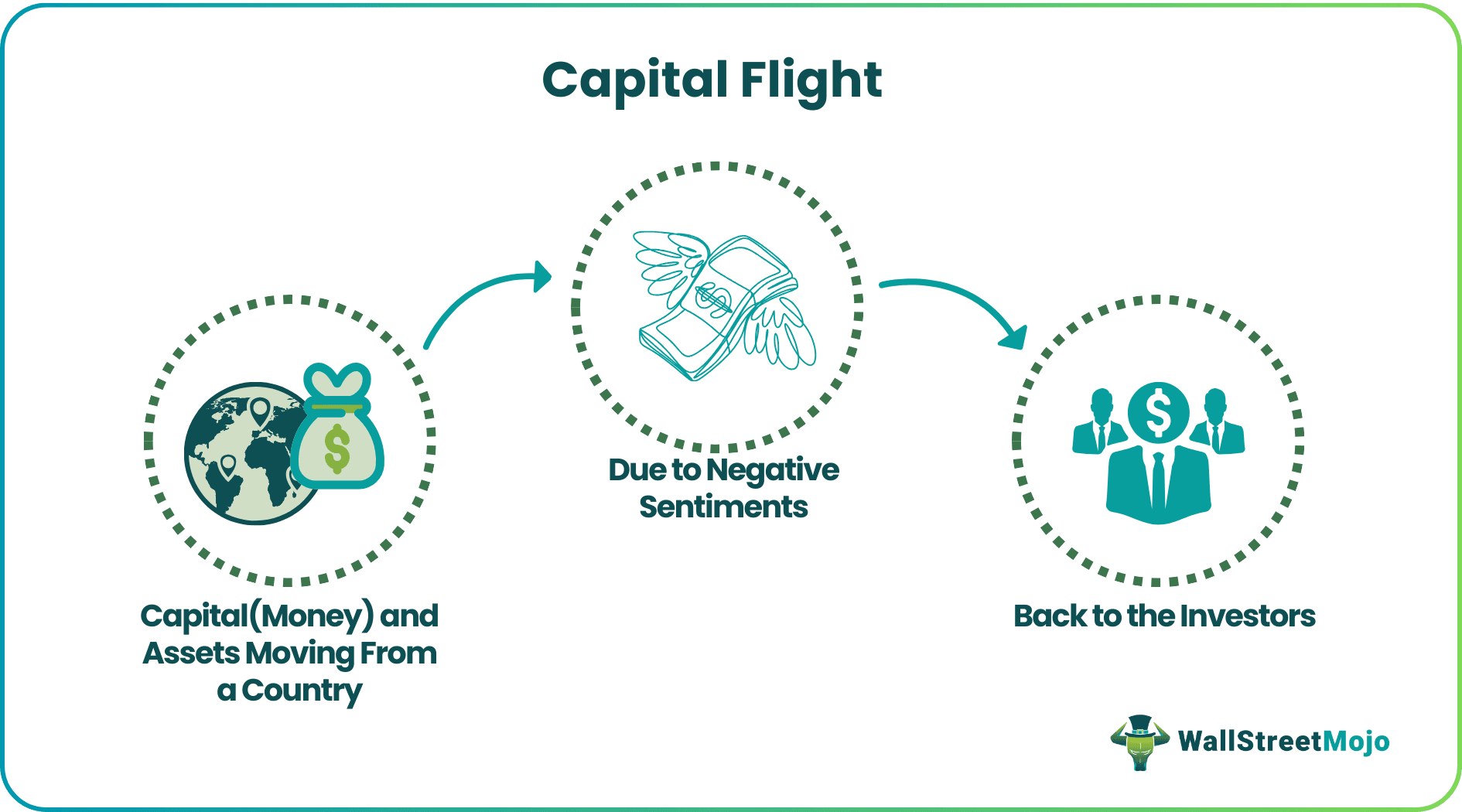
Reinsurance and the Global Capital Leak
State Farm does not operate in a vacuum. It manages its own risk by purchasing reinsurance—essentially insurance for insurance companies. Reinsurers are global entities that move capital to whichever markets offer the highest risk-adjusted returns.
When the executive branch creates a hostile environment for domestic insurers, global reinsurers view the entire U.S. market as "unstable." They respond by raising their prices or reducing the amount of coverage they provide to companies like State Farm. This cost is inevitably passed back down to the consumer. The irony of the political attack is that it frequently triggers the exact premium increases it claims to oppose.
The Disconnect in Data Interpretation
A significant portion of the tension stems from how "profit" is defined. Political critics often point to "record revenues" or "large cash reserves." In the context of insurance, these numbers are misleading.
- Revenue vs. Liability: An insurance company’s revenue consists of premiums that are legally obligated to cover future losses. This is not "disposable" income; it is a liability held in trust.
- Reserve Adequacy: If State Farm has $100 billion in reserves, but its projected losses for a hurricane season are $110 billion, that company is technically undercapitalized.
The executive branch’s strategy often relies on the public’s misunderstanding of these two points. By framing reserves as "hoarded wealth," the administration can justify price controls that would otherwise be seen as economically destructive.
Mapping the Strategic Response
For a company of State Farm’s scale, the response to executive pressure cannot be purely defensive. It must be structural.
The first movement is Geographic Diversification. By reducing "concentration risk"—the amount of insurance written in any one high-risk, high-politics area—the company minimizes its surface area for attack. This is why we see a retreat from California and Florida; it is as much about avoiding political volatility as it is about avoiding wildfires and hurricanes.
The second movement is Automated Underwriting and Risk Selection. To combat the rising costs of litigation and political overhead, insurers are turning to "black box" algorithms that price risk with such granularity that individual policyholders can be "priced out" without the company ever having to announce a broad, politically sensitive rate hike. This allows for a quiet rebalancing of the books.
The third movement is Regulatory Arbitrage. Insurers are increasingly looking for ways to restructure their business units to move certain lines of coverage outside the reach of the most aggressive state regulators, while still maintaining the "State Farm" brand.
The Resulting Vacuum
When the largest player in the market is publicly rebuked and subsequently retreats, the resulting "protection gap" is not filled by other private insurers. Instead, it is filled by "Residual Market Mechanisms" (RMMs), such as state-backed "Fair Access to Insurance Requirements" (FAIR) plans.
These state-run plans are often underfunded and represent a massive hidden liability for taxpayers. By "bashing" State Farm into a retreat, the executive branch effectively shifts the risk from a private entity (which is equipped to manage it) to the public sector (which is not). This creates a systemic fragility where a single major disaster could bankrupt a state-backed insurer, necessitating a federal bailout.
Strategic Directive for Policyholders and Investors
The current trajectory suggests that the "politicization of risk" will only accelerate. This leads to a definitive conclusion: the era of "stable, predictable premiums" is over.
- For Consumers: Expect "coverage tiering," where standard policies are stripped of essential protections (like wind or hail) to keep the "top-line" price low enough to satisfy political optics. You will be paying the same for less.
- For Real Estate Markets: The "insurance-to-value" ratio will become the primary driver of property prices. In regions where the executive branch has successfully suppressed private insurance participation, property values will stagnate as buyers find it impossible to secure the mortgages required for purchase.
- For State Farm and Competitors: The strategy must shift from "Public Relations" to "Lobbying for Tort Reform." The only way to lower premiums without going bankrupt is to lower the cost of claims. This requires a direct confrontation with the trial lawyer lobby, which is the silent partner in the rising cost of American insurance.
The political theater of "bashing" a corporation serves a short-term electoral purpose, but it ignores the fundamental law of the market: risk cannot be wished away; it can only be priced, transferred, or ignored. When it is ignored for political gain, the eventual "reckoning" is always more expensive than the original premium hike.


