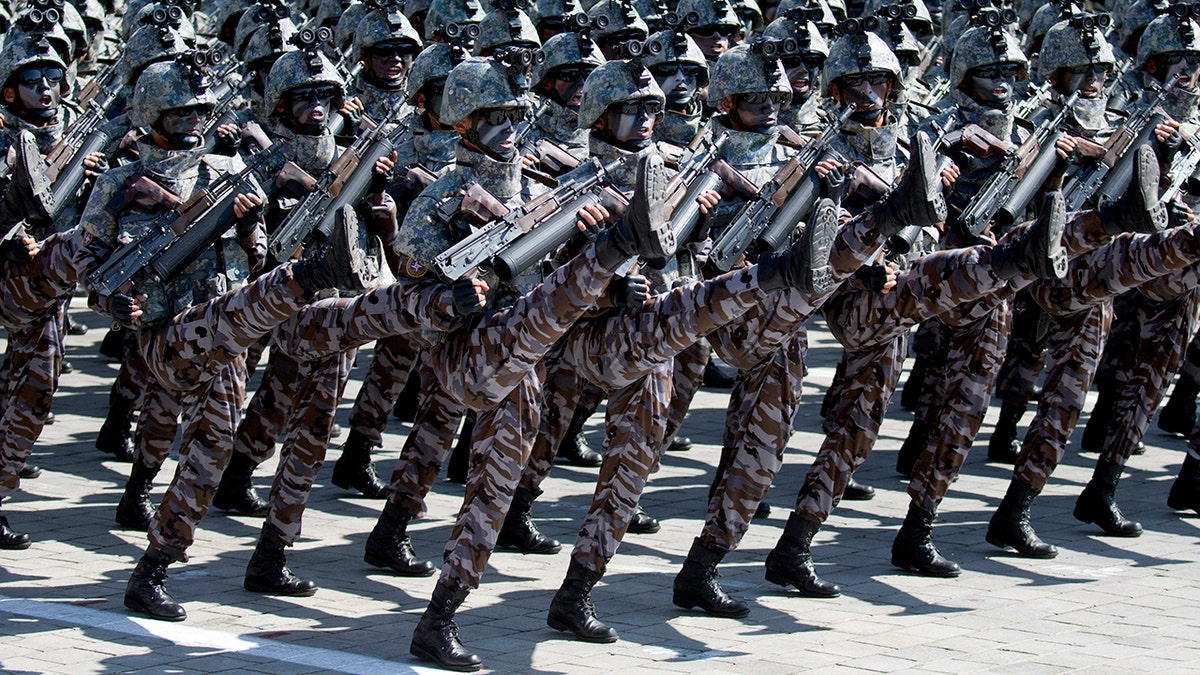
Kim Jong Un is re-engineering the social contract for North Korean youth to convert demographic volatility into a sustainable resource for his alignment with Russia. This shift is not merely a propaganda effort; it is a calculated structural pivot designed to mitigate three internal systemic risks: ideological erosion through foreign media, a stagnating domestic industrial base, and the logistical demands of a prolonged military-industrial partnership with Moscow. By positioning the youth as the "vanguard," the state is implementing a forced-labor deployment strategy masked as revolutionary zeal, ensuring that the younger generation becomes the primary engine for fulfilling high-stakes arms contracts and infrastructure projects that underpin the current Russo-North Korean axis.
The Tripartite Framework of Youth Mobilization
The North Korean state operates on a mobilization model that categorizes the youth population—specifically those within the Kimilsungist-Kimjongilist Revolutionary Youth League—into three functional utility streams. This framework allows the regime to extract maximum value from a cohort that is increasingly exposed to external information and potentially less loyal than its predecessors.
- The Labor Utility Stream: This involves the physical deployment of youth brigades to "high-priority" construction sites, such as the ongoing development of Samjiyon or the Pyongyang housing projects. These units operate outside the standard wage-labor market, providing the state with a zero-cost, high-flexibility workforce that can be redirected to military manufacturing or reconstruction efforts as needed.
- The Ideological Containment Stream: Following the 2020 Law on Rejecting Reactionary Ideology and Culture, youth mobilization serves as a temporal sink. By saturating the daily schedule with state-mandated labor and political study sessions, the regime reduces the "cognitive bandwidth" available for consuming South Korean media or engaging in black-market activities (Jangmadang).
- The Geopolitical Proxy Stream: This is the most recent development, where the youth are framed as the defenders of a "new Cold War" front. This involves preparing a specialized workforce capable of supporting Russian logistical needs—ranging from munitions production to potential post-conflict reconstruction in occupied Ukrainian territories.
The Cost Function of the Russian Alliance
The partnership with Russia has fundamentally altered Pyongyang’s economic calculus. In exchange for artillery shells and ballistic missiles, North Korea seeks food security, energy transfers, and satellite technology. However, the internal cost of meeting these production quotas falls heavily on the youth-dominated industrial sectors.
The "Cost of Production" in this context is measured not in currency, but in the depletion of human capital. To maintain the cadence of shipments to the Russian front, North Korea has shortened vocational training cycles and increased "voluntary" labor shifts for students. This creates a technical debt within the North Korean economy: the state is prioritizing immediate military output over the long-term development of a skilled, diversified workforce.
The mechanism of this exchange relies on the "Speed of the 80-Day Battle" logic—a recurring state trope where impossible production targets are met through extreme labor intensity. When applied to the Russia-aligned military industry, this logic forces a high concentration of young workers into hazardous munitions environments, trading their physical safety and future economic productivity for immediate Kremlin-sourced hard currency and technical data.
Structural Barriers to Youth Loyalty
The regime faces a critical bottleneck: the "Jangmadang Generation" (those born during or after the 1990s famine) has a different relationship with the state than the older generations. Their survival was facilitated by private markets, not state rations. This creates a fundamental disconnect that the current mobilization strategy attempts to bridge through "Shock Brigade" assignments.
The efficacy of this strategy is limited by three primary factors:
- The Information Asymmetry: Despite the state’s digital crackdown, the proliferation of smuggled Chinese smartphones and USB drives persists. The state’s attempt to cast youth as the vanguard competes with the reality of global standards of living visible through illegal media.
- The Opportunity Cost of Conscription: Standard military service in North Korea lasts between 7 to 10 years. For a youth population increasingly interested in small-scale trade, this decade of service represents a total loss of personal wealth-building potential, leading to rising resentment that must be suppressed through more intensive ideological conditioning.
- The Fragility of the "Gift" Economy: The regime often rewards loyalty with "gifts"—housing, electronics, or admission to elite universities. As the state’s resources are diverted to the military-industrial complex to serve the Russia deal, the pool of available rewards shrinks, forcing the state to rely more on coercion and less on incentive-based loyalty.
Technical Integration of Youth in Military Production
The "vanguard" role is increasingly technical. As North Korea advances its tactical nuclear capabilities and drone technology—areas where Russia likely provides consultative input—the state requires a youth cohort that is scientifically literate yet ideologically compliant.
This creates a paradox. The state needs young engineers who can reverse-engineer Russian aerospace components or manage automated production lines for 152mm shells. However, the more educated and technically proficient a youth becomes, the higher the risk they pose to the regime's information-isolation policy. The state's response is the "Integrated Surveillance-Production Model," where technical universities are physically co-located with defense manufacturing hubs, and students are subjected to constant peer-monitoring cycles.
The Mechanism of Foreign Labor Deployment
A critical component of the Russia-North Korea treaty involves the potential deployment of North Korean workers to Russian-controlled areas. Youth brigades are the prime candidates for this maneuver due to their physical resilience and the ease with which they can be organized under a military-style command structure.
From a strategy perspective, this deployment serves as a "Pressure Valve." It removes thousands of potentially restless young men and women from the domestic environment, places them in a high-surveillance foreign context, and generates a direct stream of foreign exchange for the Kim Jong Un regime. The Russian side benefits from a disciplined, low-cost labor force that requires zero local integration and can be utilized for high-risk debris clearance and infrastructure repair in war zones.
Strategic Risk Assessment: The Vanguard as a Single Point of Failure
The regime’s total reliance on youth mobilization creates a precarious single point of failure. If the promised "New Era" of prosperity—guaranteed by the Russian alliance—fails to materialize in the form of tangible caloric or energy improvements for the average youth worker, the ideological foundation of the "vanguard" will collapse.
The state is currently operating on a deficit of trust. The logic of the "Arduous March" (the 1990s famine) no longer resonates with a generation that views state failure as a historical norm rather than a temporary hardship. Consequently, the mobilization of youth for the Russia war effort is a race against time: the regime must deliver a significant quality-of-life upgrade before the exhaustion of the labor force turns into a systemic refusal to participate in the state’s ideological theater.
The Forecast for Domestic Stability
Over the next 24 to 36 months, the "vanguard" will be subjected to increasing operational tempo. As Russia's demand for munitions remains high, the North Korean state will likely announce new "Grand Construction Projects" that are, in reality, fronts for the expansion of defense manufacturing.
The strategic play for the Kim regime is to institutionalize the Russia-centric economy so deeply that the youth see no alternative path for survival. This involves the permanent integration of the North Korean educational system with the Russian defense supply chain. We should expect to see an increase in "student exchange programs" that are actually vocational pipelines for the Russian military-industrial complex.
The terminal state of this strategy is a North Korea where the youth are no longer just citizens, but a modular, exportable commodity. The success of this transition depends entirely on the regime's ability to maintain a total information blockade while simultaneously demanding the high-level technical performance required by modern warfare. Any rupture in the information barrier or a failure in the Russian supply-demand cycle will leave the North Korean state with a highly trained, highly mobilized, and deeply disillusioned youth population—the exact demographic conditions required for systemic upheaval.
The most immediate strategic move for external observers is to monitor the specific vocational training centers being prioritized in North Korea; the shift from civil engineering to aerospace and chemical munitions indicators will signal the exact level of Russian technological transfer occurring. The youth are the delivery mechanism for this knowledge transfer, making them the most critical data point for assessing the long-term lethality of the Pyongyang-Moscow axis.