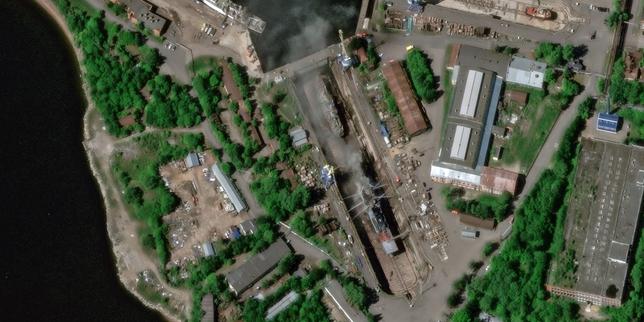
Headline-driven military analysis is broken. Every time an official press release claims a drone strike hit a fuel depot, a gunpowder factory, or a naval vessel deep inside enemy territory, the media treats it as a turning point. It is not.
The lazy consensus dominating current conflict reporting conflates tactical noise with strategic impact. Observers look at dramatic video footage of black smoke billowing over a Crimean port or a Russian border province and conclude that the logistical backbone of a major military power is snapping. This is a fundamental misunderstanding of industrial-scale attrition.
Sensational strikes on secondary infrastructure look spectacular on a feed. They generate immediate political capital. They satisfy the public demand for retaliation. But measured against the cold calculus of material supply lines and state resilience, these actions often amount to expensive pinpricks that absorb resources better spent elsewhere.
The Mirage of Logistical Collapse
Military logistics are not a fragile chain that shatters permanently when one link breaks. They function like an organic network of highways. Block one route, and the traffic reroutes. Destroy one depot, and the supply distribution decentralizes.
The prevailing narrative suggests that hitting a single gunpowder factory or a specific fuel terminal cripples an army's ability to wage war. This view ignores the sheer redundancy built into continental-scale military complexes. When a refinery or storage hub is damaged, the immediate result is a localized bottleneck, not a systemic failure.
To understand why these strikes rarely yield the promised strategic breakthroughs, look at historical precedents of strategic bombing campaigns. During the Second World War, Allied forces launched sustained, massive bombing campaigns aimed specifically at German synthetic oil plants and ball-bearing factories. Despite thousands of tons of ordnance dropped week after week, German industrial production actually peaked in late 1944. Why? Because industrial economies possess an extraordinary capacity to adapt, repair, substitute, and decentralize under pressure.
Modern drone operations, while precise, deliver a fraction of the explosive payload used in those historical campaigns. Expecting a handful of localized strikes to achieve what fleets of heavy bombers took years to accomplish is a mathematical absurdity.
The High Cost of Cheap Success
There is a glaring downside to celebrating these deep-theater strikes that analysts conveniently ignore: the asymmetry of expenditure versus recovery.
Imagine a scenario where a state spends months intelligence-gathering, manufacturing long-range strike drones, and deploying electronic warfare countermeasures to hit a specific fuel depot. The strike succeeds. A million gallons of fuel go up in flames. The internet applauds.
Now look at the spreadsheet.
- The financial and intellectual capital required to penetrate deep airspace is immense.
- The physical damage to a tank farm can often be bypassed within days using mobile fueling stations and rail diversions.
- The enemy adapts immediately, changing their air defense geometry and moving high-value assets further inland.
This is the definition of winning the battle but losing the calculus of attrition. When resources are finite, every drone sent to create a media moment in a distant province is a drone not used to disrupt the immediate, grinding pressure on the frontline where territory is actively lost or won. Turning tactical disruption into a core strategy creates a dangerous illusion of progress while the core theater of operations remains starved of decisive mass.
Dismantling the Frontline Myth
A common question raised by observers is whether degrading domestic production facilities directly reduces the volume of artillery and armor arriving at the front. The brutal, honest answer is no, not in any timeframe that alters current operations.
Modern manufacturing operates on deep backlogs and diverse supply lines. Components, raw chemicals, and propellant bases are frequently stockpiled months in advance or imported through sanctions-bypassing third parties. Hitting a domestic assembly plant creates a headline today, but the frontline units will not feel the material deficit for six months, if at all, because the pipeline behind them is already full.
Furthermore, deep strikes often trigger a rally-around-the-flag effect within the targeted nation's industrial sector. It hardens political resolve, legitimizes total war mobilization, and accelerates the transition to a permanent war economy. Far from disrupting the enemy's will to fight, scattered strikes on sovereign territory frequently streamline their bureaucratic obstacles, allowing them to scale up production with fewer internal restrictions.
Mass Over Precision
The obsession with precision deep strikes has distracted from the primary rule of industrial warfare: mass always beats localized precision over a long enough timeline.
A state cannot precision-strike its way out of a deficit in conventional artillery, electronic warfare units, and infantry mass. The hyper-focus on spectacular, long-range successes acts as a psychological coping mechanism for observers who want a clean, technological solution to a messy, protracted conflict of endurance.
True strategic impact does not look like a fireball on a social media clip. It looks like the systematic, unglamorous interdiction of tactical supply lines within fifty kilometers of the engagement zone. It looks like denying the enemy local supremacy in electronic warfare. It looks like holding ground.
Stop measuring military efficacy by the geographic depth of a strike or the shock value of the target. Start measuring it by the systemic durability of the frontline. Until the focus shifts from PR-friendly deep operations back to the brutal reality of frontline mass, spectacular explosions will remain exactly what they are: a distraction from the reality of a grinding war of attrition.


