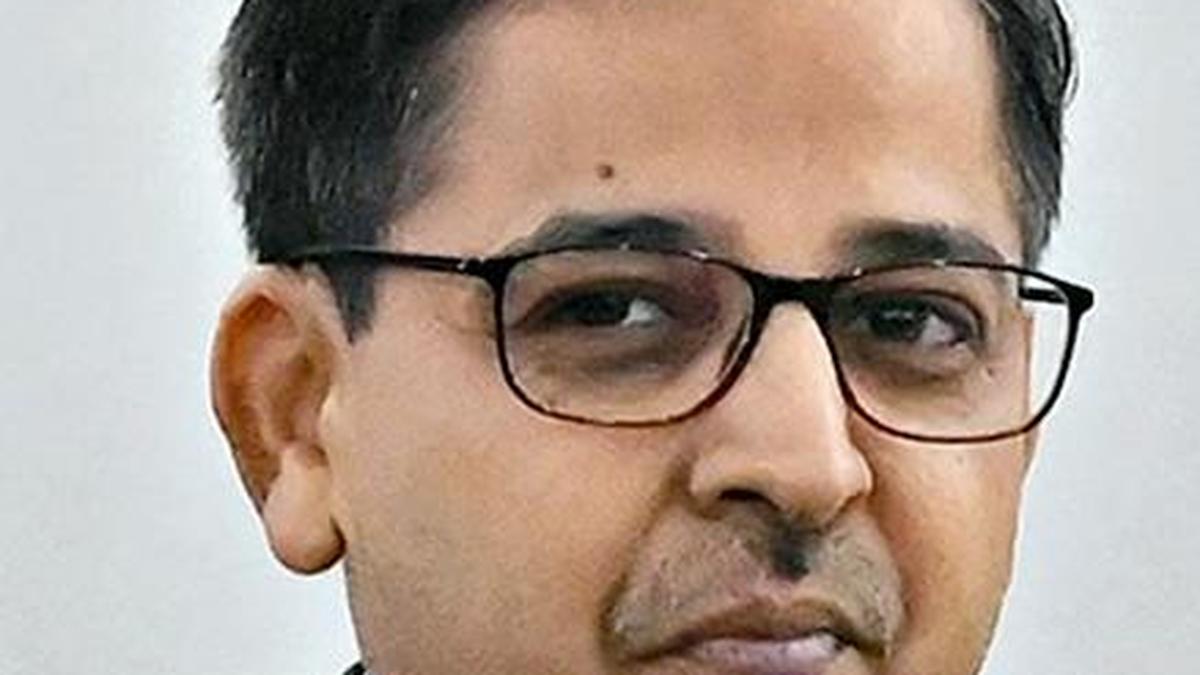
The departure of a high-ranking diplomat during periods of domestic political volatility represents more than a routine personnel rotation; it serves as a stress test for the institutional inertia of bilateral relations. When the outgoing Indian High Commissioner meets with the Bangladesh Foreign Advisor, the primary objective is not the exchange of pleasantries but the calibration of "continuity risk." In the wake of significant political shifts in Dhaka, the bilateral relationship has transitioned from a period of high-predictability alignment to a complex, interest-based negotiation. Maintaining regional stability requires a granular understanding of the economic, security, and migratory variables that dictate the friction or flow between these two neighbors.
The Triad of Interdependence
The relationship between India and Bangladesh functions through three primary structural pillars. Any disruption in one pillar creates immediate, measurable feedback loops in the others.
- Security and Border Integrity: This is the foundational layer. The 4,096-kilometer border is the longest international boundary India shares. Management of this perimeter involves the prevention of insurgent safe havens, the suppression of cattle smuggling syndicates, and the regulation of undocumented migration.
- Connectivity and Logistics: Bangladesh serves as the transit hub for India’s "Act East" policy. Rail links, inland waterways, and the use of Chittagong and Mongla ports reduce the logistics cost for India’s Northeast states by bypassing the Siliguri Corridor.
- Energy and Trade Asymmetry: India is a net exporter of electricity to Bangladesh, while Bangladesh relies on India as a primary source for industrial raw materials and essential commodities like onions, wheat, and sugar.
The Bottleneck of Transit and Transshipment
The operationalization of transit rights is often framed as a political concession, yet its reality is governed by infrastructure throughput and tariff structures. The current bottleneck is not merely diplomatic; it is technical. The rail infrastructure on the Bangladesh side often lacks the broad-gauge capacity to match Indian rolling stock, necessitating time-consuming cargo transfers.
The outgoing envoy’s focus on "bilateral ties" specifically addresses the maintenance of these transit protocols during a transition in Dhaka’s leadership. If the new administration in Bangladesh seeks to renegotiate the fees associated with Indian transit, the cost-benefit analysis for Indian logistics firms shifts. A 15% increase in transit fees could potentially render certain Northeast supply routes less efficient than the traditional "Chicken's Neck" route, despite the longer distance.
The Credit Line Trap and Project Implementation
India has extended multiple Lines of Credit (LoC) to Bangladesh, totaling nearly $8 billion. However, the disbursement rate remains low, often hovering below 20%. The friction points include:
- Procurement Requirements: Indian LoC rules typically require 65-75% of goods and services to be sourced from India. For a Bangladeshi government under pressure to revitalize domestic industry, these conditions create political friction.
- Project Approval Cycles: The bureaucratic overlap between Dhaka’s Economic Relations Division (ERD) and the Exim Bank of India creates an "approval lag" that often exceeds 24 months.
The outgoing diplomat’s role involves ensuring that these projects do not stall during the interim period. Strategic projects, such as the Maitri Super Thermal Power Plant or the various railway bridge initiatives, represent sunk costs that neither nation can afford to abandon.
Managing the Teesta River Variable
Hydropower and irrigation rights regarding the Teesta River remain the most significant point of potential rupture. The absence of a formal water-sharing treaty creates a seasonal crisis: excess water during the monsoon causing floods, and insufficient flow during the dry season impacting Bangladesh’s northern agricultural belt.
The mechanical reality of the Teesta is that any treaty is physically limited by the volume of water available at the Gazoldoba barrage in West Bengal. Because water is a State subject under the Indian Constitution, the federal government in New Delhi cannot unilaterally sign a treaty without the concurrence of the West Bengal state government. This internal Indian political friction creates a permanent "diplomatic deficit" for any envoy stationed in Dhaka.
Migration and the Domestic Political Loop
The narrative of "illegal migration" is frequently used in Indian domestic elections, which in turn triggers a defensive nationalist response in Bangladesh. However, the economic reality is a dual-flow system. While undocumented unskilled labor moves into India, there is a significant flow of high-skilled Indian professionals moving into Bangladesh’s textile and manufacturing sectors.
Bangladesh is one of the largest sources of remittance for India. Analyzing the balance of payments reveals that the economic integration is deeper than political rhetoric suggests. If the movement of people is restricted via tighter visa regimes, the immediate casualty is the Bangladeshi medical tourism sector in India, which accounts for a substantial percentage of private hospital revenue in cities like Kolkata and Chennai.
The Geopolitical Competitive Landscape
The Indian envoy’s departure occurs within a broader context of Chinese influence in the Bay of Bengal. China’s approach to Bangladesh is primarily focused on "hard infrastructure" and "liquidity." Unlike India’s LoCs, which are tied to specific Indian suppliers, Chinese loans—though often at higher interest rates—come with faster disbursement and fewer procurement hurdles.
India’s strategy to counter this involves:
- High-Level Institutional Access: Leveraging shared history and linguistic ties to maintain influence within the Bangladeshi civil service and military.
- Regional Power Grids: Integrating Bangladesh into a sub-regional energy architecture that includes Nepal and Bhutan, making India the indispensable clearinghouse for regional electricity.
This creates a "lock-in effect." Once Bangladesh’s national grid is physically synchronized with India’s, the cost of decoupling becomes prohibitively high, regardless of which political party holds power in Dhaka.
Risk Mitigation in Post-Transition Diplomacy
The immediate priority for the incoming diplomatic mission will be the stabilization of the visa issuance system. Following the recent political changes in Bangladesh, visa processing for Bangladeshi nationals was significantly scaled back due to security concerns. This created a backlog of over 100,000 applications.
A failure to restore normal consular operations creates a "goodwill vacuum" that competitors are eager to fill. The strategic play is to decouple security screenings from general travel. Implementing a tiered visa system—prioritizing students, business travelers, and medical patients—serves as a de-escalation mechanism while maintaining a rigorous security perimeter.
The Defense Cooperation Mandate
Under the 2017 defense cooperation framework, India offered a $500 million line of credit for defense equipment. Bangladesh has been slow to utilize this, traditionally favoring Chinese hardware for its Army and Navy due to lower price points and established maintenance pipelines.
To shift this, the Indian strategy must pivot from selling "platforms" (tanks, ships) to selling "systems and maintenance." By providing the underlying radar, communication, and electronic warfare suites for existing Bangladeshi assets, India can create a long-term technical dependency that is more durable than a one-time hardware sale.
Strategic Forecast
The bilateral relationship is entering a phase of "transactional realism." The previous era of "identity-based diplomacy"—where ties were anchored in the shared history of the 1971 Liberation War—is yielding diminishing returns with a younger Bangladeshi demographic.
The next 18 months will be defined by three critical movements:
- CEPA Negotiations: The Comprehensive Economic Partnership Agreement (CEPA) must be finalized to offset the loss of duty-free access Bangladesh will face upon its graduation from Least Developed Country (LDC) status in 2026.
- Energy Pivot: Bangladesh will increasingly seek to import 2,000-3,000 MW of renewable energy from Bhutan and Nepal through the Indian grid. India must position itself not as a gatekeeper, but as a facilitator of this "trilateral energy flow."
- Border Normalization: The reduction of "border killings" by the Border Security Force (BSF) is a non-negotiable requirement for reducing anti-India sentiment among the Bangladeshi public. Moving toward non-lethal border management is a strategic necessity to maintain the political capital of pro-India factions in Dhaka.
The outgoing envoy’s final briefings likely emphasize that while the political faces in Dhaka change, the geography does not. India’s goal is to ensure that the "cost of hostility" remains significantly higher than the "cost of cooperation" for any administration in Bangladesh. Success will be measured not by the warmth of public statements, but by the uninterrupted flow of trucks, trains, and electrons across the 24-degree parallel.


