The initiation of diplomatic discourse between Israel and Lebanon regarding their maritime and terrestrial boundaries represents more than a cessation of hostilities; it is a calculated attempt to decouple economic resource extraction from ideological territorial disputes. While superficial reporting focuses on the "historic" nature of the talks, a rigorous analysis reveals a complex tri-nodal constraint system involving hydrocarbon sovereignty, internal Lebanese political fragmentation, and the strategic depth of the Iranian proxy network. Establishing a durable framework requires moving beyond vague peace overtures and addressing the structural friction points that have historically rendered previous agreements inert.
The Tri-Nodal Constraint System
Successful negotiation in the Levant is predicated on three independent variables that must reach equilibrium simultaneously for any framework to hold.
- The Resource Extraction Imperative: The primary driver for Lebanese engagement is the catastrophic failure of its domestic banking sector and the resulting currency collapse. Lebanon requires the legal certainty provided by a delineated maritime border to permit TotalEnergies and other consortium members to begin drilling in Block 9. Without a signed framework, the risk premium remains too high for capital-intensive offshore operations.
- The Sovereignty Paradox: The Lebanese state is a fragmented entity where the central government lacks a monopoly on the use of force. Any agreement signed by the state must be de facto approved by Hezbollah. This creates a "double-agent" negotiation problem: Israel is negotiating with a sovereign entity that cannot guarantee the compliance of its primary military stakeholder.
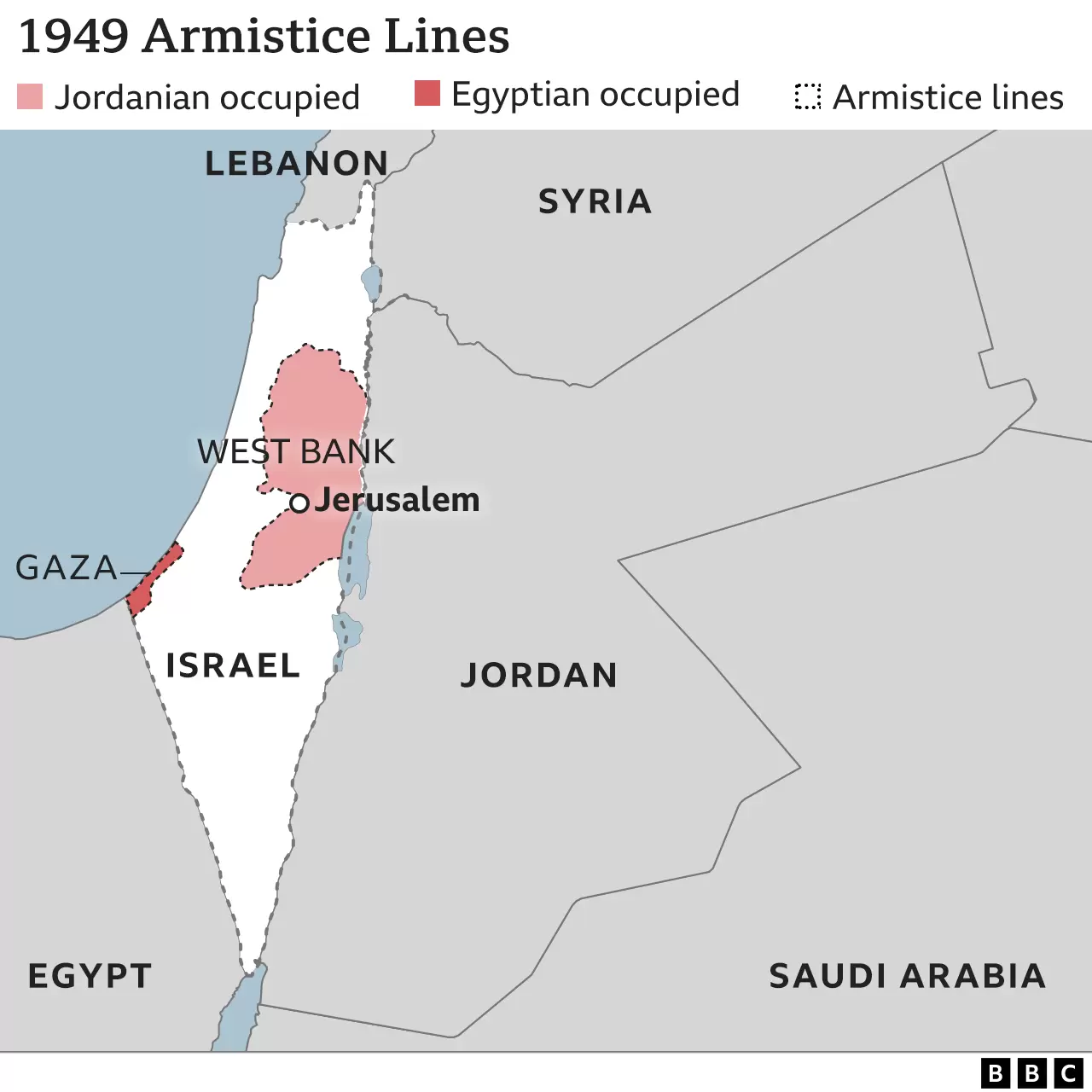
- The Buffer Zone Calibration: The terrestrial dispute, specifically regarding the "Blue Line" and the 13 contested points (including the Shebaa Farms and the village of Ghajar), is not merely about acreage. It defines the operational depth of the UN Interim Force in Lebanon (UNIFIL) and the tactical visibility of the Israel Defense Forces (IDF) into Southern Lebanese launch sites.
Maritime Delineation and the Mechanics of "Line 23" vs "Line 29"
The technical core of the negotiation rests on the geometric interpretation of the coastline and the impact of the uninhabited island of Tekhelet. Lebanon originally claimed Line 23, while Israel claimed Line 1. The emergence of Line 29—an aggressive Lebanese claim that would encompass parts of Israel’s Karish gas field—was utilized as a tactical bargaining chip rather than a legal baseline.
The transition from conflict to framework requires a transition from zero-sum territorial claims to a "Unitization Agreement." Under this mechanism, if a single geological reservoir straddles the negotiated border, the parties agree to a predetermined revenue-sharing ratio managed by a third-party international operator. This bypasses the need for direct financial transfers between the two states, which Lebanon currently avoids to maintain the appearance of non-recognition of the Israeli state.
The Cost Function of Status Quo Maintenance
For Israel, the cost of the status quo is the continuous mobilization of the Northern Command and the persistent threat of precision-guided munitions (PGMs) targeting critical infrastructure. The IDF’s strategic posture is currently defensive-reactive. A framework agreement shifts this cost function by creating a "mutual hostage" scenario. If Lebanon begins extracting gas, it gains a high-value asset that is vulnerable to kinetic strikes, thereby creating a deterrent against Hezbollah-initiated escalation.
For Lebanon, the status quo is characterized by:
- Infrastructure Decay: The inability to provide more than 2-4 hours of state-powered electricity daily.
- Capital Flight: The absence of a stable maritime border prevents the International Monetary Fund (IMF) from including future gas revenues in debt sustainability analyses.
- Sovereignty Erosion: Continued reliance on Iranian fuel shipments, which bypass state control and reinforce the parallel economy.
Logical Fallacies in Current Diplomatic Posturing
Most observers incorrectly assume that a framework for talks is a precursor to a peace treaty similar to the Abraham Accords. This ignores the structural realities of the Lebanese constitution and the Taif Agreement.
The first fallacy is the Unity Assumption. There is no unified Lebanese "national interest." The Presidency (Maronite), the Premiership (Sunni), and the Speaker of the House (Shia) represent divergent constituencies with conflicting external patrons. A framework that satisfies the economic needs of the Sunni and Maronite business elites may still be vetoed by the Shia duo if it compromises the "Resistance" narrative.
The second fallacy is the Normalization Mirage. Israel often seeks "normalization" as a primary output. However, in the Lebanon context, normalization is a non-starter. The objective must be limited to "Functional De-confliction"—a state where technical and security coordination occurs through intermediaries (the US and UN) to manage shared interests without formal diplomatic recognition.
Security Architecture and the UNIFIL Variable
A framework for peace is functionally useless without an enforcement mechanism for Resolution 1701. The current mandate of UNIFIL allows for monitoring but lacks the teeth to prevent the militarization of the area south of the Litani River. A viable framework must address the "Tactical Blind Spot" where civilian structures are utilized for military storage.
Structural requirements for a modernized security framework include:
- Automated Verification: Implementation of seismic and acoustic sensors along the Blue Line to detect tunnel construction without requiring physical UNIFIL entry into private property.
- The Litani Exclusion Zone: Re-establishing the primacy of the Lebanese Armed Forces (LAF) as the sole armed entity in the south, supported by international funding tied specifically to border security performance.
Economic Interdependence as a Conflict Stabilizer
The "historic" nature of these talks is found in the shift toward economic realism. If Lebanon can be integrated into the Eastern Mediterranean Gas Forum (EMGF), even as a silent partner, it creates a regional energy grid that includes Egypt, Jordan, Cyprus, and Israel. This grid increases the "switching costs" of conflict. If a regional war disrupts the flow of gas, the economic damage is not localized to the combatants but distributed across the entire Mediterranean basin, drawing in European Union interests as stakeholders in regional stability.
The mechanism of "Interconnected Fragility" suggests that when nations share critical infrastructure—such as pipelines or power cables—the incentive for asymmetric warfare decreases. The framework must therefore prioritize sub-sea infrastructure that physically links the economic fates of the coastal states.
Strategic Risk Assessment
Despite the progress, several "Black Swan" events could collapse the framework:
- The Succession Vacuum: The upcoming political transitions in Lebanon could lead to a power vacuum where radical factions seek to "reset" the negotiations through a border provocation.
- Proxy Interference: Should the Iranian-Saudi rapprochement or the JCPOA negotiations stall, Lebanon remains the most convenient theater for Tehran to exert pressure on the West via escalation with Israel.
- The Karish Trigger: Any unilateral move by Israel to begin production in the Karish field before a final signature is obtained could be used as a casus belli by Hezbollah to reclaim domestic legitimacy.
Strategic Playbook for Durable Resolution
To move from a framework of talks to a functional equilibrium, the following tactical steps must be executed:
- Step 1: Decouple Land and Sea. The maritime border must be finalized independently of the 13 disputed terrestrial points. The maritime boundary is an economic issue; the land boundary is an identity issue. Solving the former provides the liquidity needed to eventually address the latter.
- Step 2: Establish the US as the "Escrow Agent." The United States must act as the guarantor of the revenue-sharing agreement. Funds should be held in an international escrow account, released to Lebanon only upon verification of non-interference by non-state actors in the extraction zones.
- Step 3: Define "Enforcement Benchmarks." Instead of broad peace goals, the framework should rely on specific, measurable benchmarks, such as the reduction of PGM factory sightings or the removal of "Nature Without Borders" observation posts used by Hezbollah.
The focus must remain on the Cold Peace model. In the Levant, stability is not built on shared values, but on the precise calculation of mutual destruction and the shared necessity of economic survival. The framework is not an end state; it is a management tool for a permanent crisis. Any attempt to transform it into a grand peace gesture will likely trigger the very resistance that has stalled progress for decades. The goal is a clinical, transactional arrangement that recognizes the borders of the state while ignoring the rhetoric of the street.