The illusion of a quiet Middle East died in less than forty-eight hours. When Washington and Tehran penned an interim ceasefire framework, global markets breathed a sigh of relief, thinking the worst of the 2026 U.S.-Iran war had passed. Crude prices stabilized, and merchant ships cautiously crept back into the Gulf.
Then the drones struck.
Iran's declaration that the Strait of Hormuz is closed, paired with a sudden barrage of U.S. airstrikes hitting roughly 90 Iranian military targets, proves that the temporary truce was built on sand. President Donald Trump didn't mince words, declaring the ceasefire officially "over" after Iranian forces targeted commercial vessels, including the Qatari-flagged LNG tanker Al Rekayyat and the Saudi-flagged Wedyan. If you think this is just another round of familiar Middle Eastern posturing, you're missing the real story.
This isn't just about regional rivalry anymore. It's an aggressive, transactional play by Tehran to turn the world's most critical energy chokepoint into a toll road, and the White House is using heavy ordnance to say no.
The Toll Road Strategy Nobody Talks About
The media keeps focusing on the ideological clash, but the core driver behind the latest escalation is blunt economics. During the brief window of the ceasefire, Oman proposed a U.N.-backed transit corridor close to its own coastline to bypass dangerous waters. Iran rejected the plan immediately.
Why? Because Tehran wants to force all commercial shipping to use an Iran-approved transit route.
The Iranian Foreign Ministry explicitly spilled the strategy in a recent briefing, arguing that securing the narrow channel is a service that costs money, so they intend to levy a mandatory fee on all passing vessels. It's essentially a state-sponsored protection scheme. You pay the tax, or you risk an Islamic Revolutionary Guard Corps (IRGC) drone hitting your engine room.
When the U.S. and allied forces backed the Omani route, Iran claimed Washington breached the memorandum of understanding. The resulting attacks on merchant ships were designed to show the world that if Iran can't monetize or control the strait, nobody gets to use it.
The Shockwave Hitting Global Supply Lines
The physical reality of the Strait of Hormuz makes it highly vulnerable. It's a narrow strip of water where the actual shipping lanes are only two miles wide in each direction. You can't just sail around it.
When the IRGC launched fast-attack craft and loitering munitions against commercial shipping, United States Central Command (CENTCOM) retaliated with intense airstrikes. Led by Admiral Brad Cooper, the American response hammered Iranian air defense systems, coastal radar hubs, command-and-control networks, and over 60 IRGC small boats.
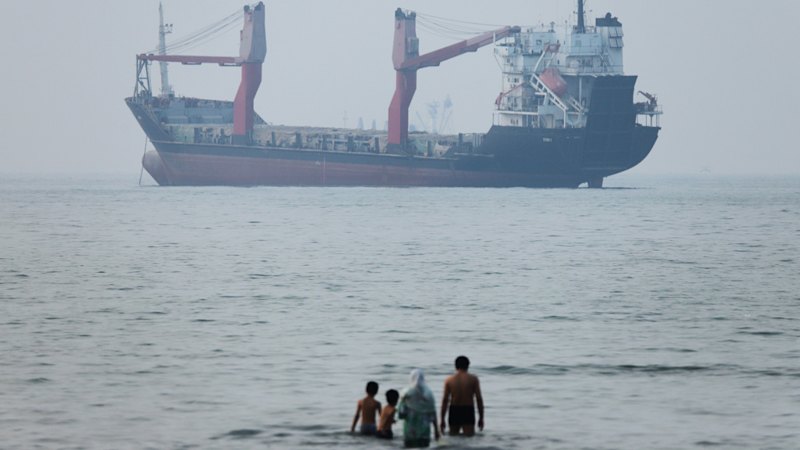
Despite CENTCOM's public statements that shipping continues to flow and that Iran doesn't control the waterway, the ground reality for seafarers is terrifying. Consider these hard facts of the current disruption:
- Stranded Crews: Around 6,000 seafarers are currently stuck on hundreds of vessels idling in or near the channel.
- Collapsing Traffic: A waterway that normally handles about 130 ship transits a day has seen its volume plummet since the attacks.
- Vanishing Reserves: The UN Economic Commission for Europe noted that global strategic oil reserves are at their lowest levels in decades, leaving no cushion for prolonged blockades.
Compounding this mess is the brutal summer heatwave gripping the region. Fueled by a strengthening El Niño, electricity grids across the globe are already strained by cooling demands. A prolonged halt in Gulf energy shipments will trigger immediate localized spikes in fuel and fertilizer costs.
Why the Diplomatic Track is Paralyzed
Negotiators are supposedly heading to Switzerland and Oman to revive the peace talks, but honestly, a permanent fix looks incredibly unlikely right now. The two sides are operating on entirely different wavelengths.
The White House revoked the vital Treasury waiver that allowed Iran to sell its oil globally as part of the initial deal. The administration's stance is purely performance-based—no waivers and no permanent sanctions relief until Iran completely turns over its enriched uranium.
Tehran, now led by President Masoud Pezeshkian following the death of former Supreme Leader Ali Khamenei earlier in the conflict, refuses to budge on three core objectives: retaining absolute sovereign control over the strait, preserving its nuclear infrastructure, and protecting its remaining regional proxies like Hezbollah.
To complicate matters, regional dynamics are fracturing. Iran launched retaliatory drone and missile strikes against Kuwait, Bahrain, and Qatar, accusing them of hosting or supporting American operations. The Gulf states are caught in the crossfire, terrified of Iranian aggression but demanding firmer U.S. security guarantees.
The Immediate Playbook for Navigating the Crisis
If your business relies on global supply chains or energy futures, you can't afford to treat this as a distant geopolitical news story. The era of cheap, uninterrupted transit through the Gulf is on pause. Take these steps to insulate your operations from the fallout.
First, audit your secondary supply chains today. If you import raw components or chemical materials that route anywhere near the Arabian Sea, start vetting alternative logistics paths through Mediterranean or overland corridors.
Second, lock in energy pricing contracts immediately. With crude hovering around $73 a barrel, the market hasn't fully priced in a total, multi-week shutdown of the strait. If the Swiss talks fail this weekend, expect a violent upward correction.
Finally, track the Omani corridor developments closely. The moment insurers refuse to cover ships using the traditional lanes, the viability of the U.N.-backed Omani route will dictate whether global maritime trade stays afloat or grinds to a catastrophic halt.